U.S. Warns Future Iraqi Government Against Including Armed Groups
Washington demands a clear separation between Iraqi state institutions and armed factions amid rising regional tensions
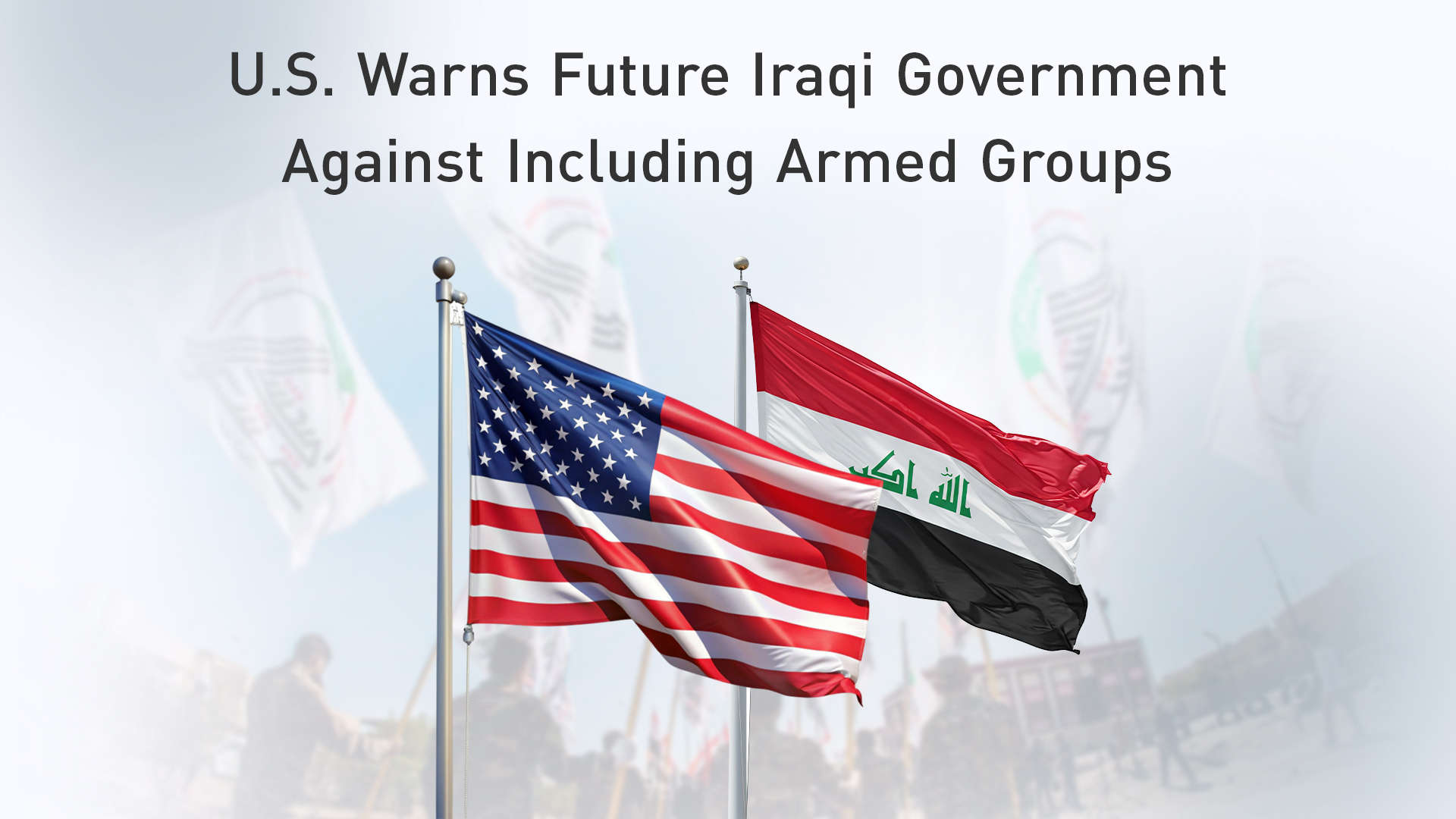
ERBIL (Kurdistan 24) - The United States has delivered a new warning message to Iraq’s future government, strongly rejecting any role or participation for armed groups operating outside state authority in the country’s upcoming cabinet, according to a senior U.S. official cited by NBC News on Friday.
Speaking to NBC News, the senior U.S. State Department official said that “the line between Iraqi state institutions and outlawed armed groups has become extremely blurred and unclear.”
The U.S. official also called on Iraqi Prime Minister-designate Ali al-Zaidi to sever ties with armed factions as part of efforts to form the new Iraqi government.
In another part of the remarks, the official urged Iraq’s future government to issue a “clear and public statement” emphasizing that armed groups would not be part of the government “in any form.”
The American demands come amid escalating regional security tensions and continued attacks targeting U.S. interests in Iraq and the broader region. According to the U.S. official, American institutions and interests in Iraq have faced more than 600 attacks during the period between late February 2026 and the implementation of the ceasefire on April 8.
The warning also reflects growing American concerns over the influence of Iran-backed armed factions inside Iraq’s political and security structures, particularly following months of regional escalation linked to the conflict between Washington and Tehran.
The term “outlawed armed groups” in Iraq is commonly used to describe factions and militias that, despite some of them formally operating within parts of Iraq’s security framework, continue to function independently from the direct authority of the Iraqi prime minister and commander-in-chief of the armed forces.
Throughout 2025 and 2026, Washington repeatedly pressured Baghdad to limit the influence of these groups and warned that Iraq’s international relations and economic stability could face consequences if such factions remain outside state control, due to the Previous U.S. State Department and Pentagon statements throughout 2025–2026.
The issue has become increasingly sensitive amid ongoing efforts to form Iraq’s next government, as several armed factions and politically affiliated groups continue seeking influence over cabinet formation and security-related positions.
The developments also come at a time when Iraq faces mounting economic pressure and growing fiscal challenges. According to recent Iraqi financial data, the country’s domestic debt has surpassed 96 trillion Iraqi dinars, raising broader concerns about long-term economic stability and the government’s ability to manage financial obligations amid political uncertainty and regional instability, according to Kurdistan24's economic report.
Analysts say the latest American warning highlights Washington’s broader strategy of preventing deeper institutional integration of armed groups aligned with Iran, particularly during a period of heightened regional confrontation and fragile ceasefire arrangements across the Middle East.
The developments also come as the United States maintains military deployments and diplomatic pressure throughout the region, including continued operations connected to maritime security in the Gulf and Strait of Hormuz, and efforts to contain further escalation with Iran.