Iraqi Farmers Protest Wheat Price Cuts in Baghdad and Kirkuk
Farmers across Kirkuk, Baghdad, and Diyala rallied in protest after Iraq reduced official wheat purchasing prices from 850,000 dinars per ton to as low as 500,000, warning that the cuts could devastate rural livelihoods and push many growers to abandon farming entirely.
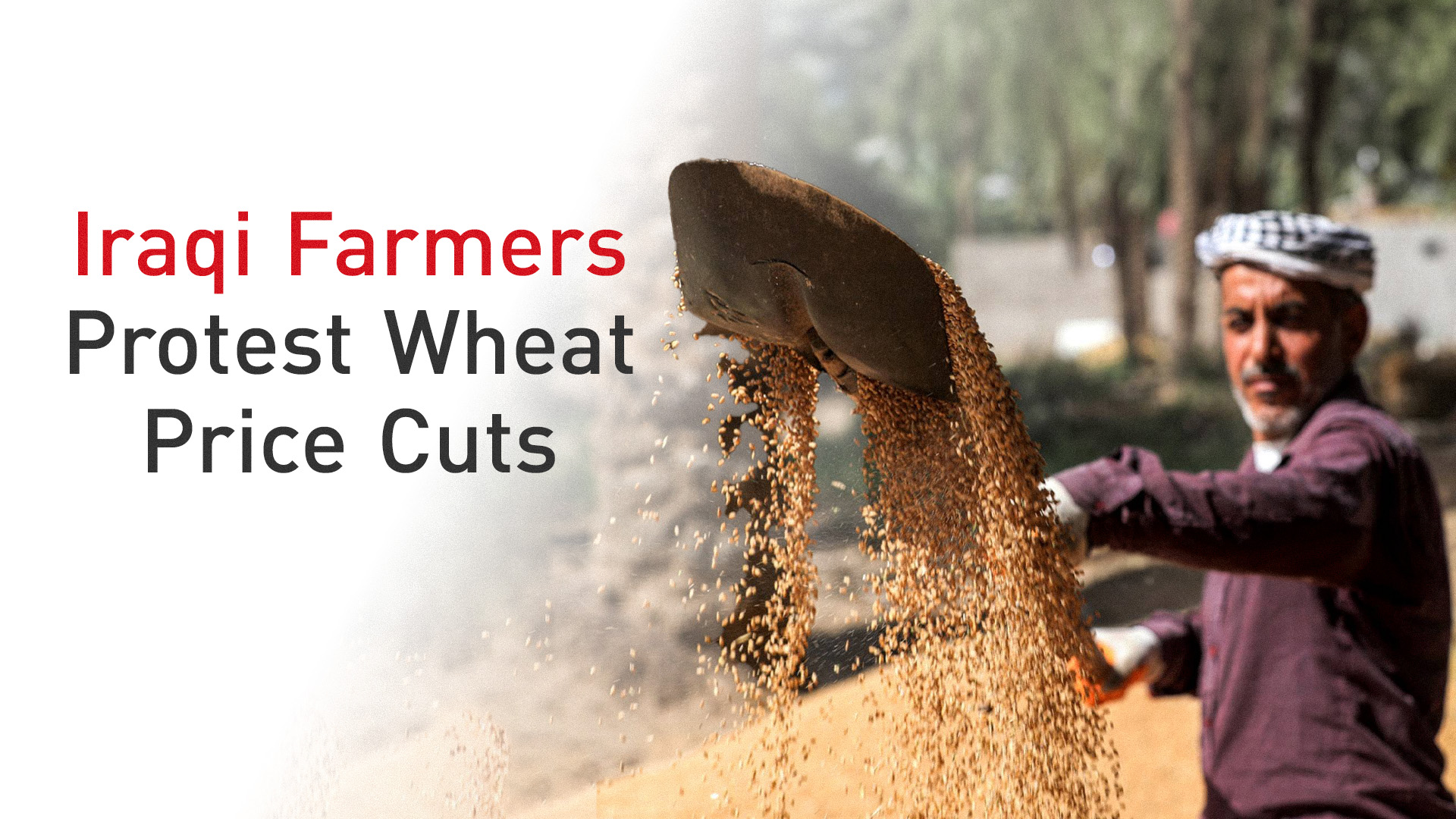
ERBIL (Kurdistan24) - Demonstrations have emerged in Kirkuk, Baghdad, and other Iraqi regions as farmers protest recent government decisions to reduce the official purchasing prices for domestic wheat.
According to local media reports and primary accounts from the field, agricultural producers gathered on Sunday, to express concerns that the new pricing tiers will result in substantial financial losses and threaten the viability of the country's strategic agricultural sector.
The protests, centered in prominent locations such as Baghdad's Tahrir Square, highlight a deepening economic friction between rural producers and federal policymakers.
Farmers argued that the sharp reduction in payments per ton of wheat fails to account for the escalating costs of production, including fuel, seeds, and equipment.
The current crisis reveals that wheat pricing is an exceptionally sensitive economic issue in Iraq, as it serves as the primary source of income for millions in the rural economy and is a cornerstone of national food security.
Decisions regarding these subsidies directly influence the sustainability of domestic farming, particularly during a period characterized by persistent water scarcity and regional economic instability.
Farmers Rally Over Wheat Prices
The demonstrations on Sunday were characterized by widespread participation from various agricultural unions and local cooperatives.
According to local media coverage of the events, the Local Union of Agricultural Cooperative Societies in Diyala issued a call for its members to convene in Tahrir Square starting at 9:00 AM.
This mobilization included branch union heads, executive officers, and individual growers from across Diyala Province and neighboring areas.
Reports noted that the protesters' primary objective is to pressure the federal government to reconsider the current price adjustments.
The primary report indicated that while the government previously paid 850,000 Iraqi dinars per ton of wheat, the new policy has introduced a tiered system that significantly lowers this amount.
Under the current regulations, farmers who are formally registered within the state's agricultural plan will receive 700,000 dinars per ton.
However, for those operating outside the official plan, the purchasing price has been set at 500,000 dinars.
Agricultural producers stated that these reductions are untenable.
According to the primary report, a farmer from Kirkuk explained that many producers in the province and the territories governed by Article 140 find themselves excluded from the official agricultural plan.
Consequently, these individuals are receiving only 500,000 dinars per ton, a figure they described as insufficient to cover basic overhead.
The farmer noted that if the decision is not blocked, many Kurdish and Iraqi growers in these regions may be forced to abandon farming entirely to avoid total financial collapse.
Wheat Pricing Dispute and Economic Pressures
The dispute over wheat payments centers on the discrepancy between government fiscal policy and the reality of farm-level expenses.
Local media reports explained that the protesters are demanding a return to the 850,000 dinars per ton rate for all producers.
The report noted that farmers view the 150,000 to 350,000 dinar reduction as a measure that effectively "undermines the dignity" of the agricultural community and devalues the importance of domestic food production.
Beyond the immediate price of the crop, the demonstrations brought other long-standing grievances to the forefront.
According to reports from the Diyala union, farmers are also demanding the immediate disbursement of delayed financial entitlements from previous growing seasons.
Protesters argued that the government's failure to pay these outstanding dues in a timely manner has created a liquidity crisis for many households.
Furthermore, agricultural societies are calling for a revision of the approved agricultural yield ratios.
Currently, the government utilizes specific metrics to determine how much wheat it will purchase from a given area of land.
The union stated that the government should adjust these ratios to exceed one ton per dunam, arguing that such a change is necessary to accurately reflect the intensive labor and high costs borne by farmers during the current season.
Pricing Policy and Institutional Responses
While the Iraqi government has implemented these cuts as part of its broader fiscal management, the reaction from the agricultural community suggests a risk of systemic stagnation.
The report noted that farmers believe the price reduction will lead to a significant decrease in wheat production in the coming years.
Growers emphasized that without a guaranteed and profitable price, there is little incentive to maintain the current levels of output required to sustain the national market.
Agricultural authorities have yet to announce a formal reversal of the policy, but the intensity of the protests in Tahrir Square has drawn significant institutional attention.
Local media reports indicated that the union in Diyala also demanded an official apology for what they described as "abuses" committed by security forces during previous demonstrations on May 3, 2026.
This demand underscores the heightened tension surrounding the issue and the perception among growers that their economic plight is being met with administrative indifference or hostility.
Farmers in Kirkuk have specifically appealed to their political representatives.
According to the primary report, Kurdish growers called on their delegates in the Iraqi parliament and the federal government to intervene.
They argued that the current pricing model disproportionately affects those in disputed territories, where registration in official state plans is often complicated by administrative and political hurdles.
Food Security and Domestic Production
The broader significance of these protests lies in the critical role that wheat plays in the Iraqi economy.
As a strategic crop, wheat is essential for maintaining a stable food supply. However, growers are facing a "perfect storm" of challenges.
In addition to the pricing dispute, the report noted that producers are contending with severe water scarcity, which has already limited the amount of arable land available for cultivation.
The combination of high production costs and falling state support has created an environment where the agricultural sector is highly vulnerable.
Economic analysts cited in local reports suggested that a failure to reach a consensus with the farmers could lead to a reliance on more expensive international imports, further straining the national budget and compromising food sovereignty.
The current atmosphere in Tahrir Square and Kirkuk reflects a growing consensus among the agricultural community that the dignity of the Iraqi grower is at stake.
The statement from the Diyala union reaffirmed that farmers remain committed to their rights and will continue to peacefully convey their demands until a sustainable solution is reached.
As of Sunday evening, the protests remained active, with agricultural cooperatives signaling that their commitment to these demands remains firm.
The outcome of this dispute will likely serve as a definitive indicator of the government's future approach to managing the rural economy and its strategic food resources.
Wheat pricing remains a critical issue for Iraq's agricultural sector and rural economy, requiring a balanced approach that protects state finances while ensuring the survival of the nation's farmers.