Kurdistan Peshmerga Ministry Publishes Multi-Year Officer Promotion Cycles
Kurdistan24 reports the Peshmerga Ministry has begun clearing multi-year officer promotion backlogs from 2022-2024, formalizing a biannual rank system aimed at standardizing career progression and strengthening institutional professionalism and command structure.
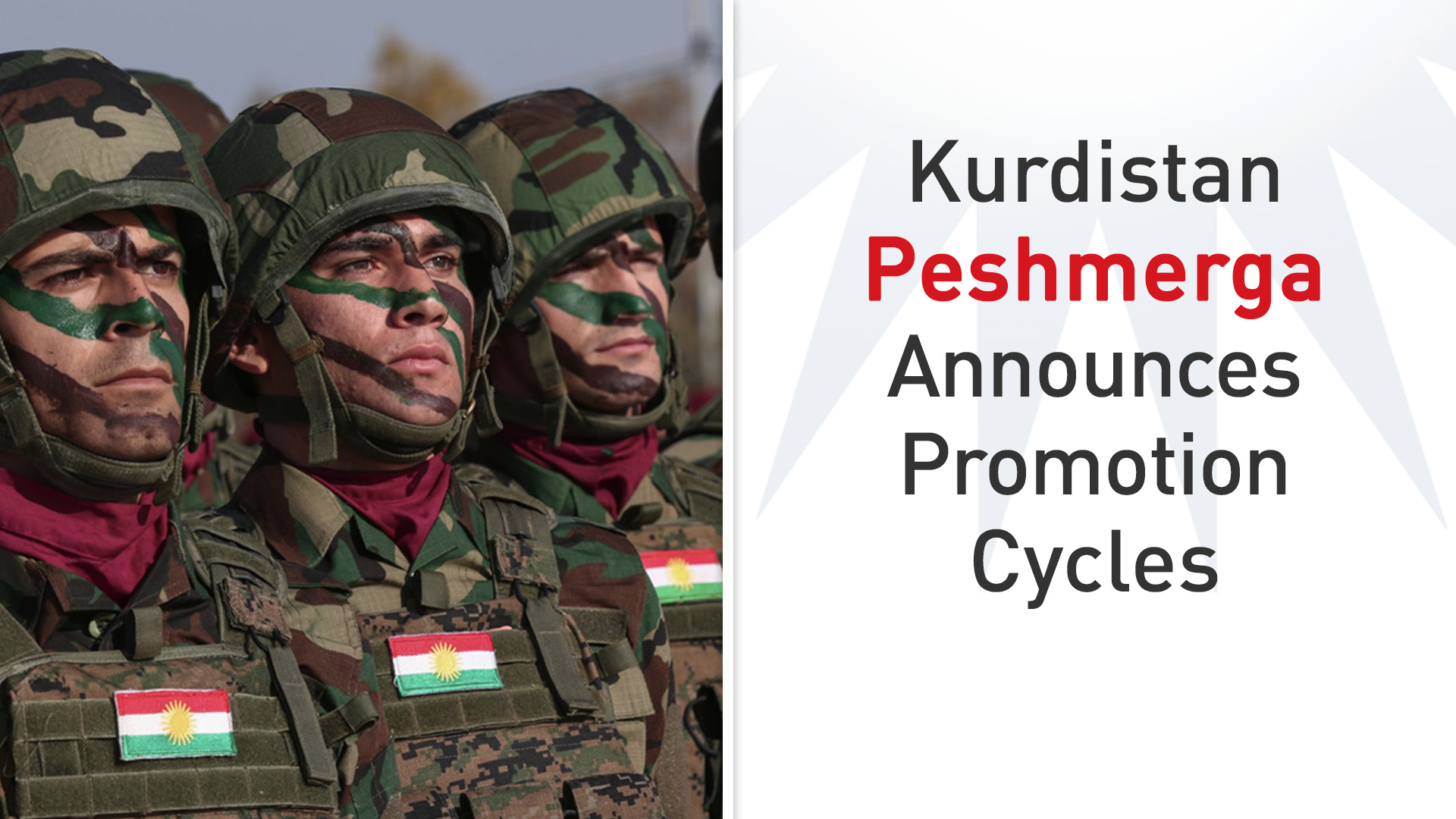
ERBIL (Kurdistan24) - Kurdistan24 released detailed administrative information on Monday about the Ministry of Peshmerga's commissioned officers' promotion cycles, providing a comprehensive overview of the current personnel management framework.
The publication of these schedules highlights an extensive multi-year effort to regularize military career progression across various commands and specialized units within the Kurdistan Region's defense apparatus.
The released data outlines a structured approach to rank advancement, encompassing several backlogged periods from 2022 through 2024.
According to Kurdistan24, the administrative process for most major military formations has been finalized, signaling a transition toward a more predictable and legally grounded institutional environment.
This development is viewed by public administration experts as a significant step in the professionalization of the force, moving away from ad hoc promotions toward a standardized bi-annual cadence.
The organizational significance of this move is rooted in the Ministry's commitment to maintaining a robust command hierarchy.
By establishing these schedules within a formal administrative framework, the Ministry of Peshmerga aims to enhance institutional transparency and ensure that personnel entitlements are handled within recognized legal timeframes.
This focus on structured career development is essential for the long-term operational readiness and stability of the region's primary security institution.
Structured Promotion Framework Announced
The formal activation of these promotion cycles followed an official announcement by the Kurdistan Region's Minister of Peshmerga, Shorsh Ismail.
On Monday, the Minister confirmed that the necessary documentation for the promotion of various officer cohorts has been authorized.
According to the Peshmerga Ministry, the primary objective of this administrative action is to provide a renewed sense of professional incentive and organizational clarity to the officer corps.
In a statement detailed by the report, Minister Ismail emphasized that his administration has prioritized the establishment of a unified team approach to resolve lingering administrative hurdles.
The Minister of Peshmerga stated that significant effort was exerted to ensure the promotion process remains aligned with established legal requirements.
He further noted that the regularization of rank advancement serves as a vital component in sustaining the morale and dedication of personnel responsible for the protection of the region.
The published schedules adopt a twice-yearly rhythm, traditionally categorized as the "March and September" lists.
The current implementation covers six distinct cycles spanning three years. According to information provided by a source within the Ministry to Kurdistan24, the administrative work for several key sectors has reached completion, while others remain in the final stages of verification.
Institutional Reforms in the Peshmerga
The breakdown of the promotion schedules reveals the breadth of the current administrative undertaking. According to the report, the framework applies differently across various sectors of the defense establishment:
- Zone One and Command Five: Administrative procedures have been concluded for the cycles of Sept. 2022, both the March and Sept. lists of 2023, and the Mar. 2024 schedule.
- Ministry of Peshmerga (General Staff): Promotions are being processed for the September 2023, Mar. 2024, and Sept. 2024 cycles.
- Oil and Gas Facilities Police: This specialized security branch has seen the completion of the Sept. 2023 promotion requirements.
The report noted that while many units have been successfully integrated into the current rollout, the Ministry is still finalizing the paperwork for other critical components.
The Peshmerga Ministry indicated that the administrative review for Support Forces 1 and 2, as well as Command 2 (Zone Two), is currently in its concluding phase and is expected to be resolved in the immediate future.
From a public administration perspective, this systematic clearing of backlogged promotions reflects a broader institutional reform.
By categorizing units and years into manageable administrative tranches, the Ministry is attempting to institutionalize a sustainable human resources model.
Analysts suggest that this level of organizational scrutiny is necessary to ensure that the command structure remains balanced and that merit-based advancement is prioritized within the military bureaucracy.
Military Career Progression System
The importance of a structured military career progression system extends beyond the individual benefits for officers. Within any modern defense organization, rank advancement serves as a primary mechanism for personnel management and institutional continuity.
According to the Minister of Peshmerga, the successful execution of these promotions provides a strong incentive for officers to continue their service with a focused commitment to their professional duties.
Minister Ismail characterized the regularized promotion system as a means to reinforce the "fortress-like" nature of the region's defense, according to the report.
By ensuring that promotions occur within their legal and procedural timeframes, the Ministry is building a more resilient organizational foundation.
This administrative consistency is a key indicator of the ongoing efforts to modernize the Peshmerga into a unified, professional force capable of meeting future security challenges.
Furthermore, the Minister addressed the concerns of personnel who may find their names absent from the currently published lists. Shorsh Ismail stated that the Ministry remains committed to ensuring that all entitled personnel receive their due rank advancements.
According to the article, he assured officers whose names appear on other pending schedules that their promotion entitlements will be returned to the Ministry for processing as soon as possible, emphasizing a policy of administrative inclusiveness.
Regional Security Context
While the current developments are primarily administrative in nature, they occur within a broader regional security environment that demands high levels of institutional readiness.
The professionalization of the officer corps through a predictable promotion and command structure is essential for maintaining the integrity of the Kurdistan Region's security footprint.
The report indicated that the Ministry views these administrative successes as a prerequisite for maintaining high morale among those tasked with territorial defense.
Although the current focus remains on the "human resources" side of military governance, the Minister of Peshmerga noted that a well-organized and motivated force is central to the region's overall stability and the protection of its citizens' dignity.
The continued coordination between the various departments involved in these promotion cycles, including the Diwan, the General Staff, and specialized unit commanders, reflects a high degree of internal cooperation.
The report noted that this collaborative effort is a core part of the Ninth Cabinet's strategy to reform and strengthen the region's administrative institutions.
Institutional Stability and Future Planning
The publication of the Peshmerga officer promotion schedule represents more than a routine personnel update; it is an exercise in institutional stability.
By resolving multi-year administrative gaps, the Ministry of Peshmerga is establishing a baseline for future defense planning. A predictable promotion cycle allow for better long-term budgeting, leadership training, and organizational development.
According to the report, the Ministry's determination to establish a consistent legal timeframe for these activities remains a primary goal.
As the remaining units enter the final stages of the promotion process, the focus is expected to shift toward maintaining this rhythm for future cycles. The Minister of Peshmerga concluded his message by extending congratulations to the newly promoted officers, wishing them continued success in their service to the region.
Ultimately, the transition toward a standardized, transparent advancement system is a hallmark of a professionalized military bureaucracy. Structured personnel management remains central to institutional stability within defense organizations, ensuring that the hierarchy is maintained through clear, rules-based procedures.