Erbil’s Green Belt Project: Inside Kurdistan’s Largest Environmental and Urban Transformation Plan
From climate protection to urban planning, the Green Belt is becoming one of the Ninth Cabinet’s most ambitious long-term projects
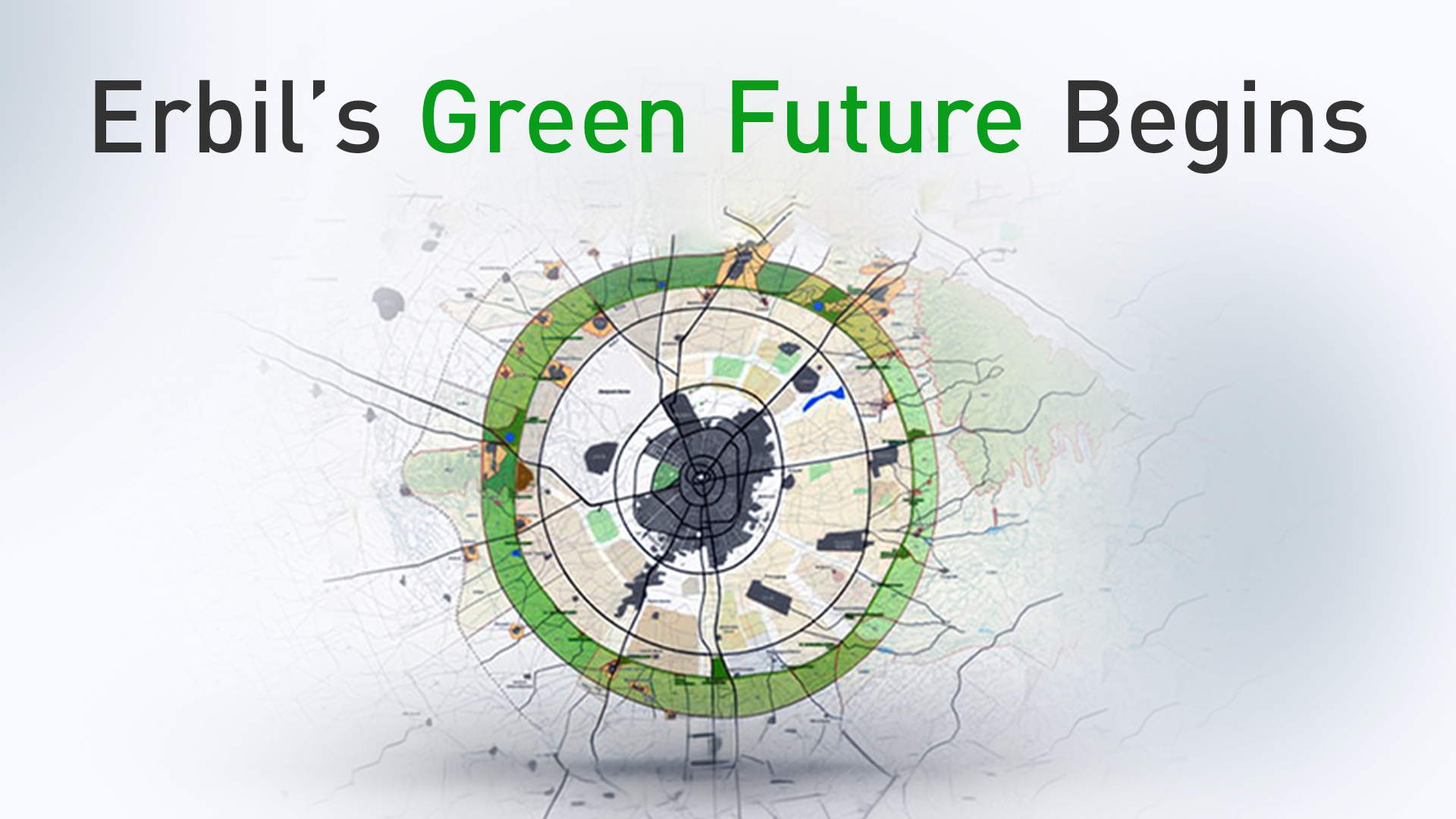
ERBIL (Kurdistan 24) - What was once considered only an environmental proposal has now evolved into one of the Kurdistan Regional Government’s largest strategic infrastructure and climate adaptation projects.
The “Green Belt of Erbil,” officially launched under the ninth cabinet led by Prime Minister Masrour Barzani, is designed to create a massive green environmental corridor surrounding the capital to reduce pollution, combat desertification, regulate urban expansion, and improve long-term climate resilience.
The project has gained increasing attention in 2025 and 2026 as Erbil faces:
- Rapid population growth
- Accelerating urban expansion
- Hotter summers
- Dust storms
- Water stress
- Environmental degradation
Officials increasingly describe the Green Belt not simply as a tree-planting campaign, but as a long-term urban protection system connected directly to Erbil’s future development model.
So, what exactly is the Green Belt?
The project aims to surround Erbil with a continuous environmental belt made up of:
- Forested zones
- Agricultural areas
- Productive orchards
- Irrigated green corridors
- Artificial ponds
- Protected environmental zones
According to official KRG and Erbil Governorate data published by Kurdistan24, the Green Belt will eventually:
- Stretch approximately 78–83 kilometers around Erbil
- Maintain a width of roughly 2 kilometers
- Include approximately 7 million trees
- Be implemented across 8 major phases
The selected trees are mainly:
- Olive trees
- Pistachio trees
- Orange trees
Officials say the focus on productive and drought-resistant trees is intended to combine environmental protection with long-term agricultural and economic sustainability.
Why does Erbil even need a Green Belt?
Erbil has expanded dramatically since the early 2000s.
Areas that were previously:
- Farmland
- Orchards
- Open countryside
- Agricultural buffer zones
have increasingly turned into:
- Residential compounds
- Commercial projects
- Highways
- Shopping centers
- Luxury developments
Urban planners and environmental experts have repeatedly warned that without ecological boundaries, Erbil risks:
- Severe air pollution
- Urban overheating
- Groundwater depletion
- Loss of agricultural land
- Higher dust exposure
- Climate vulnerability in future decades
The Green Belt is therefore designed partly as:
- An environmental shield
- A climate defense system
- An urban planning boundary
Officials say the project is intended to reduce uncontrolled urban sprawl while preserving strategic agricultural land around the city.
What happened in the first phase?
The first implementation phase officially began after Prime Minister Masrour Barzani planted the project’s first tree on October 30, 2025.
According to updated KRG figures released in April and May 2026:
- The first phase covers approximately 4,200 acres (or roughly 13,000 dunams)
- Nearly 700,000 saplings have already been planted
- The phase cost approximately $6.2 million
- Around 230 laborers and 30 engineers are working daily on the project
Officials say the first phase is now nearing completion with 700,000 saplings.
The second phase is expected to begin immediately afterward and will reportedly cover approximately 11,000 additional acres.
Why is the project considered strategic?
The Green Belt is connected to several larger government strategies simultaneously:
- Climate adaptation
- Urban planning
- Agriculture
- Water management
- Employment creation
- Environmental reform
According to KRG environmental assessments between September 2025 and April 2026, the completed project could remove between:
- 140,000 and 210,000 tons of carbon dioxide annually
Officials also say the project could:
- Reduce dust storms
- Lower urban temperatures
- Improve air quality
- Expand green space coverage
- Increase climate resilience
Some projections suggest Erbil’s total green coverage could rise from around:
- 18% to approximately 25%
Once the project is fully implemented.
But where will all the water come from?
Water remains the project’s biggest challenge.
The Kurdistan Region continues facing:
- Drought
- Reduced rainfall
- Falling groundwater levels
- Climate pressure
- Regional water shortages
To address this, the Green Belt project is being linked to several parallel water-management projects.
According to official plans, the initiative includes:
- More than 10 artificial water retention ponds
- Smart irrigation systems
- Water-efficient agricultural techniques
- Wastewater recycling infrastructure
One of the most important connected projects is Erbil’s wastewater recycling system, which officials say could eventually recycle up to:
- 840,000 cubic meters of treated sewage water daily
for irrigation of parks, gardens, and Green Belt zones.
Officials say this is critical because relying only on groundwater would make large-scale afforestation unsustainable.
Why is the project politically sensitive?
The Green Belt also touches some of the most valuable land around Erbil.
Areas surrounding the capital have become highly attractive for:
- Housing projects
- Investment compounds
- Commercial developments
- Real-estate expansion
That has created long-standing tension between:
- Environmental planning
- Commercial urban growth
According to multiple reports, parts of the designated Green Belt land are required:
- Legal land formalization
- Compensation for residents
- Removal of encroachments
- Reorganization of temporary investment contracts
The government says the project is being implemented gradually to avoid legal disputes while protecting strategic land around the city.
How does it connect to other Ninth Cabinet projects?
The Green Belt is increasingly being presented as part of a broader environmental and infrastructure strategy under the ninth cabinet.
Officials have linked it directly with:
- The Runaki 24-hour electricity project
- Water infrastructure modernization
- Highway expansion
- Smart city planning
- Agricultural reform
- Climate adaptation projects
The KRG has also promoted the Green Belt alongside broader targets to:
- Plant more than 100 million trees by 2030
- Build hundreds of parks and gardens
- Expand Erbil’s environmental infrastructure
Bigger picture: Why the project matters beyond Erbil
Environmental experts increasingly view the Green Belt as potentially one of the largest urban environmental projects in Iraq.
If completed successfully, it could become:
- A climate adaptation model for Iraq
- A regional anti-desertification project
- A long-term urban planning framework
- A major environmental identity project for Erbil
But officials and experts also acknowledge that the project’s success depends on:
- Long-term continuity
- Sustainable water management
- Environmental law enforcement
- Budget stability
- Limiting uncontrolled urban expansion
For now, the project remains in its early stages — but it is already becoming one of the defining environmental initiatives associated with the Kurdistan Region’s current development strategy.