Erbil Governor Says Baghdad ‘Created Crisis’ Instead of Supporting IDP & Refugees in Kurdistan Region
The Erbil governor said the Kurdistan Region continued hosting hundreds of thousands of displaced people and refugees despite financial pressure from Baghdad
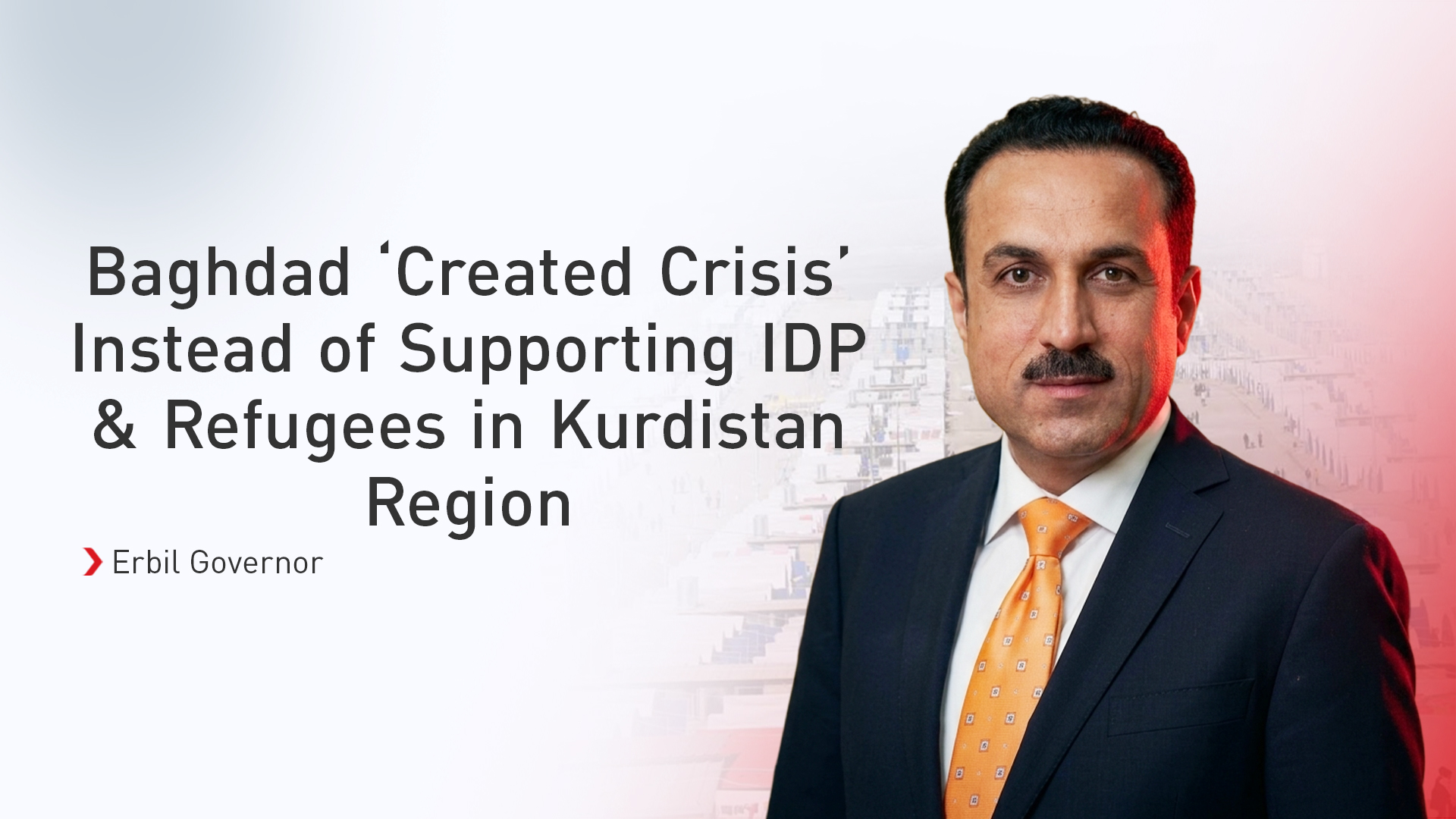
ERBIL (Kurdistan24) - From the stage of the ‘Peace and Social Freedom’ conference in Diyarbakir, Northern Kurdistan (southeastern Türkiye), Erbil Governor Omed Xoshnaw painted a stark portrait of a humanitarian burden the Kurdistan Region continues to shoulder years after the height of Iraq and Syria’s displacement crises.
Speaking at the gathering, Xoshnaw said the Kurdistan Region had welcomed displaced people and refugees from Western Kurdistan (Northern Syria) and other Iraqi cities “without discrimination,” even as Baghdad failed to fulfill agreements related to the crisis and international support remained insufficient.
The Erbil governor recalled the first waves of displacement during the regional security collapse, saying nearly two million displaced people and refugees fled toward the Kurdistan Region during the crisis, with the majority settling in Erbil and Duhok.
Before formal camps were established, he said, displaced families were sheltered in mosques, schools, and unfinished housing projects across the Region.
Despite changes in Syria and the territorial defeat of ISIS, Xoshnaw stated that 355,000 displaced people and refugees still remain in camps across Erbil governorate.
He added that Erbil currently hosts camps specifically dedicated to Kurds from eastern Kurdistan (Western Iran), Western Kurdistan, and northern Kurdistan.
Xoshnaw stressed that the humanitarian burden has persisted long after the emergency phase of the crisis, while the underlying security conditions that forced many families to flee their homes remain unresolved.
“At the time people in the Kurdistan Region themselves were displaced, the Iraqi government cut the Kurdistan Region’s budget,” he said, arguing that the move further complicated the Kurdistan Regional Government’s ability to respond to the crisis.
The governor said agreements had previously been reached with the federal government regarding displaced people and refugees, but none of those agreements were implemented.
“Iraq was not only uncooperative, it also created crises,” Xoshnaw said, criticizing Baghdad’s handling of the humanitarian situation and accusing the federal government of failing to provide the necessary financial support.
He also said United Nations agencies and donor countries had not provided the level of assistance required to help the Kurdistan Region manage the scale of displacement.
Xoshnaw further criticized Baghdad’s unilateral decision to close displacement camps, while reiterating the Kurdistan Regional Government’s opposition to any forced return of displaced families.
He said Prime Minister Masrour Barzani has consistently emphasized that the Kurdistan Region does not support the forced return of any displaced person or refugee, adding that authorities would facilitate returns only when families choose to return voluntarily.
Kurdistan Region’s humanitarian role
Xoshnaw’s remarks come against the backdrop of growing international recognition of the Kurdistan Region’s role in managing one of the Middle East’s largest and most protracted displacement crises.
The International Organization for Migration previously recognized the Kurdistan Region as a regional model for migration governance and humanitarian response, praising the Kurdistan Regional Government’s policies and services for displaced people and refugees.
According to figures previously presented by the Joint Crisis Coordination Centre (JCC), the Kurdistan Region continues to host hundreds of thousands of refugees and internally displaced persons despite mounting financial pressures and declining international aid.
Officials have repeatedly stressed that camp closures and large-scale returns cannot proceed without guarantees related to security, compensation, and stability in the areas of origin.
In his concluding remarks, Xoshnaw warned that the security factors that caused displacement in central and southern Iraq have not disappeared and continue to exist.
His comments underscored the reality that, years after the first waves of mass displacement reshaped the Kurdistan Region’s humanitarian landscape, the crisis remains unresolved for hundreds of thousands of families still living far from their homes.