UAE Official Sees '50-50' Chance for U.S.-Iran Hormuz Deal
A senior UAE official estimated there is only a "50-50" chance that the U.S. and Iran will reach an agreement to reopen the Strait of Hormuz. UAE Presidential adviser Anwar Gargash urges Iran not to 'overestimate their cards' in negotiations.
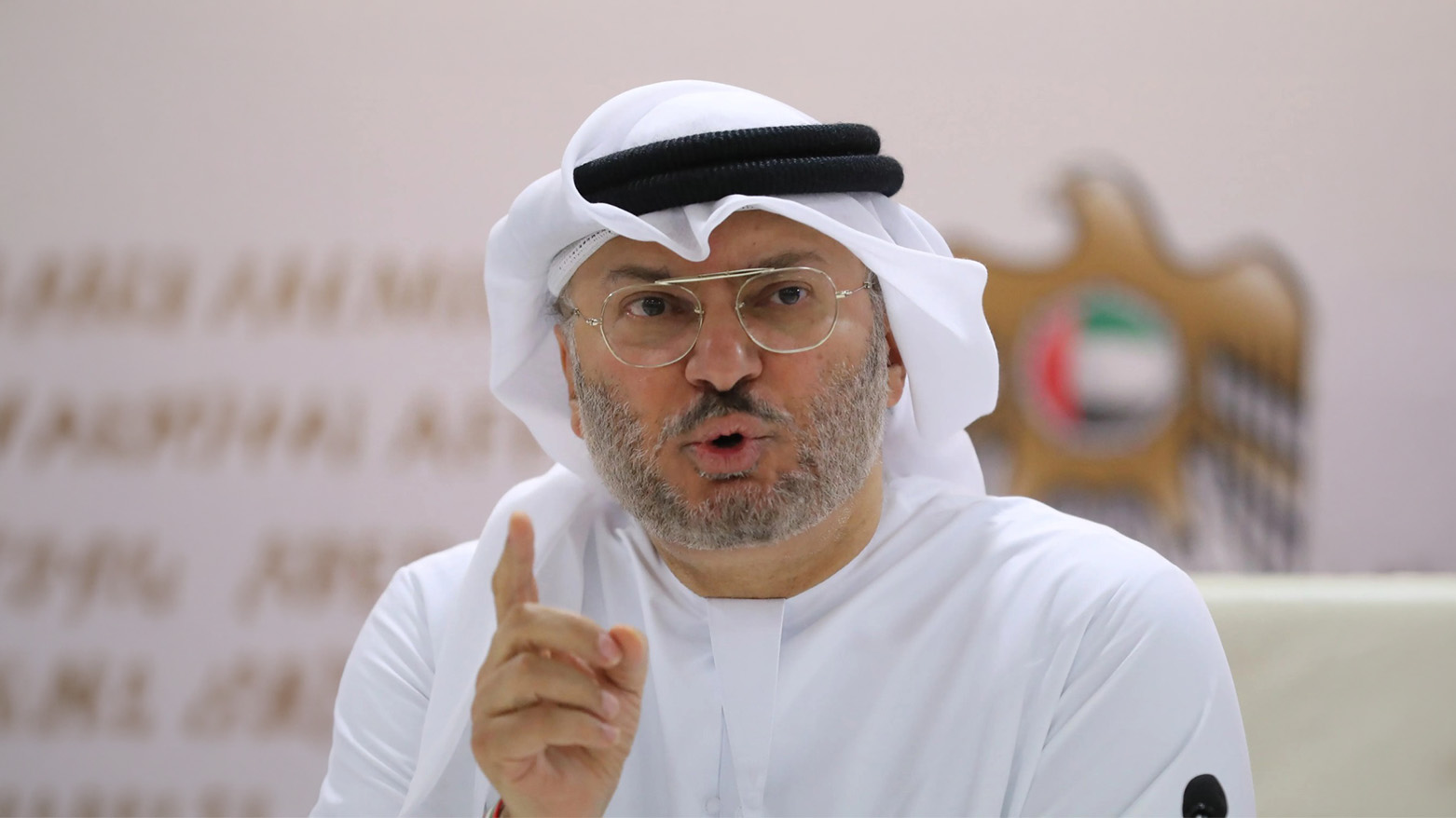
ERBIL (Kurdistan24) - The United States and Iran currently possess only a "50-50" chance of securing a diplomatic agreement that would reopen the strategic Strait of Hormuz to international shipping, according to a senior official from the United Arab Emirates.
Anwar Gargash, a presidential adviser for the UAE, warned on Friday that Tehran risks 'overestimating their cards' as negotiation leverage during the ongoing and fragile ceasefire between the two nations, highlighting the deep uncertainty surrounding the current diplomatic track.
The comments by the Emirati official reflect acute anxiety among Gulf Arab states regarding the economic and security implications of the standoff.
The Strait of Hormuz, a critical maritime chokepoint through which approximately one-fifth of the world's oil production typically transits, has been effectively blockaded by Iran since the outbreak of hostilities.
As negotiations stall, the geopolitical focus has shifted toward the internal dynamics shaping Iran's diplomatic posture.
The current diplomatic impasse lies in the growing influence of hard-line military figures within Iran's wartime leadership.
According to AP journalist Jon Gambrell, Brig. Gen. Ahmad Vahidi, the head of Iran's paramilitary Revolutionary Guard, has emerged as a central architect of Tehran's uncompromising negotiating stance.
Analysts note that Vahidi, operating within a tight circle around the reportedly wounded and secluded Supreme Leader Mojtaba Khamenei, is driving a strategy of endurance, betting that domestic and economic pressures will eventually force Washington to capitulate without Iran surrendering its enriched uranium stockpile.
This internal consolidation of hard-line authority generates profound uncertainty for Gulf states and Western governments regarding Tehran's fundamental willingness to reach a comprehensive diplomatic settlement.
Hormuz Remains Central to Talks
Speaking at the GLOBSEC Forum in Prague, Gargash emphasized the necessity of restoring the status quo in the Strait of Hormuz.
"Negotiations just to reach a ceasefire and sow the seeds for further conflict in the future is not what we're seeking," Gargash stated, according to Agence France-Presse (AFP). He insisted that the waterway must revert to its status as an internationally recognized shipping route.
The UAE's concerns are rooted in the direct military impact of the recent conflict.
According to Gargash, the oil-rich nation, which hosts U.S. military facilities, was targeted by approximately 3,300 drones and missiles during the 40 days of active warfare that began on February 28.
While Gargash noted that only around four percent of those projectiles penetrated the UAE's defenses, the scale of the bombardment underscores the vulnerability of Gulf infrastructure.
The strategic priorities of regional actors have also shifted in response to the conflict.
While U.S. negotiators maintain a primary focus on dismantling Iran's nuclear program, Gargash indicated that the immediate military threat has altered the UAE's threat matrix.
"The Iranian nuclear program was our second or third worry, now it's our first worry," Gargash said, adding that the conflict demonstrated Iran's willingness to utilize any weapon in its arsenal.
Hard-Liners Shape Tehran's Position
The pessimistic outlook on negotiations is largely driven by the perceived dominance of figures like Brig. Gen. Ahmad Vahidi within the Iranian system.
According to the AP, Vahidi's elevation to the head of the Revolutionary Guard places him in command of the country's ballistic missile arsenal and the fleet of small vessels currently enforcing the closure of the Strait of Hormuz.
Vahidi's approach is characterized by a commitment to "unending resistance."
Kenneth Katzman, a senior fellow at The Soufan Group, told the AP that Vahidi operates from a mindset that believes the U.S. must be challenged consistently.
This confrontational style is reflected in Iran's broader strategy: maintaining the economic chokehold on the Strait of Hormuz to generate a global energy crisis, while resisting U.S. demands to surrender highly enriched uranium.
The internal political environment in Tehran further complicates diplomacy.
Following unsuccessful talks in Pakistan last month, involving Iranian parliament Speaker Mohammad Bagher Qalibaf and U.S. Vice President JD Vance, Iranian negotiators faced domestic criticism for appearing too accommodating.
The AP reported that since those talks, Vahidi has become the primary point of contact for mediators, signaling a consolidation of hard-line control over the diplomatic agenda.
This consolidation occurs amid a perceived leadership vacuum.
Supreme Leader Mojtaba Khamenei has not been seen publicly since the February airstrikes.
Analysts suggest that military figures like Vahidi are utilizing this crisis governance period to capture state authority and reshape the succession process, making it difficult for the U.S. to identify a singular, decisive interlocutor.
Congressional Pressure Grows in Washington
While Iran's hard-liners solidify their stance, the U.S. administration is facing mounting domestic opposition to its handling of the conflict.
According to AP journalist Stephen Groves, the prolonged closure of the Strait of Hormuz and the subsequent elevation of domestic gasoline prices have severely eroded congressional patience with the war.
Republican leaders in the House of Representatives recently called off a planned vote on a war powers resolution after it became apparent they lacked the numbers to defeat the legislation.
The resolution, sponsored by Democrats, seeks to compel President Donald Trump to withdraw from the conflict.
According to the AP, rank-and-file Republicans are increasingly willing to defy the president, citing the economic devastation of the war and arguing that the legal timeline for unauthorized military action has expired under the War Powers Resolution of 1973.
The White House maintains that the legal requirements no longer apply due to the ongoing ceasefire.
However, the domestic political friction limits the administration's leverage.
Democratic lawmakers have highlighted the economic toll, noting that the nationwide average price of gasoline has risen to $4.53 per gallon.
Sen. Tammy Duckworth (D-Ill.) argued that the conflict has amounted to a strategic blunder, pointing to Iran's willingness to disrupt global shipping through the Strait of Hormuz as evidence that the situation has worsened.
Gulf States Seek Durable Ceasefire
The intersection of Iranian hard-line intractability and U.S. domestic political constraints leaves the regional security environment highly volatile. Gulf Arab states, while wary of Iranian aggression, are acutely aware of the economic costs of a prolonged military standoff.
As Gargash noted, there is a risk that Tehran may "overestimate their cards," a miscalculation that could lead to a collapse of the current truce.
The assessment of a "50-50" chance for a diplomatic breakthrough reflects the deep skepticism among regional partners regarding the viability of a lasting agreement.
As negotiations continue through intermediaries, the international community remains focused on the Strait of Hormuz, recognizing that the resolution of the maritime blockade will serve as the primary indicator of whether the broader geopolitical confrontation can be stabilized.