Iran Demands Compensation from Gulf States for Facilitating U.S.-Israeli Attacks
Iran's UN envoy Amir-Saeid Iravani urged the UN Security Council to hold Gulf states, including Saudi Arabia, UAE, Qatar, Bahrain, Kuwait, and Jordan, liable for alleged support to U.S.-Israeli strikes on Iran, demanding compensation for damages.
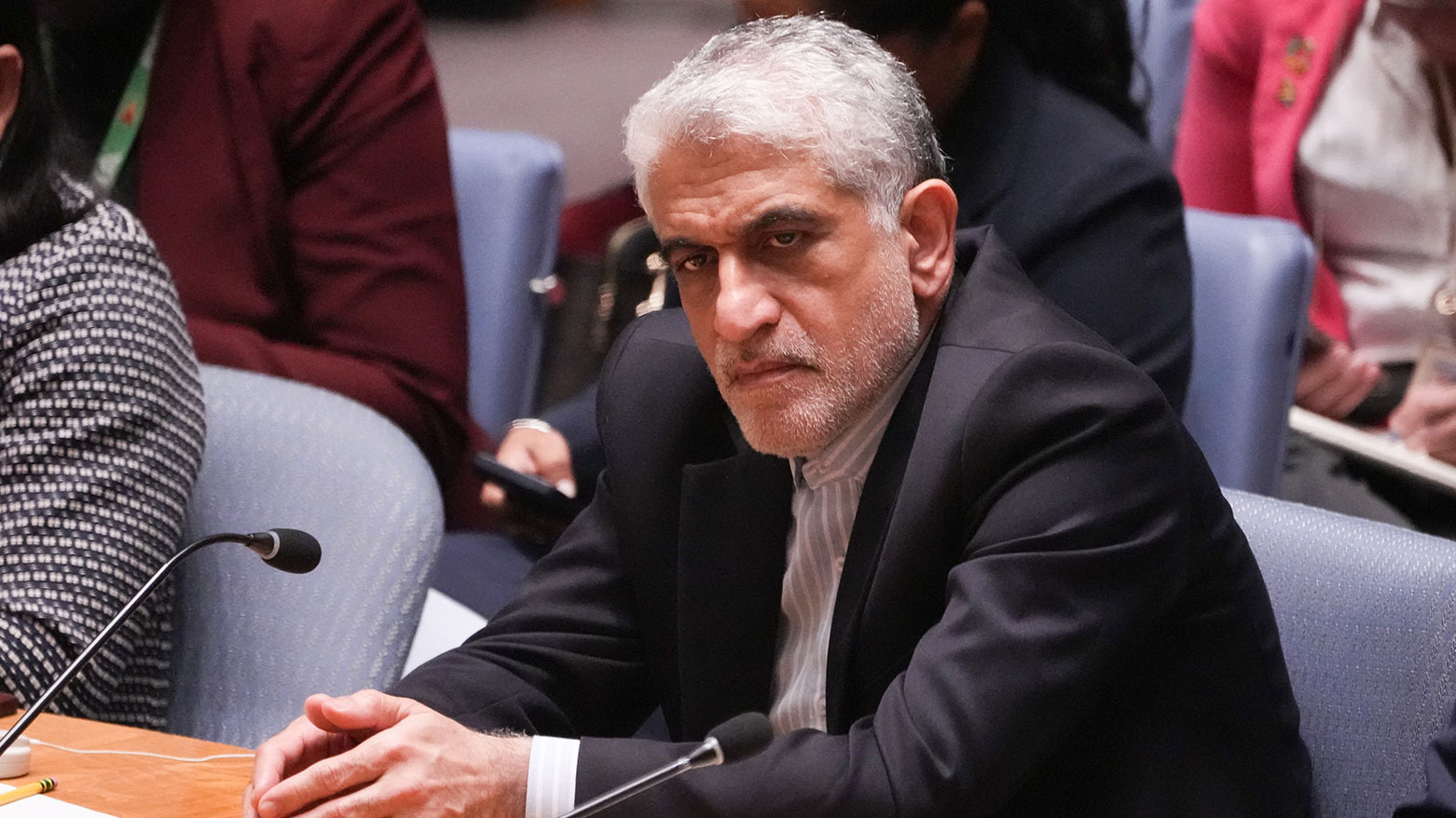
ERBIL (Kurdistan24) - Iran's Permanent Representative to the United Nations, Amir-Saeid Iravani, has formally demanded that several Gulf monarchies and regional actors compensate Tehran for material and moral damages, alleging their direct facilitation of U.S. and Israeli military operations against Iranian territory.
In a letter addressed to the UN Secretary-General and the President of the Security Council, Iravani outlined what he described as the "international responsibility" of nations including Saudi Arabia, the United Arab Emirates (UAE), Qatar, Bahrain, Kuwait, and Jordan.
The correspondence, released on Saturday, asserts that these states provided essential support that enabled "unjust" acts of aggression against the Islamic Republic.
Accusations of Regional Participation
The Iranian envoy's letter serves as a formal rebuttal to previous submissions by Kuwait and Bahrain. Iravani accused these neighboring states of attempting to "distort legal realities" and evade accountability for their roles in the ongoing conflict.
According to the letter, the facilitation of these attacks constitutes a major violation of international law and the UN Charter.
Iravani specifically cited public statements from U.S. officials and the commander of U.S. Central Command (CENTCOM), which suggested that regional partners stood "shoulder to shoulder" with Washington during the war.
The Iranian mission claims this cooperation included the provision of military bases, logistical assistance, intelligence sharing, and the granting of airspace permissions for offensive sorties.
Invoking Article 2 of the UN Charter and Article 16 of the 2001 Responsibility of States for Internationally Wrongful Acts, Iravani argued that providing such assistance to an aggressor is prohibited.
He further rejected the "self-defense" justifications previously offered by Kuwait, Bahrain, and Jordan, labeling their actions as clear examples of aggression under General Assembly Resolution 3314.
Baghdad Urges Restraint Amid Stalled Talks
The escalation of legal and diplomatic pressure from Tehran coincides with intensive efforts by regional intermediaries to prevent a total collapse of diplomacy.
On Saturday, Iraqi Foreign Minister Fuad Hussein held a telephone conversation with his Iranian counterpart, Abbas Araghchi, to discuss the fragile state of negotiations between Washington and Tehran.
According to a statement from the Iraqi Foreign Ministry, Hussein expressed Baghdad's hope for an immediate end to hostilities and a return to regional stability.
While Araghchi reportedly noted that "some progress" had been achieved in recent rounds of dialogue, the diplomatic atmosphere remains strained.
Iraq has positioned itself as a critical interlocutor, with Hussein calling for an end to military actions in the Strait of Hormuz and the lifting of blockades on Iranian ports to restore "normal life" to the region.
The Iraqi-Iranian dialogue highlighted the involvement of other regional mediators, including Pakistan and Qatar.
Pakistan's Chief of Army Staff, Field Marshal Asim Munir, arrived in Tehran on Friday in an effort to bridge the widening gap between the warring parties.
Uncertainty in Washington
Despite these mediation efforts, reporting suggests that the window for a negotiated settlement may be closing.
According to Axios journalist Barak Ravid, President Donald Trump has grown increasingly frustrated with the "agonizing" pace of the talks.
U.S. officials told Axios that negotiations have reached a "very exhausting" stage with no substantial breakthrough, despite the daily exchange of draft proposals.
This frustration led President Trump to abruptly cancel his weekend plans and return to the White House on Friday evening.
In a social media post, Trump cited "circumstances pertaining to Government" as the reason for his urgent return, which included skipping his eldest son's wedding.
Sources close to the administration told Axios that while no final decision has been made, the President is weighing a "decisive" military operation to conclude the war if diplomacy continues to stall.
Conflict Background
The current war began on Feb. 28, 2026, following U.S. and Israeli airstrikes against senior Iranian leadership.
Tehran responded by targeting U.S. regional bases and closing the strategic Strait of Hormuz.
By Apr. 8, the U.S. had implemented a blockade of Iranian ports, a move that has paralyzed regional shipping and remains a central point of contention in the ongoing negotiations.
As search for a diplomatic off-ramp continues, Iravani's letter emphasizes that Tehran views the legal accountability of its neighbors as a non-negotiable element of the post-war landscape.
The Iranian representative concluded that the Security Council's failure to hold these states accountable does not absolve the Gulf countries of their duty to compensate Iran for the damages incurred.