PM Barzani Says Baghdad Talks Focused on Salaries, Future Erbil-Baghdad Relations
“We requested that the salaries of the people of the Kurdistan Region, like those of all other Iraqi citizens, not be tied to any political disputes,” he stated.
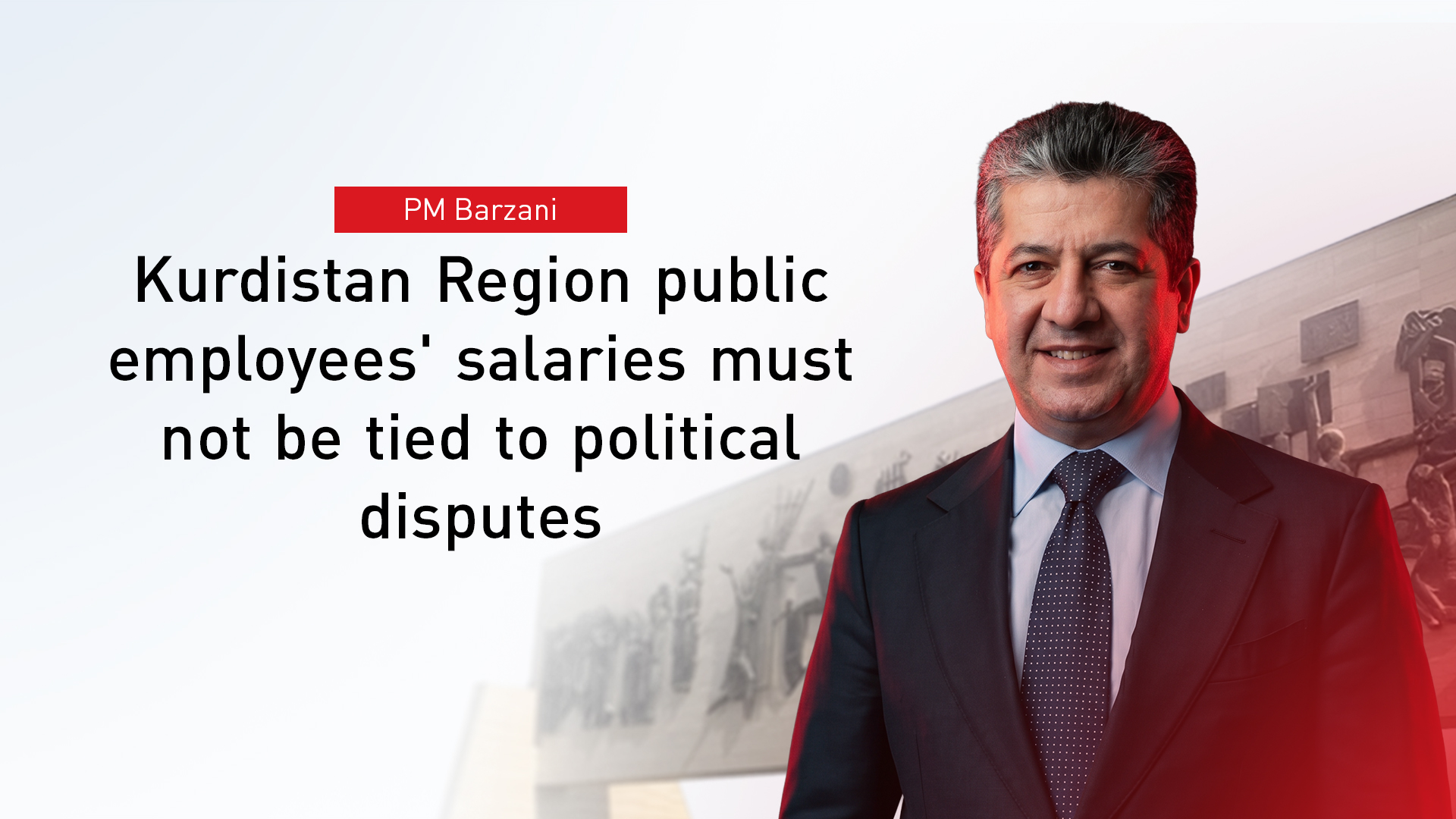
ERBIL (Kurdistan24) – Kurdistan Region Prime Minister Masrour Barzani said on Sunday that his meetings in Baghdad were focused on resolving disputes between Erbil and Baghdad, ensuring the continuation of salary payments to Kurdistan Region employees, and strengthening future relations between both sides.
As part of a series of diplomatic meetings in the Iraqi capital, Prime Minister Barzani met with Ammar al-Hakim, head of the Hikma National Movement. The meeting was also attended by Iraqi Finance Minister Falih al-Sari.
According to discussions during the meeting, both sides reviewed Iraq’s overall political and economic situation, as well as the major challenges currently facing the country. They also emphasized the importance of supporting the new federal government in addressing those challenges and resolving issues with the Kurdistan Regional Government within the framework of the Iraqi constitution.
The talks stressed the need to protect the constitutional rights of the people of Kurdistan and all Iraqi communities while maintaining political stability and cooperation between Erbil and Baghdad.
Following the meeting, Barzani held a press conference in which he described the discussions with Iraqi political leaders as positive and productive.
“We concluded our visit, thank God, after holding very good meetings and discussions with most officials,” Barzani said. “We discussed all the important issues and reaffirmed our commitment to defending all the rights of the people of Kurdistan.”
A major focus of the talks was the issue of salary payments to employees in the Kurdistan Region. Barzani said the Kurdistan Region had requested that salaries not be linked to political disputes, stressing that employees in the Region should be treated equally to all Iraqi citizens.
“We requested that the salaries of the people of the Kurdistan Region, like those of all other Iraqi citizens, not be tied to any political disputes,” he stated.
Barzani added that officials in Baghdad had responded positively to the request and expressed hope that salary transfers to Kurdistan Region employees would continue without interruption.
He also noted that the issue was discussed directly during his meeting with al-Hakim and the Iraqi Finance Minister.
“During our meeting with Ammar al-Hakim, attended by the Iraqi Finance Minister, we discussed sending the salaries of the Kurdistan Region’s employees, and we hope the salary transfers will continue,” he said.
The Prime Minister further revealed that political leaders in Baghdad are expected to continue discussions after the Eid al-Fitr holiday to complete the formation of the new Iraqi cabinet. He said another meeting is planned to address previous mistakes related to nominations for the remaining ministerial positions in the government of Prime Minister Ali al-Zaidi.
In addition to salaries and cabinet formation, Barzani said the discussions also covered strategic economic issues, including the need to allow Iraqi provinces and the Kurdistan Region to strengthen both oil and non-oil revenues at the local level.
He explained that increasing provincial revenues would help provinces play a greater role in supporting the federal government and improving the country’s economy.
“At present, we are prepared, as in previous months, to transfer half of the revenues currently generated in the Region through the KRG to the federal government, so that they will continue sending salaries,” Barzani said.
The Kurdistan Region Prime Minister also stressed the importance of learning from previous disputes between Erbil and Baghdad and focusing instead on building a more stable future relationship between the two sides.
“We wanted lessons to be learned from past mistakes, and for all sides to review the problems and their causes,” Barzani said. “However, our focus now is on defining the future relationship between the KRG and the federal government. Our attention is on future relations, not the past.”
The Kurdistan Region and Iraq move forward together when there is genuine dialogue and understanding. We are stronger together when we share common principles and goals.
— Masrour Barzani (@masrourbarzani) May 24, 2026