A Season of Anticipation: Duhok Eyes Tourism Surge as Kurdistan Prepares for Eid
From the bustling bazaars of Erbil to the mountain resorts of Duhok, the Kurdistan Region enters a five-day holiday defined by festive traditions and a high-stakes regional backdrop.
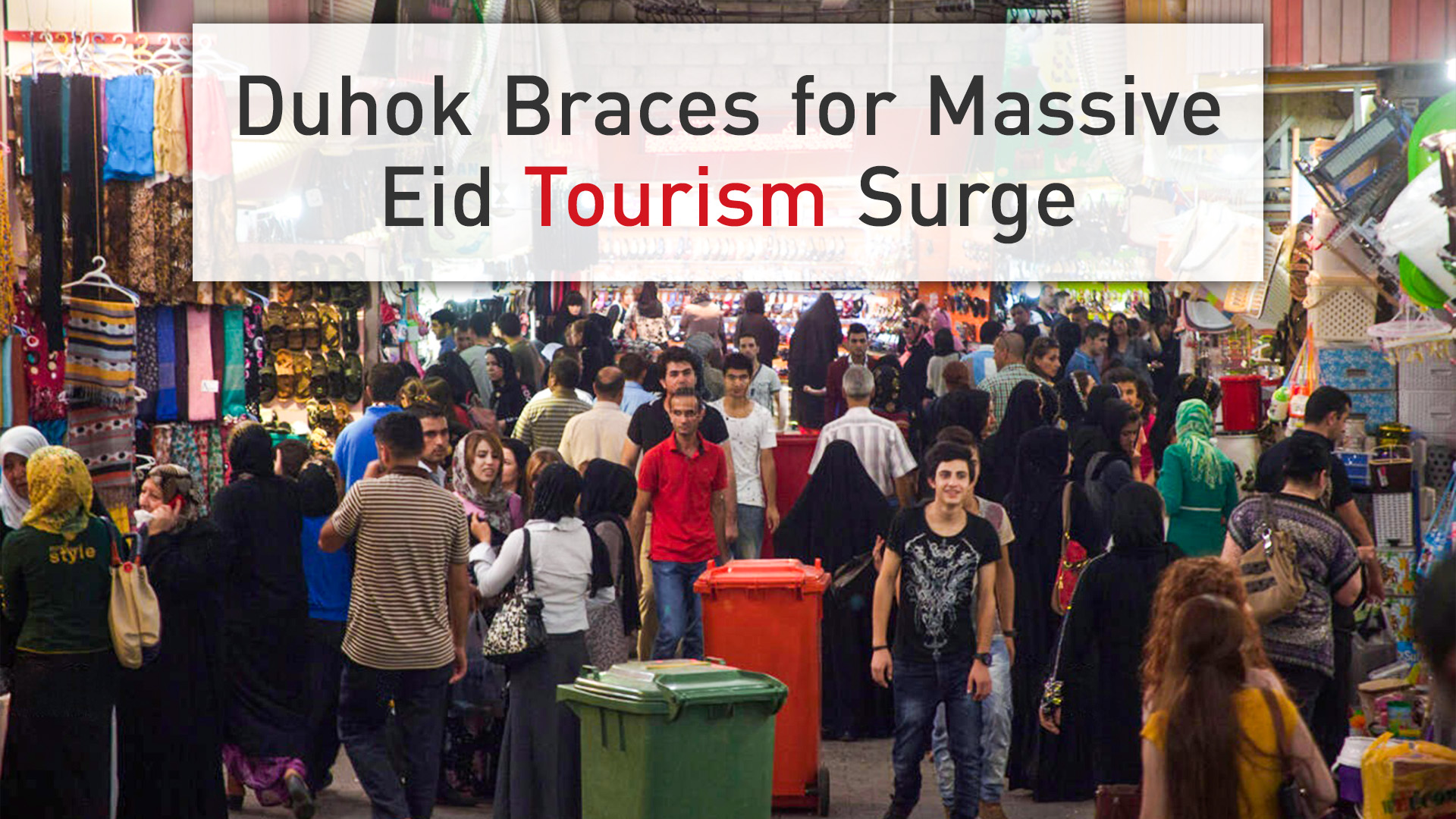
ERBIL (Kurdistan24) - The narrow alleys of the Kurdistan Region's bazaars have dissolved into a cacophony of festive commerce and tradition. In Erbil's Langa Market, the air is thick with the scent of roasted nuts and cardamom, punctuated by the sharp haggling of shoppers and the high-pitched laughter of children tugging at their parents, sleeves.
Brightly colored Kurdish dresses and crisp suits hang in rows, catching the afternoon light as families engage in the age-old ritual of choosing "Eid clothes."
For the citizens of the Kurdistan Region, the approach of Eid al-Adha is more than a religious milestone; it is a sensory experience that temporarily eclipses the complexities of daily life.
As the Kurdistan Regional Government (KRG) initiates a five-day public holiday beginning Tuesday, May 26, a wave of festive energy is sweeping from the capital to the northern heights of Duhok, where the tourism sector is bracing for one of its most significant seasonal surges in recent history.
Markets Glow with the Colors of Celebration
Amid the crowds, the joy of the holiday remains most visible in the eyes of the youngest generation.
Diden Mohammed, a local student, embodies the excitement that has remained unchanged for decades. Having already selected a new outfit for the occasion, Diden's plans are a mixture of family devotion and childhood play.
"I have prepared myself for Eid," Diden told Kurdistan24, describing the purchase of a new t-shirt and trousers. "I will visit my aunt and relatives' houses to play. I won't even use a mobile or iPad. On the night before Eid, I will fold my clothes next to my bed."
However, for those who have watched the markets evolve over the decades, the modern atmosphere carries a hint of nostalgia for a "golden generation."
Nyaz Hamadamin, who has spent 15 years selling children's clothing in Erbil, notes a profound shift in the way the youth engage with the holiday.
"The difference between now and the past is vast," Nyaz observed, reflecting on a time when children valued their Eid attire above all else.
He noted that today's digital age often distracts from the traditional anticipation.
"In my time, we used to sleep with our Eid clothes next to us. Now, children sometimes don't even look at the clothes because of the mobile in their hands," he tells Kurdistan24 reporter Shayma Bayiz.
Yet, despite the digital encroachment, the physical pulse of the market suggests that the fundamental pull of Eid remains a powerful social force.
Duhok's Tourism Sector Eyes an Economic Boost
While families in Erbil settle into their holiday routines, Duhok Province has entered a state of "high alert" to manage an expected massive wave of tourists.
Provincial authorities and private business owners anticipate that thousands of travelers from central and southern Iraq will capitalize on the five-day break to seek the cooler climates and hospitality of the north.
In Duhok, the tourism industry is an economic lifeline, supporting over 13,000 jobs across 750 various centers. With a nightly capacity to accommodate more than 17,000 guests, the province's hotels have reported nearly full occupancy through pre-bookings.
Sherwan Hashim, a local hotel owner, noted that the signs for this season are far more promising than the previous Eid, which was overshadowed by regional conflict.
"We have made all preparations to receive tourists," Hashim told Kurdistan24's reporter Rebwar Hilmi.
"The signs indicate that the arrival rate will be higher this year. Whether they come in organized tourist groups or private cars, many have secured their places with us in advance," he added.
This revival is expected to provide a necessary financial stimulus for local business owners and create seasonal employment opportunities for the province's youth.
A Robust Plan for Visitors
To ensure the influx of visitors proceeds smoothly, the Duhok Tourism Directorate has implemented a rigorous oversight plan.
The strategy involves coordination between government agencies and the private sector to maintain service quality and prevent price gouging during the peak period.
Shemal Jafar, the spokesperson for Duhok Tourism, explained that under the supervision of the Director General, committees will remain active throughout the holiday.
"An organized plan has been set to serve tourists, including the distribution of tourist guides and organizing celebrations," Jafar stated.
He added that there is close coordination with security agencies and the hotel and restaurant association to ensure that the province's 17,000-guest capacity is managed effectively and safely.
Faith, Travel, and Regional Tensions
The local festivities in Kurdistan unfold against a wider, more complex regional backdrop.
As families in Duhok and Erbil gather for breakfast, over 1.5 million Muslims are currently performing the Hajj pilgrimage in Mecca.
According to reporting by Agence France-Presse (AFP) and The Associated Press (AP), this year's pilgrimage is being held under punishing heat, frequently exceeding 40°C, and a delicate geopolitical atmosphere.
AFP's Haitham El-Tabei reported that while pilgrims in Mecca focus on the spiritual rites at Mina and Mount Arafat, the trajectory of the Middle East conflict remains a topic of quiet concern.
AP reporters Baraa Anwer and Mariam Fam noted that the Hajj is taking place amid a tenuous U.S.-Iran ceasefire, even as U.S. President Donald Trump recently signaled progress toward a "Memorandum of Understanding pertaining to PEACE" that could eventually reopen the strategic Strait of Hormuz.
In Saudi Arabia, the sight of advanced air-defense batteries on the outskirts of Mecca serves as a silent reminder of the regional volatility.
Yet, much like the citizens in the Kurdistan Region, the pilgrims emphasize endurance and hope. Moroccan pilgrim Jreish Mohammed told AFP that the realization of his 50-year dream to visit the holy sites outweighed any regional anxiety.
As the Kurdistan Region's institutions close their doors for the five-day holiday, with service departments remaining on standby, the atmosphere remains one of resilience.
Between the nostalgic memories of shopkeepers and the eager anticipation of children like Diden, the celebration of Eid al-Adha stands as a bridge between the spiritual and the communal.
In Duhok, where the mountain air prepares to welcome thousands of guests, the holiday is not just a tradition, but a vital sign of a region determined to find joy and economic vitality, even as the broader horizon of regional stability remains in a delicate balance.