'Nuclear Dust': Trump Calls for Supervised Destruction of Iran's Enriched Uranium
U.S. President stated that Iran's enriched uranium must either be handed over to the United States for destruction or eliminated inside Iran (or another agreed location) under international supervision.
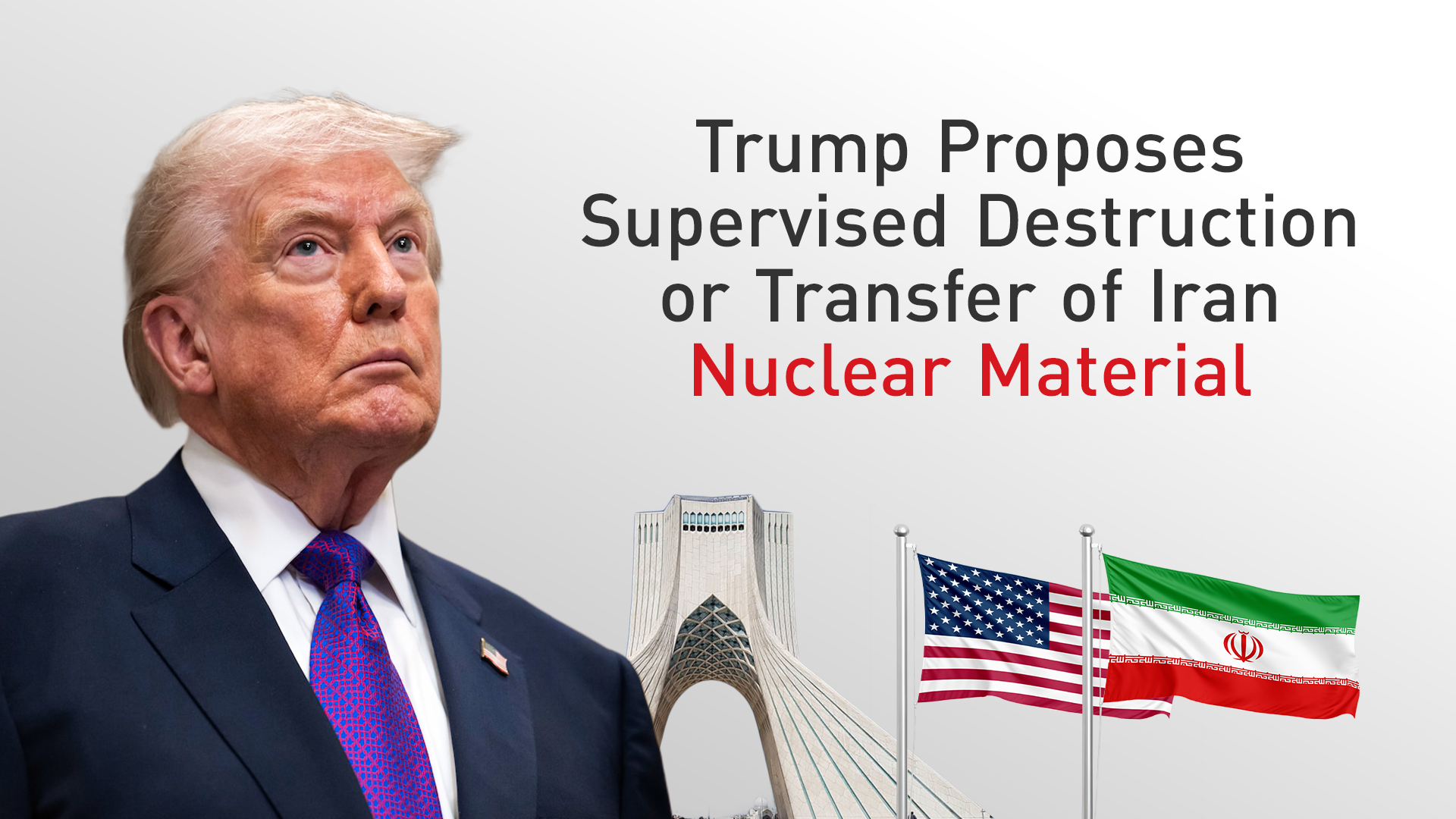
ERBIL (Kurdistan24) - U.S. President Donald Trump issued a high-stakes nuclear ultimatum to Tehran on Tuesday, demanding the immediate surrender or witnessed destruction of Iran's enriched uranium stockpile.
The declaration, made via his Truth Social account, introduces a new layer of friction to the regional crisis as U.S. Central Command (CENTCOM) conducted a series of "self-defense" strikes against Iranian military targets in southern Iran, underscoring a period of extreme volatility between diplomacy and military escalation.
Trump's Nuclear Ultimatum
In a Tuesday morning post, President Trump characterized Iran's nuclear inventory as "Nuclear Dust," asserting that the material must either be "immediately turned over to the United States to be brought home and destroyed" or demolished within Iran at an approved location.
Trump specified that such a process must be overseen by the "Atomic Energy Commission, or its equivalent," acting as a witness to the event.
The demand represents a maximalist shift in Washington's negotiating posture.
While the President noted a preference for "coordination with the Islamic Republic of Iran" during the destruction process, the requirement for a total relinquishment of enriched uranium, material Tehran has historically guarded as a matter of national sovereignty, sets a formidable threshold for the success of ongoing peace talks.
CENTCOM Strikes and Military Pressure
The nuclear demand follows significant kinetic activity.
On Monday, U.S. forces launched targeted strikes in southern Iran to protect personnel from what CENTCOM described as "threats posed by Iranian forces."
CENTCOM spokesperson Tim Hawkins stated the operations focused on missile launch sites and vessels attempting to emplace naval mines in strategic waters.
Iran's state-run broadcaster IRIB confirmed that several loud explosions were heard in the vicinity of the port city of Bandar Abbas around midnight local time on Monday.
While local authorities described the situation as "normal" following the blasts, the exchange of fire has placed immense strain on the ceasefire framework that has been tenuously observed since April 8.
Diplomacy in the Shadow of Force
These military developments coincide with the arrival of high-level Iranian negotiators in Doha, Qatar, for a fresh round of talks.
Despite the escalation, U.S. Secretary of State Marco Rubio, speaking during a visit to India, maintained that a deal remains within reach.
Rubio described an intense "back and forth" regarding specific language in the initial documents, suggesting a resolution could be reached within days.
However, Tehran remains cautious. Iranian Foreign Ministry spokesperson Esmaeil Baqaei acknowledged that while conclusions have been reached on a "large portion of the issues," a finalized agreement is not yet "imminent."
The duality of U.S. policy, coupling Doha-based diplomacy with direct strikes in southern Iran, has left regional observers uncertain as to whether the military pressure is intended to extract concessions or if it signals the impending collapse of the diplomatic track.
Hormuz, Markets, and Strategic Pressure
The strategic focal point remains the Strait of Hormuz, where an Iranian blockade has previously throttled global fuel supplies.
Monday's military action triggered immediate volatility in energy markets; West Texas Intermediate (WTI) fell by more than five percent on Tuesday morning, while Brent crude trended upward, reflecting investor anxiety over the durability of any maritime opening.
Rubio struck a defiant tone regarding the waterway, labeling the blockade "unlawful" and "unacceptable."
He asserted that the strait would be reopened "one way or the other," underlining the economic urgency driving the administration's timeline.
Expanding Regional Conditions
President Trump has also signaled that any final peace deal must be tethered to a broader regional realignment. He suggested that it should be "mandatory" for countries including Saudi Arabia, Qatar, Turkey, and Pakistan to join the Abraham Accords as part of the settlement.
This demand has met with skepticism; Anna Jacobs of the Arab Gulf States Institute in Washington told AFP that Gulf nations are unlikely to accept such maximalist conditions, particularly as normalization with Israel remains tied to the unresolved issue of Palestinian statehood.
As tensions on the Lebanese front also worsen, with Israeli Prime Minister Benjamin Netanyahu ordering an "acceleration" of operations against Hezbollah, the region remains in a state of high alert.
The coming days in Doha will determine if Trump's nuclear ultimatum serves as the final hurdle for a peace deal or the catalyst for a return to full-scale war.