Gulan Revolution Proved Kurdish Will Stronger Than External Plots, Says KDP VP Barzani
On the "Golden Jubilee" of the Gulan Revolution, KDP Vice President Masrour Barzani said the 1976 uprising proved Kurdish resilience and national will after the 1975 setback, reviving the liberation movement and paving the way for the 1991 Raperin and the Kurdistan Region's constitutional status.
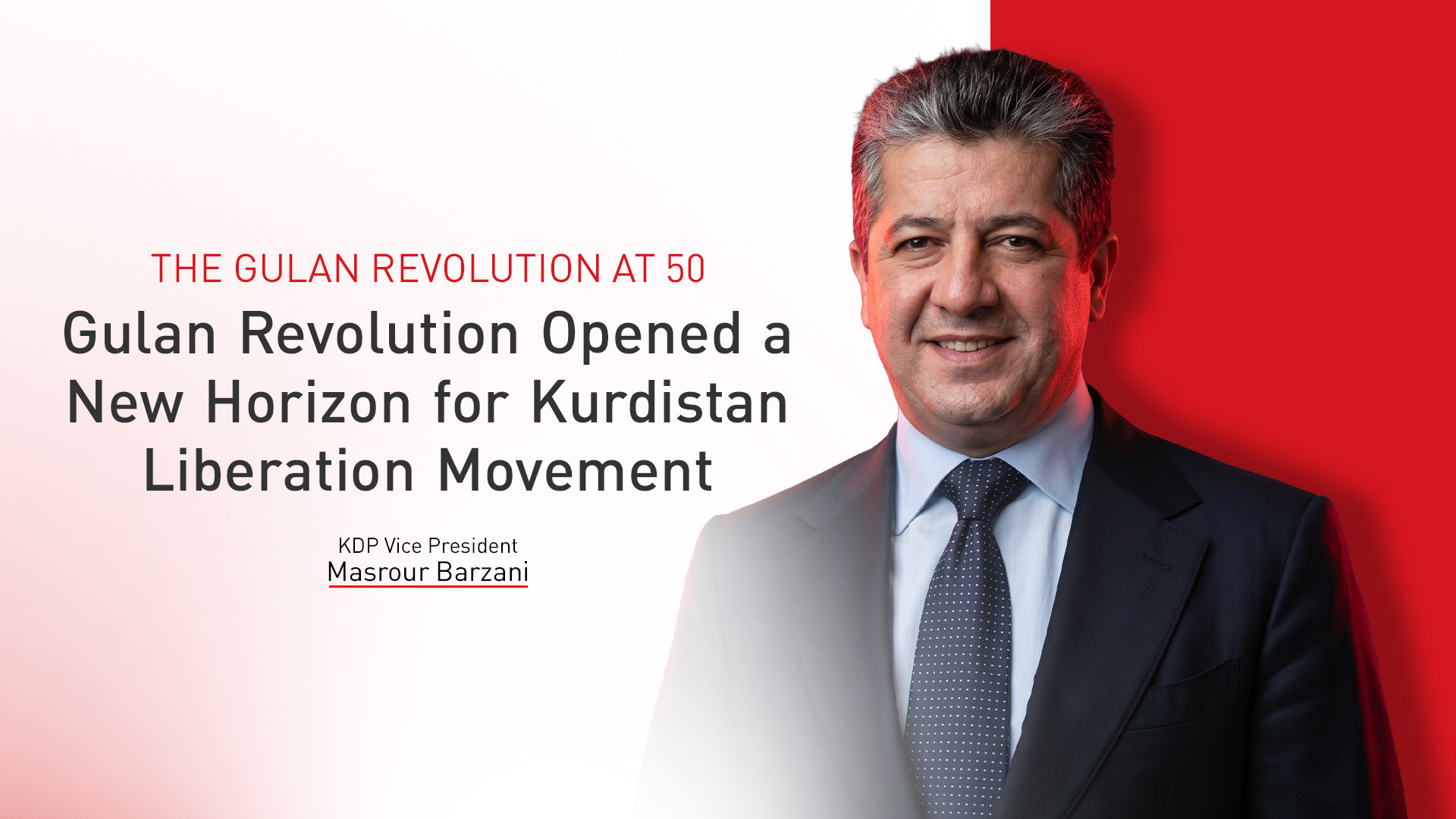
ERBIL (Kurdistan24) - Marking the 50th anniversary of the Gulan Revolution, the Vice President of the Kurdistan Democratic Party (KDP), Masrour Barzani, stated on Tuesday that the 1976 uprising demonstrated the Kurdish people's resilience and proved that national will remains stronger than any external plot.
The commemoration highlights a pivotal moment in Kurdish political memory, signifying the revival of the liberation movement following the historical setbacks of the mid-1970s.
In an official message released on the golden jubilee of the revolution, KDP Vice President Masrour Barzani emphasized that the movement not only defeated the efforts of those seeking to undermine Kurdistan but also established a new political horizon.
He noted that the Gulan Revolution served as the foundation for future national milestones, including the 1991 Raperin (Uprising) and the eventual establishment of the Kurdistan Region's constitutional status.
A Revolution That Reversed Setback
The Gulan Revolution was launched on May 26, 1976, during a period of profound geopolitical crisis for the Kurdish leadership.
It emerged just over a year after the 1975 Algiers Agreement between Iran and the Iraqi Baathist regime, which led to the collapse of the Great September (Eylul) Revolution and the temporary halt of Kurdish armed resistance.
The 1976 uprising represented an urgent reorganization of Kurdish political and military structures.
The transition from the Eylul era to the Gulan era is viewed as the catalyst that prevented the permanent suppression of Kurdish national aspirations.
By resuming the struggle under extremely difficult conditions, the movement signaled to both regional powers and the international community that the Kurdish cause remained active.
Will Against Adversity
KDP Vice President's commemorative statement focused on the psychological and organizational victory of the movement.
He asserted that the revolution "crushed the plots" of enemies and "ill-wishers," proving that the Kurdish desire for self-determination could not be extinguished by diplomatic or military maneuvering.
"Despite the difficult conditions of that time, [the revolution] resumed the struggle, fight, and defense of the legitimate rights of the people of Kurdistan with high morale," the Vice President noted.
He attributed the success of the era to the "resilience, unity, and shared stance" of the people, framing the 1976 generation's efforts as a prerequisite for the autonomy gains enjoyed by the Region today.
Fifty Years On: Political Legacy
Five decades after its inception, the Gulan Revolution remains a cornerstone of modern Kurdish political identity.
By celebrating the "Golden Jubilee," the KDP leadership seeks to reinforce the importance of national unity and organizational strength in the face of ongoing regional instability.
Read More: President Barzani Marks 50 Years Since Gulan Revolution
The legacy of 1976 continues to shape the Kurdistan Region's current political landscape, serving as a reminder of the effectiveness of a unified stance.
As the Region navigates modern challenges, the historical narrative of the Gulan Revolution is presented as a blueprint for endurance, emphasizing that institutional gains are best protected through the same resilience and clarity of purpose that defined the 1976 uprising.