Nearly 800,000 KRG Employees Receive Salaries Through 'MyAccount'
Nearly 800,000 KRG public employees will receive May salaries through the "MyAccount" digital banking system ahead of Eid al-Adha. The rollout marks a major step in Kurdistan Region financial modernization despite an 80 billion dinar federal funding shortfall.
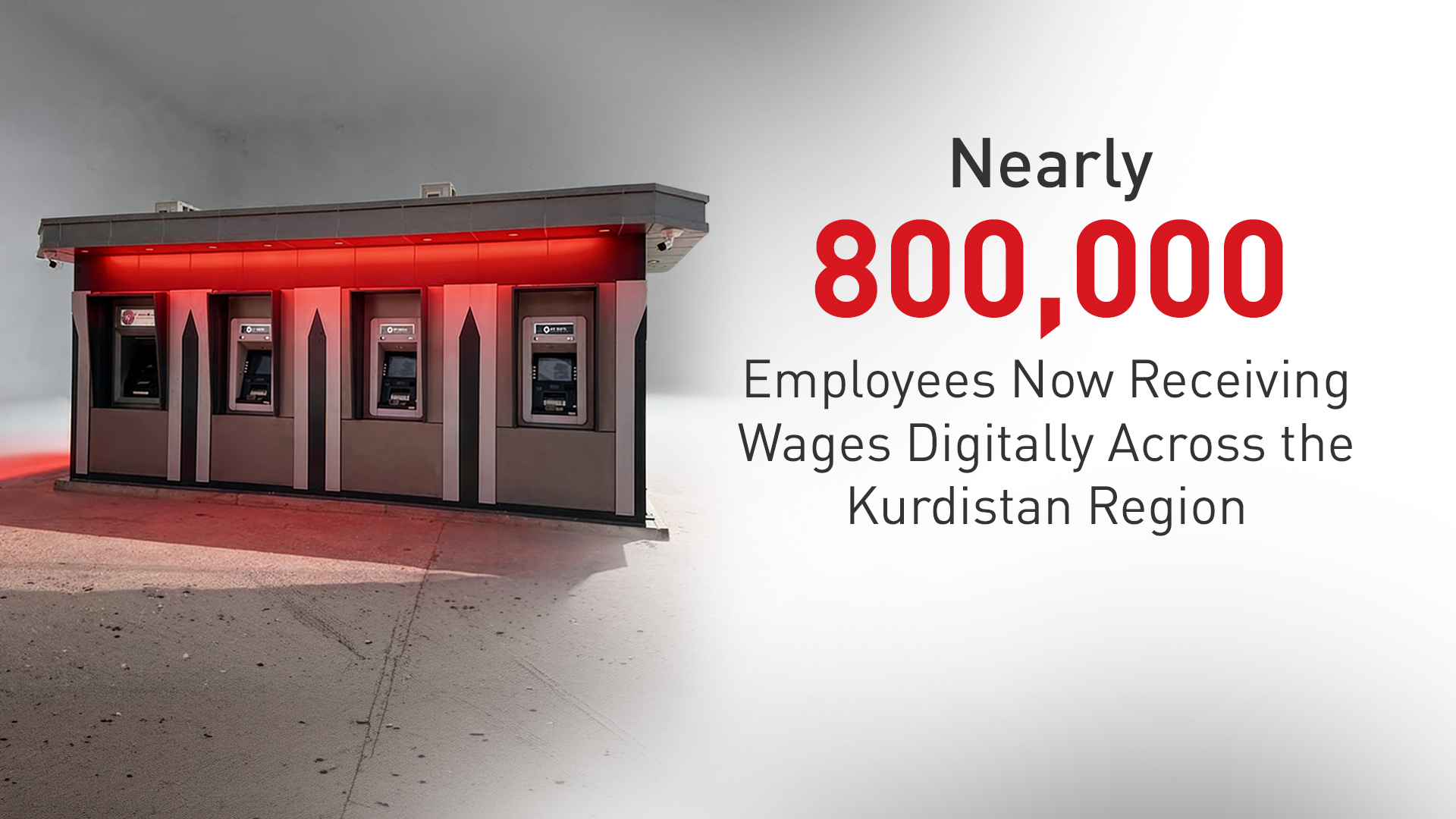
ERBIL (Kurdistan24) - The Kurdistan Regional Government (KRG) achieved a significant milestone in its ambitious financial modernization agenda on Tuesday, announcing that nearly 800,000 public-sector salary earners will receive their May entitlements through the "MyAccount" (Hejmari Min) digital banking system.
This massive rollout, occurring on the eve of the Eid al-Adha holiday, represents a critical shift in the Region's economic infrastructure, transitioning away from a historical reliance on cash-based transactions toward a structured, electronic financial framework.
Launched in 2023 under the direction of Prime Minister Masrour Barzani and the Ninth Cabinet, the "MyAccount" program aims to strengthen financial inclusion and provide a more transparent and efficient method for managing public funds.
The timing of this month's distribution is particularly poignant, as the KRG mobilizes its administrative and banking sectors to ensure that civil servants across the Kurdistan Region receive their pay despite a significant funding shortfall from the federal government in Baghdad.
Digital Salary Rollout Expands
According to statistical data from the KRG Ministry of Finance and Economy, the digital salary deployment has achieved significant penetration across the region's provinces, with 795,750 public-sector beneficiaries integrated into the system for May.
A provincial breakdown shows Erbil contains the highest density of electronic payroll recipients, accounting for 373,300 beneficiaries.
In Sulaimani Province, 227,600 government personnel are receiving monthly pay through digitized accounts, while the expansion has securely processed payrolls for 181,900 public workers throughout Duhok Province.
The expansion also extends into Halabja Province, where 12,950 public-sector earners are registered on the automated platform.
Ministry records indicate these figures reflect a highly integrated operational baseline, highlighting how rapidly the digital banking network has scaled to encompass the administrative workforce.
| Province | Beneficiaries |
| Erbil | 373,300 |
| Sulaimani | 227,600 |
| Duhok | 181,900 |
| Halabja | 12,950 |
| Grand Total | 795,750 |
Eid Distribution Begins
The formal distribution of the May payroll commenced on Tuesday, and will conclude on Thursday, according to an administrative directive issued by the Ministry of Finance and Economy.
To guarantee that civil servants obtain their entitlements prior to the holiday, the ministry implemented specialized protocols to bypass standard operational limits.
Regional authorities ordered all public banks, treasuries, and directorates to maintain functional operations and continue processing payments throughout the Eid vacation period, despite the official suspension of standard working hours across Iraq and the Kurdistan Region.
According to the schedule, payroll recipients assigned to receive traditional cash on the initial day of distribution were advised to visit banking facilities after 5:00 PM to accommodate the logistical time required to transport currency to regional administrations, cities, and districts.
Conversely, individuals utilizing the modernized electronic system were granted access to their balances via automated teller networks starting at 3:00 PM on Tuesday.
For employees unable to complete transactions during the condensed three-day window, the Ministry of Finance and Economy confirmed that payment facilities will remain operational at the beginning of next week when official working hours resume.
Throughout the holiday, local banks will remain open from 10:00 AM onward to handle ongoing disbursements in accordance with the pre-published schedule.
Federal Transfer Shortfall
The current distribution cycle unfolds against a backdrop of prolonged fiscal friction between Erbil and Baghdad.
Documented statements from the KRG Ministry of Finance and Economy revealed that Erbil systematically fulfilled its regulatory prerequisites by transmitting the definitive May payroll registries and the April trial balance ledger to the Iraqi Federal Ministry of Finance last week.
To eliminate any bureaucratic pretexts for delays and secure funding before the holiday, the KRG deposited 50 billion Iraqi dinars into the federal government's account at the Erbil branch of the Central Bank of Iraq on the morning of Monday.
This transaction, executed via an official ministerial document, represented half of the region's estimated non-oil revenues for May.
Regional financial officials noted that demanding half a month's revenue while six calendar days remained in the month was unprecedented in global accounting systems, yet the KRG complied to facilitate rapid salary delivery.
Despite these cooperative steps, serious discrepancies emerged.
The KRG Ministry of Finance and Economy calculated that the total funding required to satisfy May salaries for all regional public sector workers amounted to exactly 970,741,514,914 Iraqi dinars.
However, at 3:00 PM on Monday, at the close of official Central Bank hours, the federal authorities transmitted only 890,502,000,000 Iraqi dinars to the KRG account.
This resulted in a critical shortfall of over 80 billion Iraqi dinars less than the verified obligations.
To shield public servants from the immediate consequences of this deficit and prevent holiday disruptions, the KRG Ministry of Finance and Economy took the executive decision to bridge the gap temporarily by securing an independent loan, ensuring that every citizen receives their full entitlements on schedule.
A Push Toward Financial Modernization
The "MyAccount" (Hejmari Min) program serves as a cornerstone of the broader economic reform program initiated by the Ninth Cabinet to restructure the regional financial ecosystem.
Since its launch in 2023 by Prime Minister Masrour Barzani, the initiative has actively sought to dismantle the region's historic reliance on cash-dominant systems by establishing a regulated, transparent commercial banking environment.
To date, the project has recorded substantial milestones, with approximately 900,000 public-sector salary earners formally registered within the central database.
Out of this total pool of registrants, more than 800,000 institutional workers have already received active bank cards issued by participating commercial institutions.
By integrating hundreds of thousands of civil servants into the formal banking sector, the KRG aims to expand access to modern financial instruments, reduce transactional risks, and stimulate private-sector credit markets, creating a resilient economic foundation for the region.
Banking Infrastructure Grows
To support this digital transition, the KRG, in coordination with participating private commercial banks, has aggressively scaled physical banking infrastructure across all territories.
Private banks embedded within the "MyAccount" program have collectively installed more than 600 Automated Teller Machines (ATMs) throughout the Kurdistan Region, enabling citizens to withdraw cash 24 hours a day.
Under the master plan, the KRG intends to increase the number of ATMs to over 1,000 by the conclusion of the initiative.
Financial authorities emphasize that this infrastructure expansion is being conducted in strict compliance with prevailing regulations established by the Central Bank of Iraq.
This synchronized expansion ensures that electronic financial services become normalized across urban and rural zones alike, safeguarding the administrative autonomy and systemic stability of the region's evolving financial sector.