Iran Accuses US of Violating Ceasefire as New Strikes Raise Fears of Wider Regional Conflict
Israeli attacks in Lebanon kill dozens while Tehran says negotiations for a possible peace framework continue amid rising tensions in the Gulf
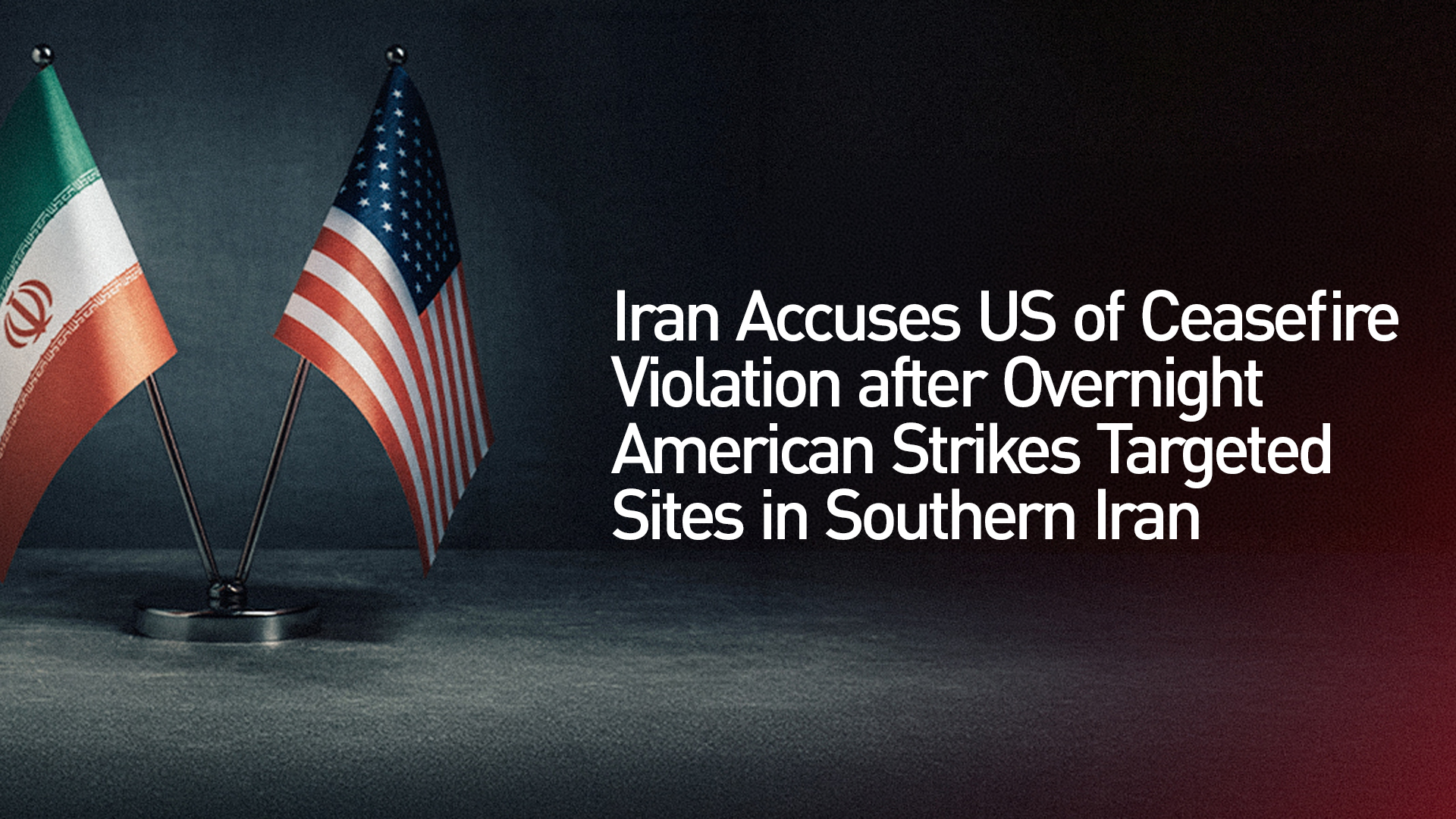
ERBIL (Kurdistan24) — Iran on late Tuesday accused the United States of breaching an already fragile ceasefire after overnight American strikes targeted sites in southern Iran, escalating fears of a broader regional conflict as violence also intensified in Lebanon.
The renewed confrontation came as oil prices surged and diplomatic efforts continued behind the scenes to salvage a potential peace agreement between Washington and Tehran.
The US Central Command (CENTCOM) confirmed that American forces carried out overnight attacks against Iranian missile launch sites and mine-laying boats in southern Iran, describing the operations as “self-defense strikes.”
“US forces conducted self-defense strikes in southern Iran today to protect our troops from threats posed by Iranian forces,” CENTCOM spokesman Captain Tim Hawkins said, adding that the targets included missile sites and vessels attempting to deploy naval mines.
Iranian authorities condemned the attacks as a “gross violation” of the ceasefire that began on April 8.
“The US terrorist army, continuing its illegal and unjustified actions since the ceasefire. In the past 48 hours, it committed a gross violation of the ceasefire in the Hormozgan region,” Iran’s foreign ministry said in a statement.
Tehran warned it would retaliate against any further attacks.
“Iran will not leave any evil unanswered and will not hesitate to defend the Iranian nation,” the statement added.
Iranian state media reported explosions overnight in the strategic southern port city of Bandar Abbas, near the Strait of Hormuz, one of the world’s most critical oil shipping lanes.
The Islamic Revolutionary Guard Corps (IRGC) also claimed it had shot down a US drone that entered Iranian airspace and fired at an American F-35 fighter jet.
The escalation rattled global energy markets, with Brent crude oil prices rising more than three percent following news of the strikes and fears over the security of the Strait of Hormuz.
Iran’s Supreme Leader Ayatollah Mojtaba Khamenei used a statement marking the beginning of Eid al-Adha to accuse Washington of losing influence across the Middle East and warned regional countries against hosting US military bases.
“The United States, in addition to no longer having any safe haven in the region for aggression and the establishment of military bases, is moving further and further away from its former position with each passing day,” Khamenei said.
Despite the renewed military exchanges, US Secretary of State Marco Rubio said diplomacy remained possible and insisted that the Strait of Hormuz would reopen “one way or the other.”
China also expressed concern over the deteriorating situation and urged all parties to respect the ceasefire.
“We urge the parties concerned to fulfil their ceasefire commitments, resolve disputes through peaceful means... and promote the early restoration of peace,” Chinese foreign ministry spokeswoman Mao Ning told reporters.
Meanwhile, violence intensified in Lebanon, where Israeli strikes in the country’s south killed at least 31 people on Tuesday, including four children, according to Lebanon’s health ministry.
The attacks came amid continued clashes involving the Iran-backed militant group Hezbollah and Israel despite an April 17 truce that has repeatedly come under strain.
Israeli Prime Minister Benjamin Netanyahu vowed earlier this week to “crush” Hezbollah, while an Israeli military official said ground operations were expanding deeper into Lebanese territory.
Iran has reportedly insisted that any broader peace agreement with Washington must also address the conflict in Lebanon.
Diplomatic efforts nevertheless appeared to continue. Iranian state broadcaster IRIB reported that a senior Iranian delegation returned Tuesday from a two-day visit to Qatar, where talks focused on a possible framework to end the conflict.
Iranian President Masoud Pezeshkian told Qatari Emir Sheikh Tamim bin Hamad Al Thani during a phone conversation that Tehran was “ready to reach a respectful framework to end the war,” according to IRIB.
Iranian media also reported progress toward a proposed 14-point memorandum of understanding that could pave the way for a broader settlement. According to Tasnim news agency, Tehran is seeking the release of approximately $24 billion in frozen Iranian assets as part of the negotiations.
In another significant development, internet connectivity in Iran began showing signs of recovery after nearly three months of nationwide restrictions.
Internet monitor NetBlocks described the disruption as the “longest nationwide internet shutdown in modern history” before reporting a partial restoration of access on Tuesday.
Iran’s vice president later confirmed that the “first step” toward restoring internet access had been implemented.
Residents also reported limited improvements in connectivity.
“Since a few minutes ago, I could open international websites using my home internet provider,” a 22-year-old woman from the western city of Kermanshah told local media, though she said virtual private networks (VPNs) were still needed to access social media platforms.