'Strength and Stability of Kurdistan Region Bolsters Iraq's National Security' Says Iraq's NSA
Iraq's NSA Qasim al-Araji said Kurdistan Region's stability is tied to Iraq's security after meeting Prime Minister Masrour Barzani in Baghdad, stressing unity, shared history, and coordination.
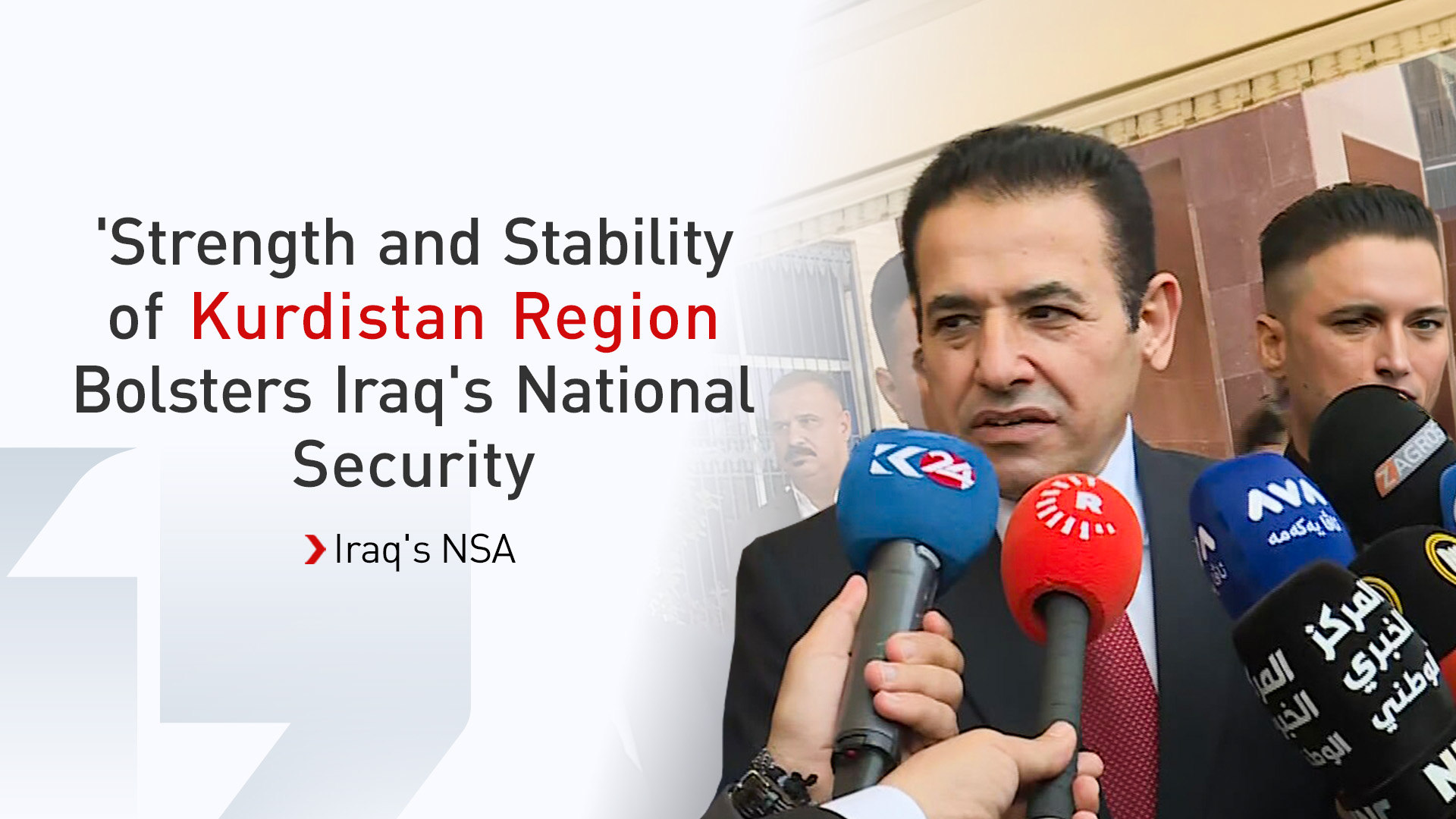
ERBIL (Kurdistan24) - Iraqi National Security Advisor Qasim al-Araji underscored on Sunday that the stability and strength of the Kurdistan Region are fundamentally linked to the overall security and cohesion of Iraq. Speaking following a high-level meeting in Baghdad with Kurdistan Region Prime Minister Masrour Barzani, al-Araji emphasized that a unified political and security posture is essential for national progress.
The meeting, held on the second day of Prime Minister Barzani's official diplomatic mission to the Iraqi capital, focused on the depth of the historical relationship between Kurds and Arabs.
In a press statement attended by a Kurdistan24 reporter Dilan Barzan, al-Araji noted that both components stood together in the struggle against past dictatorship, a shared history that he believes allows for greater mutual understanding today.
He asserted that fostering this relationship serves the interests of all citizens, moving the country toward a unified future where shared sacrifices are no longer required.
Addressing the ongoing security challenges facing the country, al-Araji maintained that the federal government and the Kurdistan Region are operating with a high level of coordination. He stated that the two administrations understand each other's positions clearly, noting that "the strength of the Kurdistan Region is the strength of Iraq."
According to supporting reports, the discussions specifically targeted the elimination of security threats and recent attacks directed at the Kurdistan Region.
Speaking to Kurdistan24 reporter Dilan Barzan, Prime Minister Barzani credited the National Security Advisor for being consistently supportive in efforts to neutralize these risks. Prime Minister Barzani noted that al-Araji has effectively fulfilled his institutional role in addressing threats that impact both the Kurdistan Region and federal Iraq.
A significant outcome of the meeting was the announcement of a high-level security delegation's upcoming visit to Tehran.
Al-Araji revealed that this committee, which includes himself and Kurdistan Regional Government (KRG) Minister of Interior Rebar Ahmed, along with various Kurdish and Arab representatives, will study the security situation in detail.
Regarding the matters concerning drone and missile attacks on the Kurdistan Region, Qasim al-Araji revealed that he discussed this matter with Kurdistan Region Prime Minister Masrour Barzani and the Federal Prime Minister.
He announced, "A high-level security delegation will visit Tehran soon to study this matter clearly." He indicated that the delegation is a high-level security committee consisting of himself and Rebar Ahmed, the KRG Minister of Interior, along with representatives of different Kurdish and Arab components, working within the framework established by former Prime Minister Mohammed Shia al-Sudani's government decisions to resolve security issues.
The delegation aims to resolve security issues through clear, government-led decisions within the framework of Prime Minister Mohammed Shia al-Sudani's administration.
During the dialogue, al-Araji expressed the federal government's pride in the Kurdistan Region's contributions, characterizing Erbil as a foundational partner in the establishment of Iraq's post-2003 political architecture.
A statement released by the KRG indicated that both officials reached a consensus on providing total support to the federal cabinet to ensure that service delivery reaches all Iraqi components without discrimination.
The engagement reflects a strategic shift toward institutionalizing political trust and security dialogue between Erbil and Baghdad. Both officials reiterated that adhering to the Iraqi Constitution and respecting the recognized federal status of the Kurdistan Region are the primary mechanisms for preventing future friction.
The security consultations form part of a broader diplomatic effort by the Prime Minister to settle long-standing administrative and financial files between the two governments.
The shared view emerging from the meeting is that continued cooperation is essential for securing Iraq's long-term stability and ensuring the Kurdistan Region remains a secure and integral part of the country's federal system.