Lebanese PM Accuses Israel of ‘Scorched-Earth Policy’ as Fighting Intensifies in South
Nawaf Salam calls for immediate ceasefire amid fresh Israeli strikes, Hezbollah attacks, and U.S.-mediated negotiations
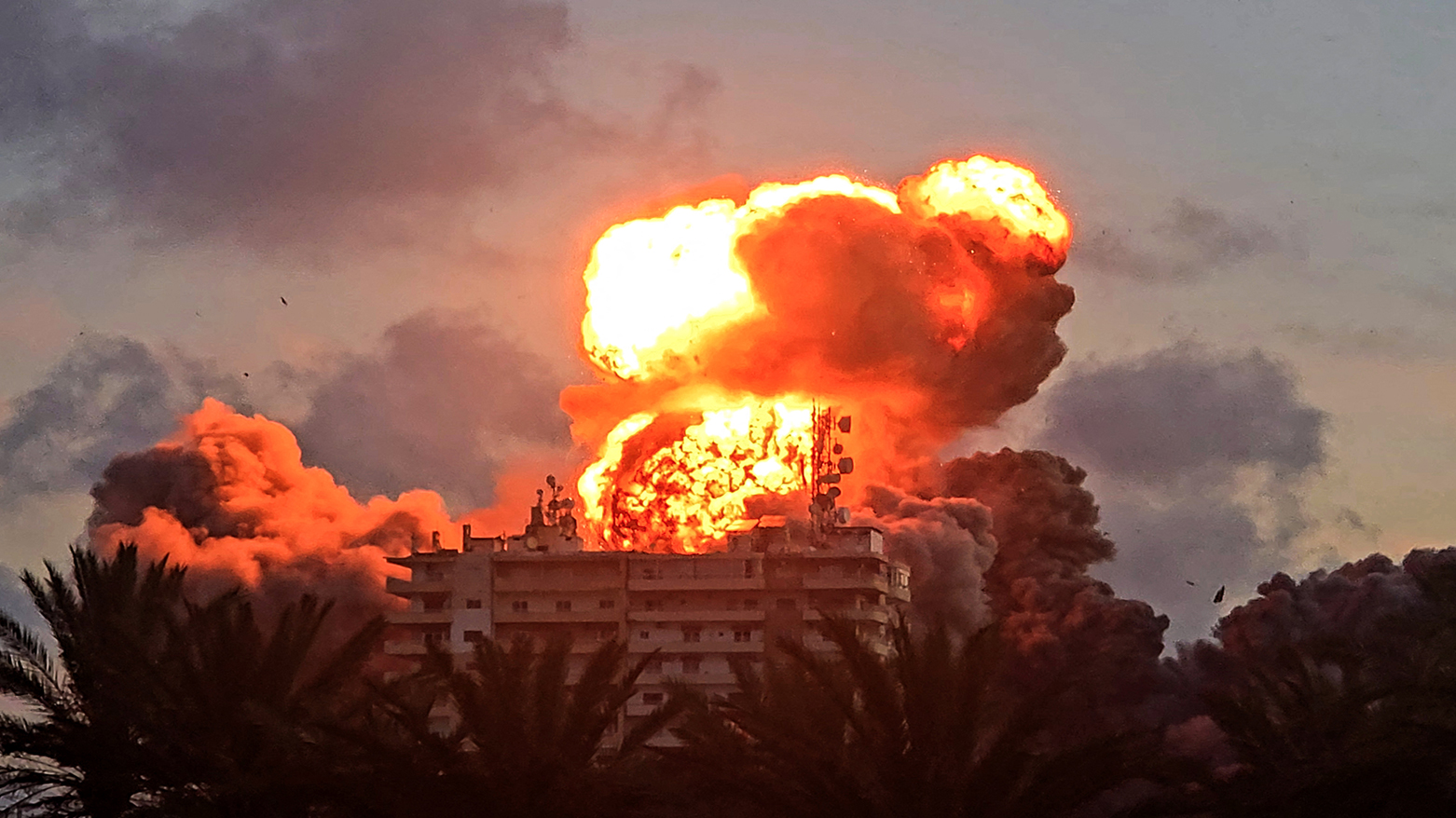
ERBIL (Kurdistan24) — Lebanese Prime Minister Nawaf Salam on Saturday accused Israel of pursuing a “scorched-earth policy” in southern Lebanon, warning of a dangerous escalation in the conflict and urging an immediate ceasefire as Israeli forces pressed deeper into Lebanese territory and launched fresh attacks.
In a televised address, Salam condemned Israel's military campaign, accusing it of systematically destroying communities and displacing civilians across southern Lebanon.
“Israel is pursuing a scorched-earth policy and collective punishment,” Salam said, accusing Israeli forces of “destroying towns and villages, and forcing their inhabitants into exile.”
Such actions, he argued, would bring “neither security nor stability” to Israel.
His remarks came a day after Israeli Prime Minister Benjamin Netanyahu announced that Israeli troops had advanced beyond the Litani River, approximately 30 kilometers north of the Lebanon-Israel border, and were “hitting Hezbollah head on” in an expanded offensive against the Iran-backed group.
Salam described the latest developments as a “dangerous” escalation and called for “a swift and real ceasefire” to prevent further deterioration of the security situation.
Despite the ongoing hostilities, the Lebanese premier defended his government's engagement in diplomatic efforts with Israel. Military delegations from both countries met in Washington on Friday for security discussions under U.S. mediation, with additional political negotiations expected next week.
While acknowledging the uncertainty surrounding the talks, Salam said diplomacy remained the best available option.
“The outcome is not guaranteed,” he said, but added that negotiations represented “the least costly path for our country and our people.”
The latest round of talks follows a ceasefire agreement that officially came into effect on April 17 to halt fighting between Israel and Hezbollah. However, the truce has largely failed to hold, with both sides accusing one another of repeated violations and using those allegations to justify continued military operations.
A U.S. statement issued after Friday’s talks described the discussions as “productive military-to-military discussions” that would help shape next week’s political meeting, though it made no direct reference to the ceasefire arrangement.
Hezbollah has strongly opposed the direct negotiations between Lebanon and Israel.
Meanwhile, violence continued across southern Lebanon on Saturday.
Lebanon’s state-run National News Agency reported multiple Israeli attacks in the south, while the Lebanese Armed Forces said two soldiers were seriously wounded in a strike carried out by what it described as a hostile Israeli drone near the city of Nabatieh.
The Israeli military also issued new evacuation warnings for more than a dozen locations, including villages near Nabatieh and areas in eastern Lebanon, signaling the possibility of further military operations.
For its part, Hezbollah announced that it had launched multiple attacks targeting northern Israel and engaged Israeli troops in clashes around several southern Lebanese towns.
The group said its fighters were confronting Israeli forces near the outskirts of Zawtar al-Sharqiyah, Yohmor al-Shaqif, and Dibbine, claiming Israeli troops had not yet succeeded in taking control of those areas.
The Israeli military said more than 25 projectiles were fired from Lebanon toward northern Israel on Saturday. Air raid sirens sounded in the cities of Karmiel and Safed for the first time since the April ceasefire, according to Israel’s Home Front Command.
Israeli public broadcaster Kan aired footage circulating on social media that appeared to show rockets landing in the Mediterranean Sea near the coastal city of Nahariya, prompting beachgoers to flee the area.
The conflict has exacted a heavy human toll. According to Lebanon’s Health Ministry, Israeli attacks have killed more than 3,371 people since March 2, when Hezbollah entered the broader regional conflict in support of its ally Iran.
Hezbollah has stated that its attacks against Israel are retaliation for the killing of Iran’s supreme leader in U.S.-Israeli strikes at the outset of the regional war on Feb. 28.
The Lebanese front has increasingly become intertwined with broader diplomatic efforts to end the wider conflict in the Middle East. Iranian officials have repeatedly insisted that any comprehensive agreement to halt the war must also address the situation in Lebanon alongside issues involving Iran, Israel, and regional security arrangements.
The current phase of fighting represents the most significant escalation between Israel and Hezbollah in years and forms part of a wider regional conflict involving Iran and its allies. Since hostilities intensified earlier this year, repeated efforts by the United States and other international actors to secure lasting ceasefires have struggled to gain traction.
The conflict has displaced large numbers of civilians on both sides of the border and intensified security concerns in northern Israel, where communities have faced repeated rocket attacks and cross-border threats.
Israeli officials argue that military operations are necessary to degrade Hezbollah's capabilities and prevent future attacks, while concerns persist that continued fighting could further destabilize the region despite ongoing diplomatic efforts.