U.S. Allies Call for Greater Unity as Global Security Threats Grow
Defense leaders at Shangri-La Dialogue stress cooperation and rules-based order despite tensions over burden-sharing and China policy
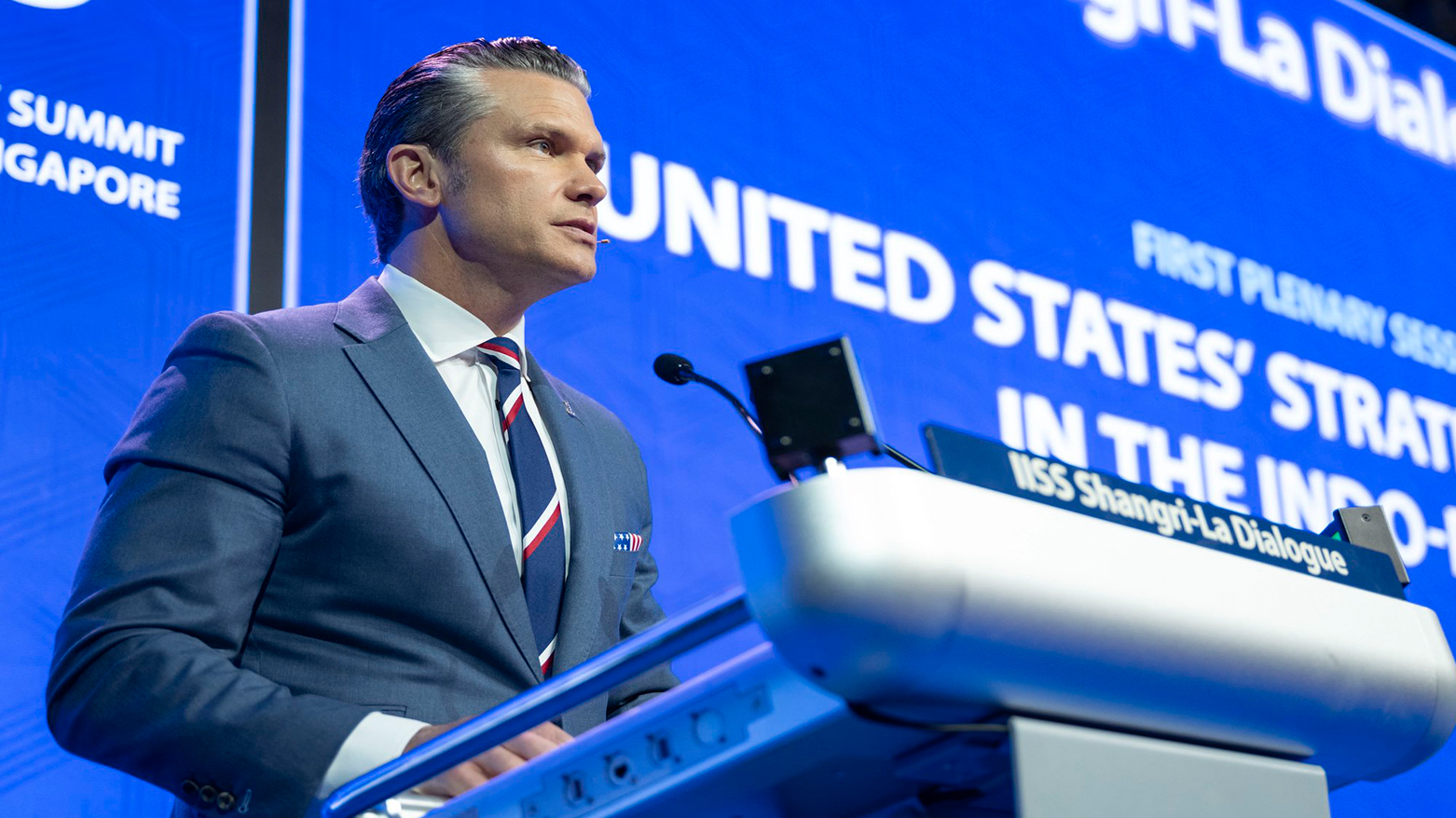
ERBIL (Kurdistan24) — Senior defense officials from key U.S. allies on Saturday emphasized the need for stronger international cooperation in the face of increasingly interconnected security challenges, arguing that unity among democratic nations is essential to maintaining stability amid rising geopolitical tensions.
Speaking at the Shangri-La Dialogue security forum in Singapore, defense leaders from Japan, the Philippines, Australia, and the Netherlands underscored the importance of alliances and a rules-based international order, even as the administration of U.S. President Donald Trump has adopted a more critical stance toward some of Washington's traditional partners.
The calls for solidarity came a day after U.S. War Secretary Pete Hegseth renewed criticism of NATO members and other Western allies, arguing that many have failed to devote sufficient resources to their own defense.
Japanese Defense Minister Shinjiro Koizumi praised Washington’s commitment to the Indo-Pacific region but cautioned that divisions among allies could undermine collective security at a time of mounting global challenges.
“Division weakens deterrence; unity strengthens deterrence,” Koizumi told delegates at the conference, organized by the International Institute for Strategic Studies.
“If gaps emerge among the United States, Europe, and allies and like-minded countries, forces that take it as an opportunity will surely come in,” he said. “We must prevent such a situation. We must keep our cooperation going. Now is the time to make our cooperation even stronger.”
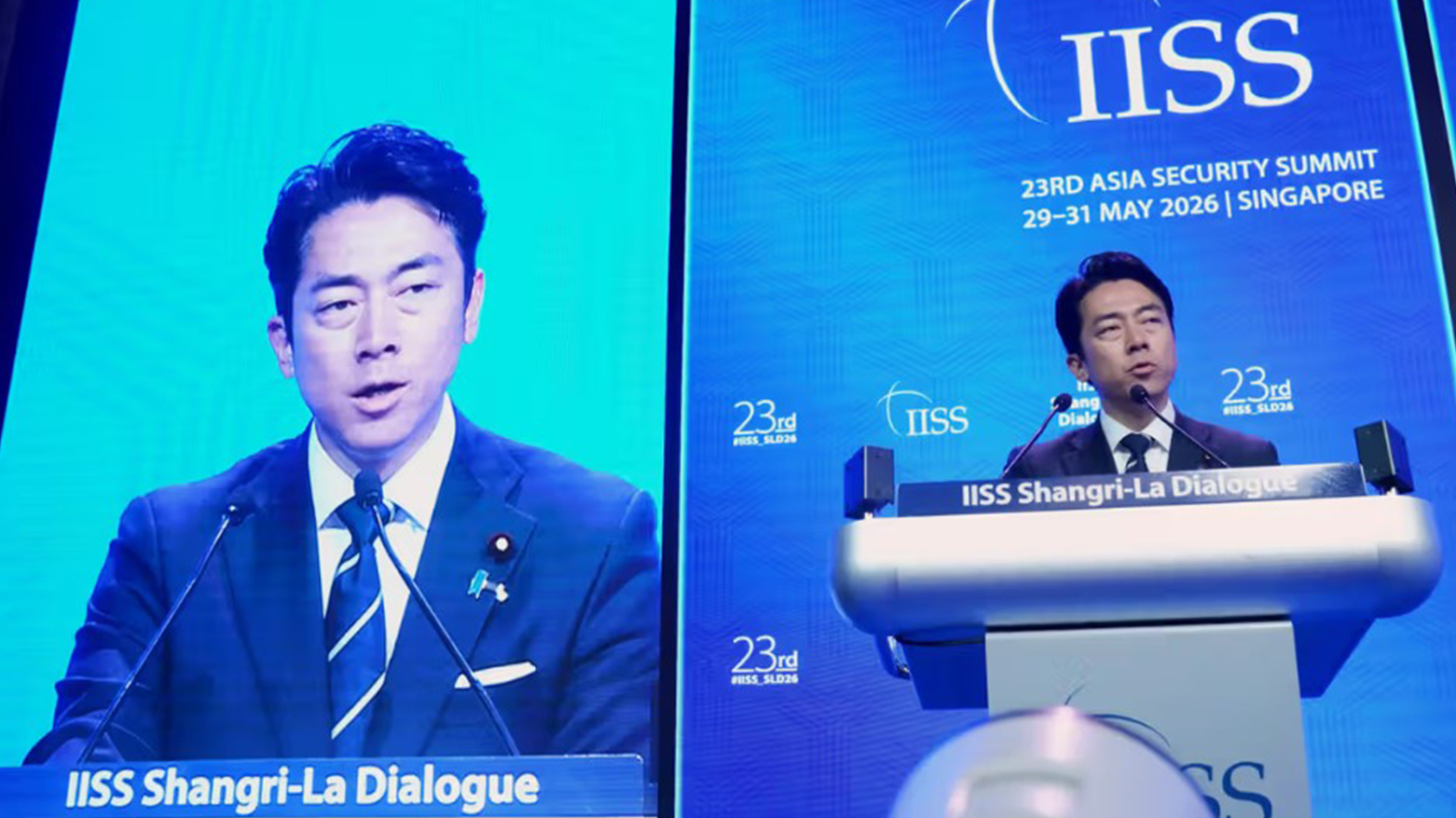
Koizumi’s remarks reflected growing concerns among U.S. partners that geopolitical rivals could exploit any weakening of transatlantic and Indo-Pacific alliances.
The Japanese minister also defended Tokyo’s recent decision to ease restrictions on weapons exports, a significant shift from Japan’s long-standing postwar pacifist policies.
Last month, Prime Minister Sanae Takaichi’s government lifted a ban on lethal weapons exports as part of broader efforts to strengthen Japan’s defense posture amid regional security concerns.
China sharply criticized the move, with Foreign Ministry spokesperson Guo Jiakun accusing Japan of moving toward “a new type of militarism.”
Koizumi dismissed the accusation as hypocritical.
“Think about it, there is a country that has a huge arsenal of nuclear weapons and strategic bombers,” he said. “Japan has neither of such weapons, and yet Japan is labeled as new militarism. Isn’t it strange?”
He also called for greater transparency and dialogue, expressing regret that China had not sent its defense minister to this year’s conference.
The debate over China’s growing military influence remained a central theme throughout the gathering, although U.S. rhetoric appeared notably softer than in previous years.
At last year’s Shangri-La Dialogue, Hegseth warned that Beijing was rapidly expanding its military capabilities and was actively preparing for a potential invasion of Taiwan. This year, however, the war secretary struck a more measured tone following President Trump’s recent visit to Beijing, where he met Chinese President Xi Jinping.
According to Hegseth, the two leaders agreed to work toward “a constructive relationship of strategic stability,” a statement that received a positive reception from China’s delegation.
Despite the shift in Washington’s tone, some regional allies signaled that their concerns regarding China remain unchanged.
Philippine Defense Minister Gilberto Teodoro Jr. said Manila would continue to take a firm stance amid ongoing maritime disputes with Beijing in the South China Sea.
“The situation with the United States is different than that from the Philippines,” Teodoro told reporters. “They can talk to China that way in a position of parity, if not superiority, while the Philippines cannot.”
“If China doesn't change its behavior, my tone won't change,” he added.
The forum also highlighted continuing debate over the role of military power and international norms in maintaining global security.
During his speech on Saturday, Hegseth praised several Asian allies for increasing defense spending while criticizing some European governments for relying too heavily on international institutions and legal frameworks without maintaining sufficient military strength.
“You can have all the rules you want and rules are great,” Hegseth said. “But if you can’t back them up with hard power, the rules are not worth the paper they are written on.”
His comments came as NATO countries continue to increase military expenditures following Russia’s invasion of Ukraine in 2022, after years of failing to meet alliance spending targets.
Australian Defense Minister Richard Marles said he agreed that international norms require credible military backing but stressed that rules and institutions remain indispensable.
“We are all committed to a rules-based system, because that is actually what gives middle powers like Australia or smaller countries agency,” Marles said on the sidelines of the conference.
He argued that collective action remains the most effective response to shared security challenges.
“This is a collective challenge, and it demands a collective response, which is actually what the rules-based order is all about,” he said.
Dutch Defense Minister Dilan Yesilgöz-Zegerius echoed those concerns, arguing that modern conflicts increasingly transcend regional boundaries and demonstrate how interconnected global security has become.
“A war in Europe involves drones from Iran, soldiers and ammunition from North Korea and various types of support from China,” she said. “The lesson is clear: regional tensions are no longer regional. Our security is interconnected.”
She warned that middle powers risk becoming passive observers if they fail to cooperate through international coalitions and partnerships.
“The fact that international rules are being violated does not mean we should abandon them,” Yesilgöz-Zegerius said.
“On the contrary, it means we must defend them more constantly and more courageously. International law may be imperfect, but history teaches us that the alternative is far worse.”
The Shangri-La Dialogue is Asia’s premier security summit, bringing together defense ministers, military leaders, diplomats, and security experts from across the world to discuss major strategic challenges.
This year’s gathering took place against a backdrop of heightened tensions involving China, Russia, Iran, and North Korea, as well as ongoing conflicts in Eastern Europe and the Middle East.
The conference has also highlighted evolving debates within the U.S.-led alliance system as Washington urges allies to assume greater responsibility for their own defense while continuing to coordinate on shared global security challenges.