Iraqi FM Warns of Financial 'Catastrophe' if Iran War Continues
Fuad Hussein says falling oil revenues have forced Baghdad to print additional currency as exports plunge amid regional conflict
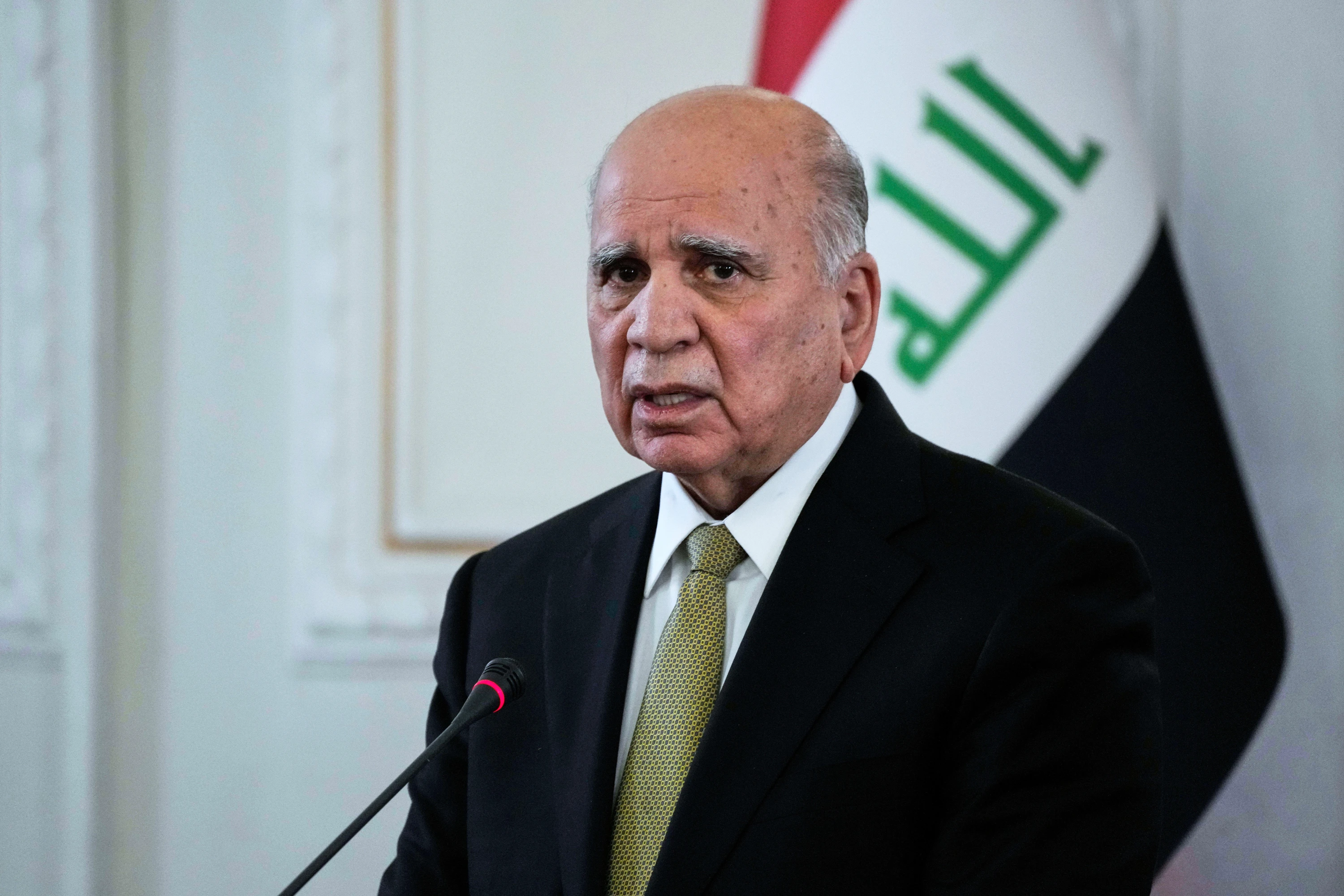
ERBIL (Kurdistan 24) - Iraq's Foreign Minister issued one of the starkest public warnings yet about the economic consequences of the Iran war on Saturday, telling an interviewer that his country faces a financial catastrophe if the conflict extends through the end of the year, as oil export revenues collapse and the government turns to currency printing to cover its obligations.
Speaking in an interview with Al-Sharqiya TV on Saturday, Foreign Minister Fuad Hussein said Baghdad has raised its money-printing ceiling from 100 trillion Iraqi dinars to 125 trillion dinars, a measure he acknowledged carries serious inflationary risks. "We cannot solve our problems through printing; that would lead to inflation," Hussein said, warning that Iraq's financial reserves are being steadily drawn down to cover government commitments as revenues continue to fall.
From 100 Million Barrels to Less Than Ten
The numbers Hussein presented illustrated the severity of the disruption to Iraq's export capacity since the outbreak of the US-Israeli war against Iran on Feb. 28, 2026, and the subsequent breakdown of shipping through the Strait of Hormuz. According to Hussein, Iraq exported nearly 100 million barrels of oil in February, generating approximately six billion dollars in revenue. By March, exports had collapsed to 18.6 million barrels, producing less than two billion dollars. April brought a further decline to below ten million barrels and just over one billion dollars in receipts.
"If the war continues until the end of the year, it would be a catastrophe for us," Hussein said.
The trajectory represents one of the most dramatic contractions in Iraqi oil export revenues in recent memory, driven not by any failure of domestic production but by the near-total disruption of Gulf shipping lanes on which Iraq depends to bring its crude to international markets.
A Structurally Exposed Economy
The scale of the vulnerability Hussein described reflects a deeper structural problem. Iraq's government depends on oil revenues for roughly 90 percent of its spending, including public-sector salaries that support millions of Iraqi families. Prolonged disruption to export flows does not merely reduce government income; it threatens Baghdad's ability to meet basic payroll obligations and sustain public services at a time of already elevated social pressure.
The warning from Hussein carries added weight given that it came from the Foreign Ministry rather than the Finance Ministry, signalling that Iraq's economic exposure to the conflict has become a matter of diplomatic concern as well as fiscal management.
Iraq's new Finance Minister, Falih al-Sari, has separately called for increasing non-oil revenues and strengthening alternative sources of government income to reduce dependence on crude exports, a structural reform that analysts have urged for years but that has consistently been deferred during periods of high oil prices.
Searching for Alternative Routes
With Gulf shipping lanes compromised, Hussein said Iraq is actively exploring alternative export corridors. These include the reopening of northern oil flows through Türkiye's Ceyhan port, a route that was halted in March 2023 following an arbitration ruling between Ankara and Baghdad and has not fully resumed, as well as potential overland export corridors through Syria, a route that would require significant infrastructure investment and political coordination.
Neither alternative offers an immediate solution at the scale needed to replace Gulf export volumes, but both reflect Baghdad's urgent search for leverage over its own economic fate in a conflict it did not initiate and over which it exercises limited influence.
Caught Between Two Fires
Iraq's position throughout the Iran war has been one of the most delicate of any state in the region. Baghdad maintains deep political, economic, and religious ties with Tehran, while simultaneously hosting US military forces and depending on Washington's goodwill for security assistance and diplomatic support. The government of Prime Minister Mohammed Shia al-Sudani has repeatedly called for de-escalation and positioned Iraq as a potential mediator, but has been unable to insulate the country from the economic fallout of the conflict.
Hussein's remarks on June 6 represent the clearest public acknowledgment yet from a senior Iraqi official that the country's fiscal position is deteriorating rapidly, and that the timeline for serious economic damage is not measured in years but in months.
| BRIEF: Iraqi Foreign Minister Fuad Hussein warned on Saturday that Iraq faces financial catastrophe if the Iran war continues, with oil exports falling from nearly 100 million barrels in February to below ten million in April. Baghdad has raised its money-printing ceiling to 125 trillion dinars to cover the shortfall. |