Trump Says Iranian Officials Requested Halt to U.S. Strikes
Washington says it is prepared to intensify military operations against Iran, while Tehran claims to have targeted U.S. military facilities across the region and warns ships away from the Strait of Hormuz
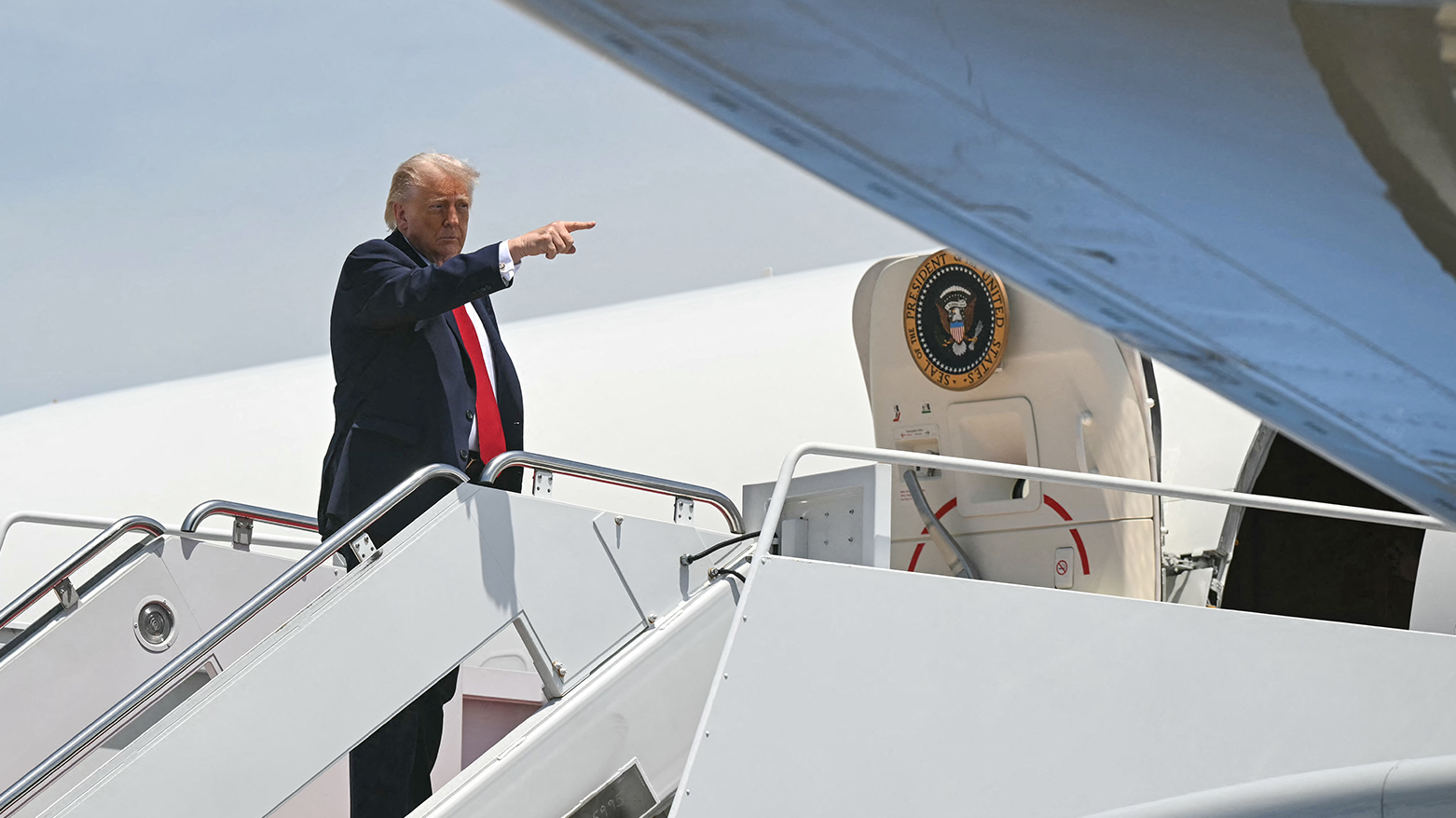
ERBIL (Kurdistan24) - U.S. President Donald Trump said senior Iranian officials directly contacted him seeking an end to American military strikes, as the confrontation between Washington and Tehran expanded across multiple countries in the Middle East.
According to Fox News chief foreign correspondent Trey Yingst, Trump revealed on Wednesday that top Iranian officials had called him and asked the United States to halt its bombing campaign following a new wave of American attacks.
Trump said the U.S. military had carried out what he described as "vicious" and "violent" strikes earlier in the day, involving 49 Tomahawk missiles in addition to fighter aircraft targeting Iranian radar installations and air defense systems.
The reported strikes targeted locations approximately 40 miles outside Tehran as well as positions along Iran's southwestern coast on the Persian Gulf.
The U.S. president warned that Washington is prepared to escalate military action if Iran does not agree to a deal aimed at ending the current crisis.
"We'll bomb the S— out of them tomorrow," Trump told Fox News.
U.S. launches new strikes inside Iran
Meanwhile, U.S. Central Command (CENTCOM) announced the completion of a new wave of airstrikes against military targets inside Iran.
According to CENTCOM, U.S. Marine Corps, Air Force and Navy units participated in the operation, using precision-guided munitions to strike military surveillance systems, communications infrastructure and air defense sites.
The U.S. military said the targeted facilities posed threats to American forces and international commercial shipping.
Iranian media reported multiple explosions in and around Tehran, including in Karaj west of the capital and Varamin southeast of Tehran. Local sources indicated that Payam Airport may have been among the locations affected.
Iran claims attacks on U.S. facilities
In response, Iran's Islamic Revolutionary Guard Corps (IRGC) announced a series of retaliatory operations against U.S. military facilities in the region.
The IRGC said it launched two waves of attacks against American military installations at Ali Al Salem Air Base and Ahmed Al Jaber Air Base in Kuwait, while also targeting Sheikh Isa Air Base in Bahrain.
Iranian media further claimed that attacks were directed toward the U.S. Fifth Fleet headquarters in Bahrain.
Kuwaiti military authorities confirmed that air defense systems had intercepted hostile aerial targets and urged citizens to follow official security guidance.
The IRGC also announced that it launched 12 ballistic missiles against what it described as a U.S. command and control center at Azraq Air Base in Jordan, claiming damage to facilities and military aircraft.
Shortly afterward, the U.S. Embassy in Jordan issued an emergency security alert warning that missiles, drones or rockets had been reported in Jordanian airspace and instructed American citizens to seek shelter immediately.
Strait of Hormuz tensions deepen
The confrontation has also affected maritime security in the Gulf.
Iran's Revolutionary Guards Navy announced that the Strait of Hormuz would remain effectively closed for an unspecified period, warning vessels against approaching the strategic waterway.
The force stated that any ship nearing the strait would be considered as cooperating with hostile forces.
Iranian media reported that maritime traffic through the waterway had largely stopped following overnight naval confrontations between Iranian and American forces near the strait.
The IRGC further claimed that drone attacks had targeted 18 American objectives, including facilities associated with the U.S. Fifth Fleet.
U.S. Embassy issues Iraq warning
Amid the escalating tensions, the U.S. Embassy in Iraq issued a security alert advising American citizens to maintain heightened vigilance and closely monitor local developments.
The embassy warned that travel disruptions and airspace closures could occur without notice and reiterated the existing Level 4 travel advisory for Iraq, which urges U.S. citizens not to travel to the country and advises those present to leave if possible.
The latest developments mark one of the most dangerous escalations in direct U.S.-Iran tensions in recent years.
While Washington continues to strike Iranian military infrastructure, Tehran has expanded its response beyond its borders, targeting locations linked to U.S. forces in Jordan, Kuwait and Bahrain while simultaneously threatening maritime traffic through the Strait of Hormuz.
With both sides signaling readiness for further action, regional governments remain on high alert amid growing concerns that the conflict could widen into a broader regional confrontation.