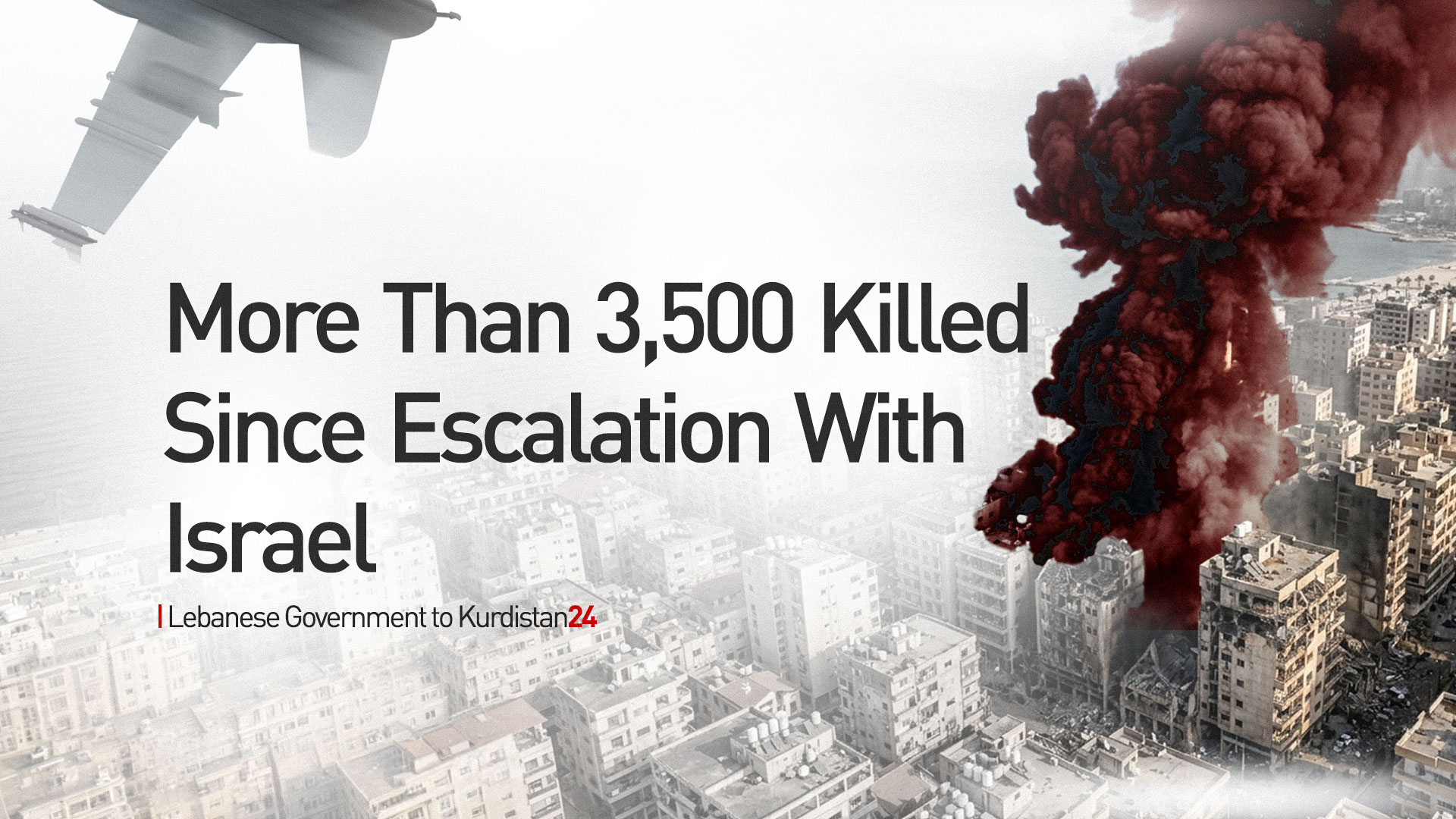
Lebanese Government to Kurdistan24: More Than 3,500 Killed Since Escalation with Israel
Officials tell Kurdistan24 that negotiations mediated by the United States are continuing, while warning that southern Lebanon and its residents are bearing the cost of a conflict they did not choose.
ERBIL (Kurdistan24) - The Lebanese government's media office said ongoing negotiations with Israel under U.S. mediation have yet to produce a final agreement, while warning that the humanitarian toll of the conflict continues to rise across the country.
In comments to Kurdistan24 on Thursday, the office said Beirut remains engaged in diplomatic efforts aimed at ending the escalation, but no breakthrough has been achieved so far.
According to the Lebanese government, residents of southern Lebanon are paying the price for decisions they did not make and are caught in a conflict that is not of their choosing.
The government also addressed Iran’s role in the conflict, calling on Tehran to stop treating southern Lebanon and its population as a bargaining tool in broader regional negotiations.
Lebanese officials argued that the country's southern region should not be used as leverage in diplomatic or political disputes and stressed the need to protect civilians from the consequences of continued military escalation.
According to figures provided by the Prime Minister's media office, Israel has carried out more than 3,500 airspace violations and six ground incursions into Lebanon since April 17.
The office said the conflict has resulted in approximately 3,560 deaths and nearly 11,000 injuries across the country during the same period.
Officials also reported significant losses among Lebanon’s security forces, saying 47 members of the country's security institutions have been killed since the escalation began.
The casualties include 29 soldiers from the Lebanese Armed Forces, three members of the Internal Security Forces, one General Security officer, 13 State Security personnel, and one parliamentary police officer.
The Lebanese government further warned that the country's capacity to host displaced civilians is under growing pressure.
According to the statement, Beirut and Sidon have reached their limits in accommodating displaced families, leaving northern Lebanon as the primary area still able to receive additional people fleeing the violence.
Officials stressed that facilitating the return of displaced residents to their homes in southern Lebanon remains one of the government's highest priorities.
Despite continuing military operations and mounting humanitarian costs, Lebanese authorities said they remain committed to diplomatic efforts aimed at reducing tensions and reaching a lasting arrangement.
The comments come as regional and international actors continue efforts to prevent a wider conflict and secure an agreement that would allow displaced residents to return home and help restore stability along Lebanon's southern frontier.