Syrian President Highlights Improving Ties With Iraq, Regional Diplomacy
Syrian president outlines diplomatic priorities with Iraq, Lebanon and Israel while addressing sanctions, Kurdish dialogue and domestic challenges.
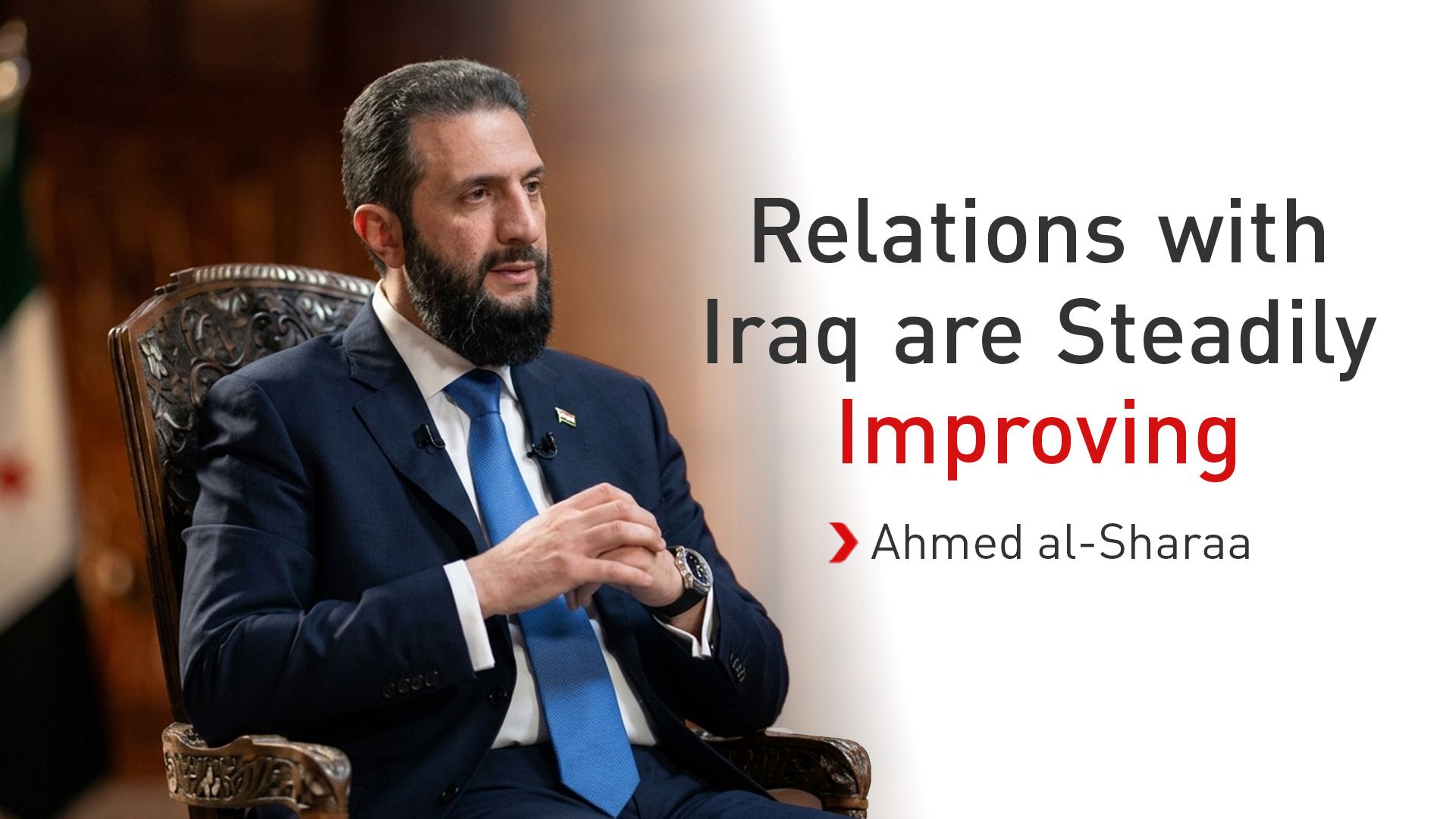
ERBIL (Kurdistan24) - Syrian President Ahmed al-Sharaa said Sunday that relations between Damascus and Baghdad continue to move in a positive direction, presenting closer engagement with Iraq as a key element of Syria's broader effort to rebuild regional partnerships while navigating a complex security environment.
Speaking in an interview with Al Jazeera, al-Sharaa described steadily improving ties with Iraq as part of a wider diplomatic agenda focused on strengthening cooperation with neighboring countries. His remarks came alongside comments on Lebanon, Israel, sanctions and several domestic issues, reflecting what he portrayed as an interconnected approach to restoring stability both inside Syria and across the region.
Turning to Lebanon, Al-Sharaa stressed that Syria has no intention of intervening militarily in its neighbor's affairs. Instead, he said Damascus is engaged in discussions with Lebanese officials aimed at supporting long-term stability through dialogue rather than force.
He argued that Lebanon's challenges cannot be addressed solely through security measures and said Syria is pursuing what he described as a broader strategic vision in its engagement with Beirut. According to al-Sharaa, instability in Lebanon inevitably affects Syria, making cooperation between the two countries an important regional priority.
The Syrian president also reiterated his support for strengthening the authority of the Lebanese state, saying decisions concerning war and peace should remain in the hands of official institutions. He cautioned that further deterioration in Lebanon could have consequences extending beyond its borders.
Addressing Syria's relationship with Israel, al-Sharaa said Damascus seeks to avoid military confrontation, arguing that renewed conflict would not serve Syria's interests. He disclosed that efforts involving multiple international actors are underway to explore a security arrangement, while emphasizing that any future understanding would not require Syria to abandon its claim to the occupied Golan Heights.
He suggested that progress toward a broader security framework could create opportunities for a more comprehensive peace, provided Syria's territorial rights remain protected.
Alongside his regional policy remarks, al-Sharaa addressed several domestic and international issues shaping Syria's recovery.
On the economic front, he argued that the removal of sanctions alone would have only limited impact unless Syria is also taken off the United States' list of State Sponsors of Terrorism, indicating that broader changes in international policy would be needed to support economic normalization.
Discussing the agreement between the Syrian government and Kurdish parties, al-Sharaa acknowledged that implementation has advanced more slowly than initially anticipated. Despite the slower pace, he said the government remains hopeful that the agreement can ultimately be carried through successfully.
The president also announced the establishment of a specialized committee to examine cases involving missing persons. He said the body will operate in line with international standards and cooperate with countries that possess relevant expertise, describing the initiative as part of efforts to address one of Syria's longstanding humanitarian challenges.
Regarding Russia's military presence in Syria, al-Sharaa said discussions over the future of Russian military facilities have yet to produce a final outcome, indicating that consultations remain ongoing.
He also commented on the deadly traffic accident along the Damascus-Deir ez-Zor highway, saying investigations are continuing and that authorities are examining every possible explanation before reaching conclusions.
Taken together, al-Sharaa's remarks portrayed Syria's foreign and domestic priorities as closely linked. While emphasizing stronger relations with Iraq as a cornerstone of Damascus' regional diplomacy, he also pointed to dialogue with neighboring states, institutional stability and continued engagement on unresolved political and humanitarian issues as central components of Syria's current agenda.
|
Summary Syrian President Ahmed al-Sharaa says relations with Iraq are steadily improving as Damascus pursues dialogue with Lebanon, seeks to avoid conflict with Israel and addresses sanctions, Kurdish talks, missing persons, Russian military facilities and an ongoing highway accident investigation. |