Nigerian President Claims 13,000 'Terrorists' Killed as Domestic and Regional Pressures Mount
Nigerian President Bola Tinubu pointed to declining insurgency deaths and massive surrender figures, yet the country continues to grapple with multi-front violence and an exodus of citizens seeking opportunity abroad.
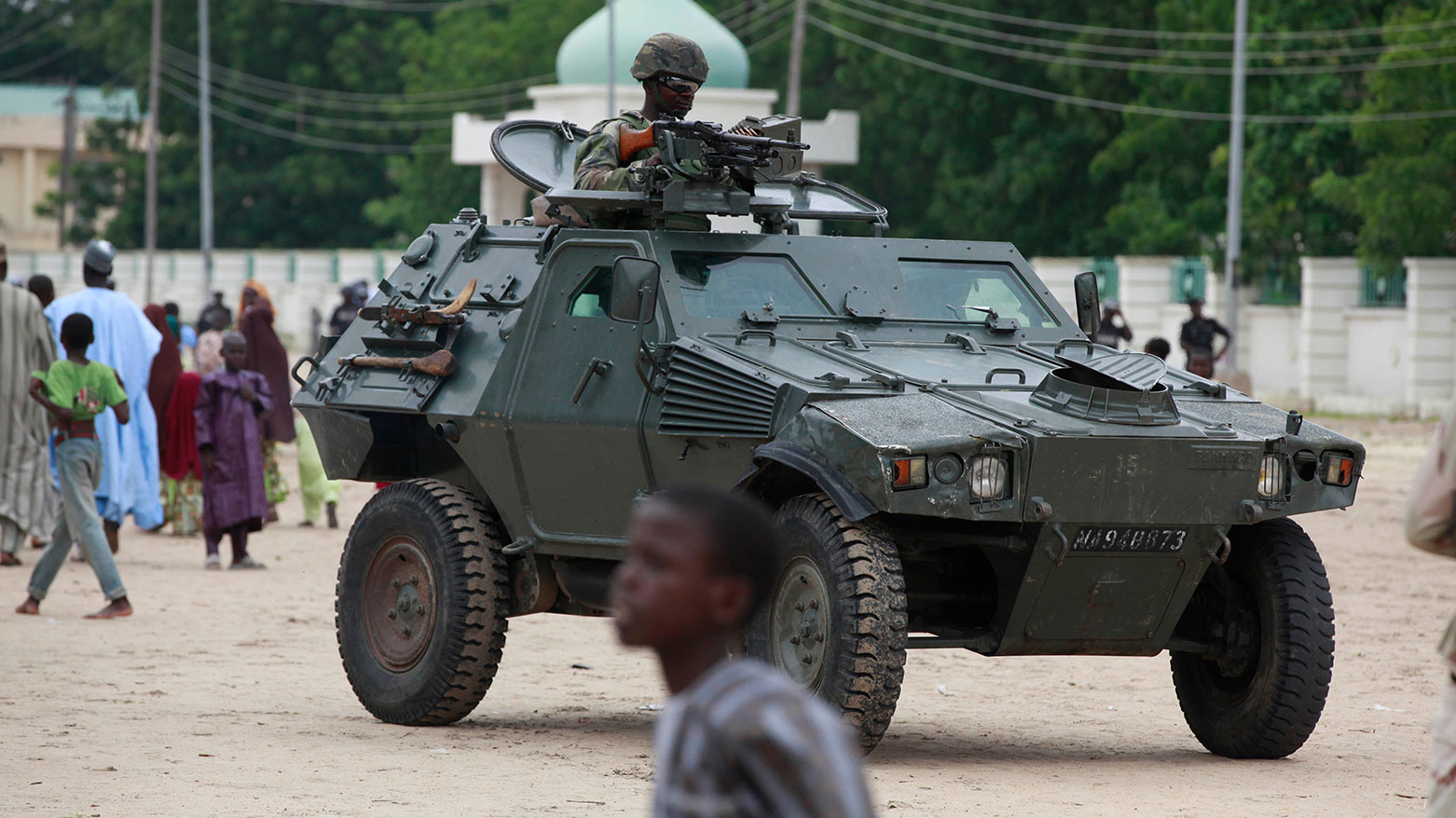
ERBIL (Kurdistan24) - Nigerian President Bola Tinubu has claimed sweeping victories against insurgent forces, asserting that government troops have killed more than 13,000 "terrorists" over the past year. The pronouncement reflects an aggressive effort by the administration to project security stability, even as Africa's most populous nation continues to battle overlapping crises of violence, economic fragility, and mounting regional migration pressures.
Speaking on Friday, Tinubu announced that the death toll linked to the country's long-running jihadist insurgency has plummeted by 81 percent since he assumed office in 2023.
According to reporting by Agence France-Presse (AFP), the president did not clarify whether the 13,000 fatalities occurred exclusively in 2025 or over a rolling 12-month period.
Tinubu also emphasized the success of reintegration programs, claiming that more than 124,000 fighters and their dependents have surrendered through the government's "Operation Safe Corridor" since 2023.
The figures highlight the staggering scale of a conflict that began in 2009 with the Boko Haram uprising in the northeast.
Since then, the violence has spawned numerous armed splinter groups, killed tens of thousands, and displaced millions. However, as AFP reported, the Nigerian state faces a deeply fractured security landscape that extends far beyond jihadist militancy.
The north and central regions are plagued by violent farmer-herder clashes and heavily armed, non-ideological "bandit" gangs engaged in rampant kidnapping for ransom. In the southeast, secessionist agitation continues to simmer.
The instability is also creeping southward into previously secure zones. AFP highlighted a recent incident in May, in which over 40 students and teachers were abducted from schools in the relatively safer southwestern state of Oyo.
The External Pressures of Domestic Instability
The push to stabilize the domestic security environment is occurring as Nigeria faces severe external diplomatic and humanitarian challenges, driven largely by the outward migration of citizens fleeing economic and security pressures.
According to reporting by Ope Adetayo of The Associated Press, the Nigerian government was forced to initiate a mass repatriation effort on Thursday, evacuating the first group of 262 citizens from South Africa following a wave of violent anti-immigration protests.
Since April, tensions between foreign workers and locals in South Africa have frequently erupted into attacks, with locals claiming migrants are taking jobs.
The repatriation flight underscores the complex governance challenges facing Abuja.
While Nigerian Foreign Minister Bianca Odumegwu-Ojukwu stated that the president ordered the evacuation to protect citizens from a "hate-infested environment," South African authorities presented a contrasting narrative.
South African Home Affairs Minister Leon Schreiber stated that the returnees were processed because they were found to be undocumented, declaring them "undesirable persons" and banning them from reentry for five years.
Returning Nigerians, however, told the AP that South African authorities systematically denied them legal residency status based on their nationality.
Nigerian Humanitarian Affairs Minister Bernard Doro criticized the blanket criminalization of the migrants, arguing that cases of illegality should be assessed individually rather than condemning entire populations.
The situation in South Africa, which recently prompted Ghana to repatriate approximately 1,000 of its own citizens, illustrates the broader structural vulnerabilities facing West African nations.
For the Tinubu administration, the massive counterinsurgency figures are intended to reassure a nervous public and international investors that the state is regaining control over its territory.
Yet, the simultaneous need to evacuate citizens from foreign nations highlights a harsh reality: military victories against insurgents must be matched by profound economic and institutional reform if the government hopes to stem the flow of Nigerians seeking stability beyond its borders.
|
Summary Nigerian President Bola Tinubu claims over 13,000 "terrorists" were neutralized and insurgency deaths dropped 81% since 2023. Amid this domestic security push, Nigeria is also repatriating citizens fleeing anti-immigrant violence in South Africa, highlighting broader regional governance pressures. |