Iraqi PM Heads to Ankara as Baghdad Seeks to Deepen Economic Partnership With Türkiye
Prime Minister Ali Faleh Al-Zaidi arrives in Ankara with a high-level delegation, including two Kurdish officials, for talks aimed at expanding Iraq-Türkiye cooperation on trade, infrastructure, security, and the Development Road Project.
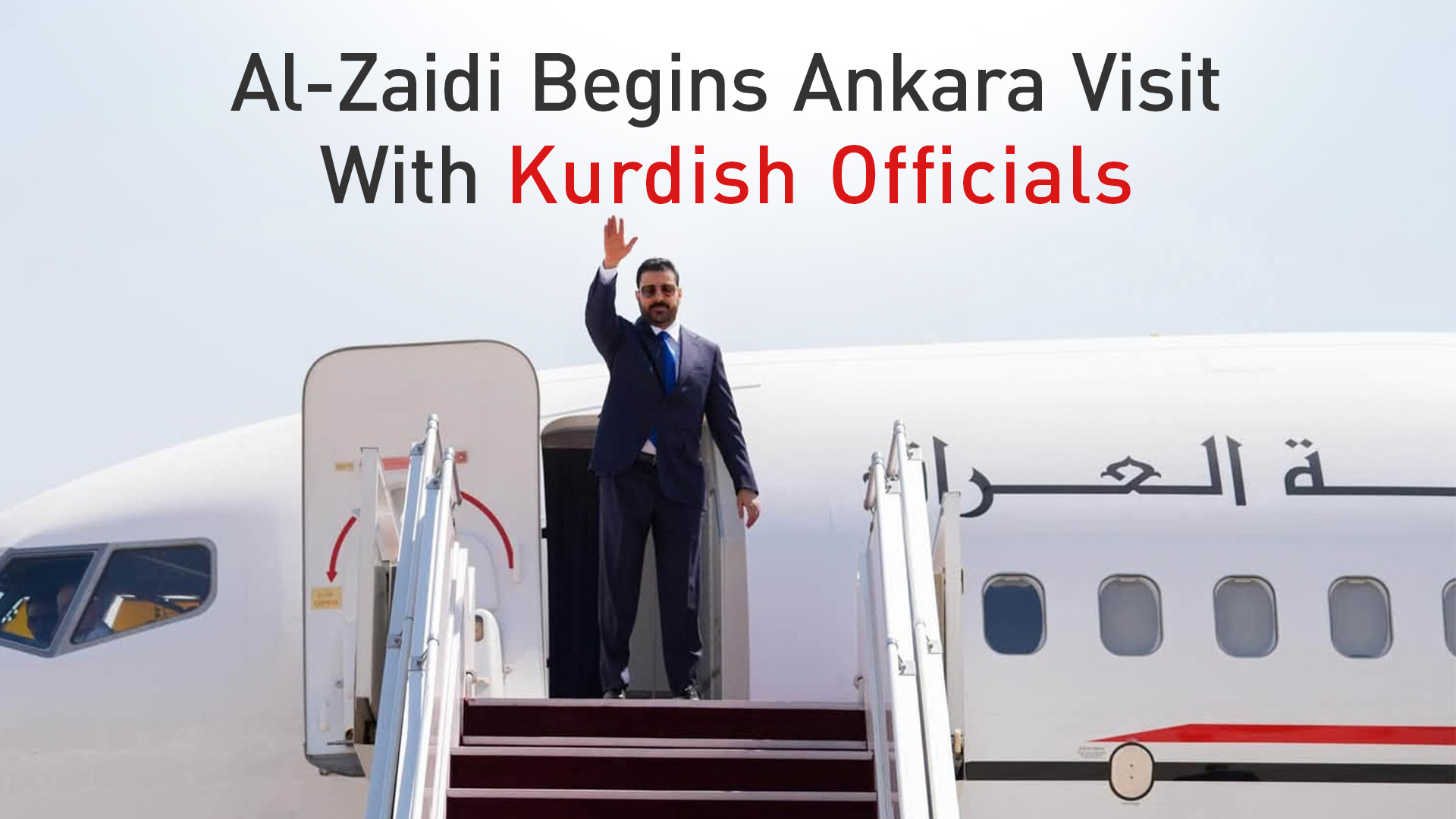
ERBIL (Kurdistan24) - Iraqi Prime Minister Ali Faleh Al-Zaidi is due to arrive in Ankara on Tuesday at the head of a senior government delegation that includes two Kurdish officials, underscoring Baghdad's effort to present a unified approach to strengthening ties with Türkiye on issues ranging from trade and infrastructure to regional security and energy cooperation.
According to the Iraqi News Agency (INA), the visit will feature extensive discussions with Turkish leaders on bilateral relations, the Development Road Project, investment, water resources, counterterrorism, and broader regional coordination.
The trip comes as Baghdad seeks to redefine its relationship with Türkiye around long-term economic integration rather than the disputes that have often shaped the agenda in previous decades.
Ahead of the visit, Al-Zaidi laid out that vision in an opinion article published by Anadolu Agency, arguing that Iraq and Türkiye now have an opportunity to transform shared challenges into a foundation for regional prosperity.
He wrote that "the question is no longer how we manage our shared challenges, but how we transform them into opportunities," describing the current geopolitical environment as a rare opening for deeper strategic cooperation.
His remarks reflect a broader shift in Iraqi foreign policy, which increasingly emphasizes economic diplomacy, infrastructure development, and regional connectivity as central pillars of national growth.
According to Al-Zaidi, Iraq has placed stability, institutional reform, and economic diversification at the center of its domestic agenda while pursuing balanced relations with neighboring states to support sustainable development.
That strategy places Türkiye among Iraq's most significant regional partners.
The prime minister pointed to Türkiye's industrial strength, advanced transportation networks, infrastructure expertise, and strategic location linking Europe and Asia as complementary assets to Iraq's own geographic position and development ambitions.
Together, he argued, the two countries possess the ingredients to build one of the Middle East's most consequential economic partnerships.
At the heart of Baghdad's vision is the Development Road Project, which Iraqi officials increasingly present as a regional transport and logistics initiative rather than a purely national undertaking.
Al-Zaidi argued that the corridor could reshape commercial links between the Gulf, Türkiye, and European markets by creating a faster route for trade while encouraging industrial investment across Iraq.
Beyond reducing transportation times, Iraqi officials see the project as a catalyst for new industrial zones, logistics centers, employment opportunities, and private-sector investment.
Baghdad has consistently portrayed the corridor as a means of integrating regional economies at a time when global supply chains are evolving and governments are seeking more resilient trade routes.
Al-Zaidi suggested that geography gives both Iraq and Türkiye an opportunity to become a bridge connecting Asia, the Gulf, and Europe, provided they expand cooperation beyond traditional diplomatic engagement into long-term economic integration.
Security, however, remains a prerequisite for that ambition. The prime minister stressed that sustained development depends on close coordination against terrorism and organized crime while respecting each country's sovereignty.
"Development can only thrive where security prevails," he wrote, arguing that economic progress and regional stability are mutually reinforcing rather than separate policy objectives.
Water resources are expected to feature prominently during the Ankara talks as well. Rather than framing water solely as a technical dispute, Al-Zaidi described it as an issue with direct implications for agriculture, food security, and economic development.
He called for greater scientific cooperation, shared management approaches, and investment in modern technologies to help both countries address growing environmental pressures.
The emphasis on water cooperation reflects Baghdad's broader effort to approach longstanding bilateral issues through practical collaboration instead of recurring political disagreements.
According to INA, the visit also demonstrates Iraq's intention to broaden cooperation across multiple sectors while maintaining dialogue on regional security and strategic infrastructure.
The participation of Kurdish officials in the delegation highlights the importance Baghdad places on coordinating with the Kurdistan Region on projects expected to shape Iraq's future economic landscape.
Al-Zaidi concluded that closer Iraq-Türkiye cooperation could extend beyond bilateral gains to serve as a wider model for regional stability.
He argued that shared investments, transportation links, energy projects, and industrial development offer a more durable foundation for peace than prolonged geopolitical competition.
"The Middle East needs new success stories," he wrote, expressing hope that deeper economic integration between Iraq and Türkiye could become an example of how neighboring countries can advance prosperity through cooperation rather than conflict.
|
Summary Prime Minister Ali Faleh Al-Zaidi arrived in Ankara with a delegation including Kurdish officials to advance Iraq-Türkiye relations through the Development Road Project, trade, regional cooperation, security, and economic partnership, positioning both countries as a key regional trade corridor. |