U.S. Envoys Head to Switzerland as Diplomatic Push With Iran Hangs in the Balance
Despite the postponement of scheduled technical talks over the war in Lebanon, the arrival of senior American, Iranian, and Qatari officials in Europe signals a desperate effort to salvage a fragile peace framework.
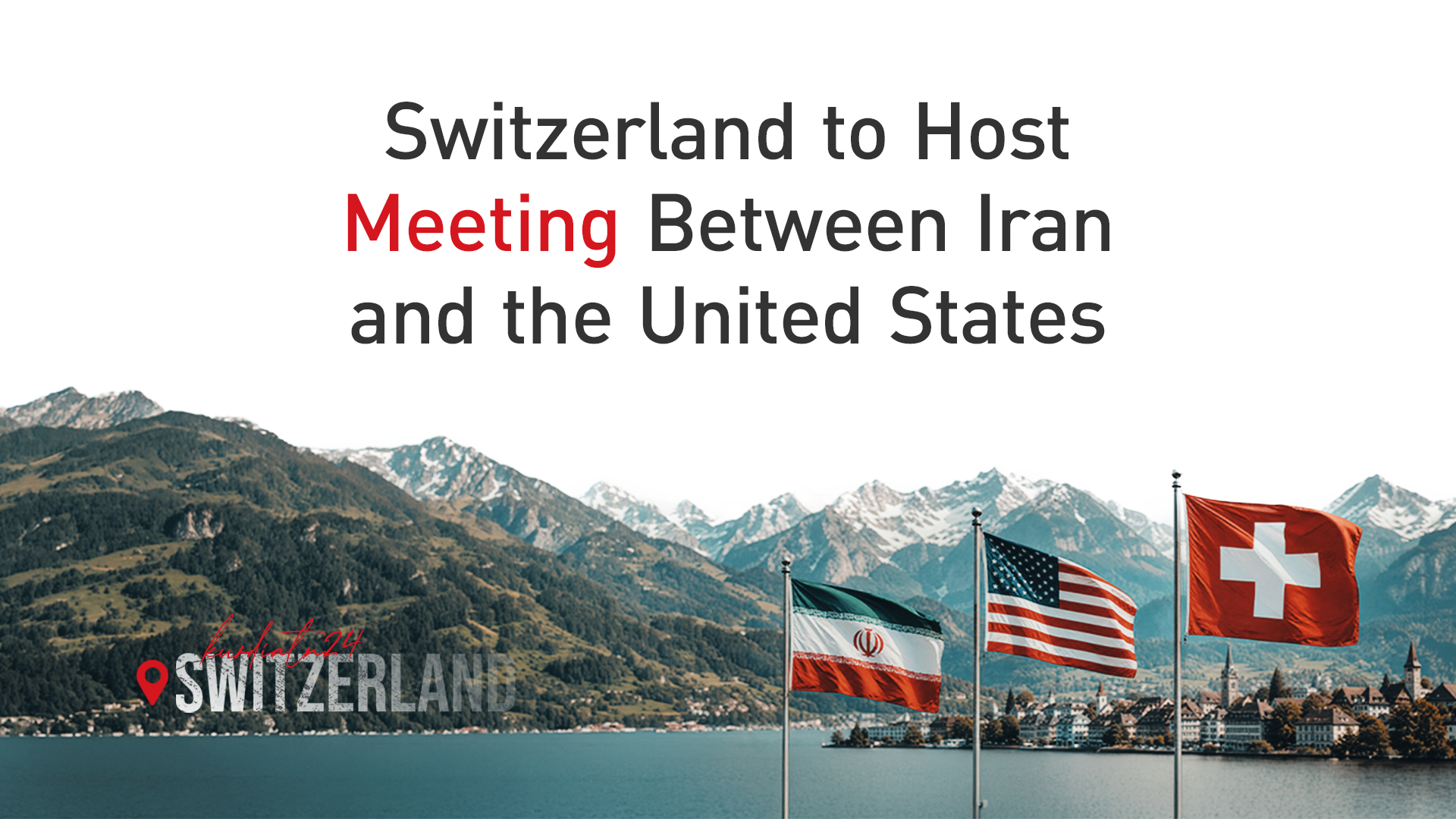
ERBIL (Kurdistan24) - As the fragile diplomatic framework between the United States and Iran faces severe strain, senior American envoys have been dispatched to Switzerland in an urgent effort to keep technical peace negotiations alive, even as the formal schedule for talks has been abruptly postponed.
The high-stakes diplomatic maneuvering, reported by Agence France-Presse (AFP), underscores the deep uncertainty surrounding the trajectory of U.S.-Iran relations following a grueling three-month military conflict.
The war, which erupted on Feb. 28 following joint U.S.-Israeli strikes that killed Supreme Leader Ayatollah Ali Khamenei, recently transitioned into an uneasy truce. However, the path toward transforming that preliminary arrangement into a durable settlement has been severely complicated by escalating proxy warfare in the Levant.
According to AFP, American media outlets reported on Friday that U.S. envoy Steve Witkoff was en route to Switzerland, citing unnamed U.S. officials. His journey coincides with the arrival of Jared Kushner, President Donald Trump's son-in-law and senior envoy, who was already on the ground in the alpine nation.
Their presence in Europe highlights a critical diplomatic pivot. AFP reported that the envoys' travel comes as Washington and Tehran attempt to get technical follow-up talks "back on track." Vice President JD Vance was initially slated to lead the American delegation but postponed his trip at the last minute on Thursday night, leaving it unclear whether he will participate in the upcoming weekend discussions.
The Lebanon Factor
The immediate hurdle to finalizing the peace framework lies far beyond the borders of Iran.
According to reporting by Barak Ravid of Axios, the talks in Switzerland were explicitly postponed due to the intensifying fighting between Israel and Hezbollah in Lebanon.
The Axios report reveals that Iranian Foreign Minister Abbas Araghchi has conditioned his participation in the Swiss negotiations on the situation in the Levant.
Citing a source from a mediating country, Ravid reported that Araghchi told international counterparts on Friday that achieving a ceasefire in Lebanon is "make or break" for the U.S.-Iran talks.
Iranian officials have reportedly stressed that they demand a Lebanese ceasefire take hold before they will fully commit to the diplomatic process in Switzerland, although Araghchi had tentatively planned to travel to Europe on Saturday.
This linkage demonstrates how deeply interconnected the various Middle Eastern theaters have become.
For Tehran, Hezbollah is not merely an ally, but the cornerstone of its regional deterrence strategy. Allowing the negotiations in Switzerland to proceed while Israel heavily bombards Hezbollah positions would be perceived domestically and regionally as a capitulation.
Mediators Scramble to Save the Deal
Recognizing the fragility of the moment, regional mediators are scrambling to bridge the gap.
According to Axios, Qatari Prime Minister Mohammed bin Abdulrahman al-Thani, a pivotal intermediary between Washington and Tehran, arrived in Switzerland earlier on Friday.
His presence suggests that intense, behind-the-scenes diplomacy is underway to decouple the broader U.S.-Iran settlement from the immediate tactical realities of the Israel-Hezbollah conflict, or conversely, to rapidly broker a Lebanese ceasefire that would allow the Swiss talks to proceed.
The stakes for these negotiations are monumental.
The conflict initiated in late February involved heavy U.S. strikes that systematically dismantled Iran's conventional military and naval capabilities.
Iran responded by heavily disrupting global maritime traffic, mining the Strait of Hormuz, and triggering severe shocks in global energy markets.
Trump's Negotiating Posture
For the Trump administration, the urgency of securing a deal is driven by a desire to stabilize the global economy while capitalizing on what it views as a decisive military victory.
In a recent interview with The Axios Show, President Trump provided extensive insight into his administration's strategic calculus.
He asserted that the U.S. military campaign had achieved total dominance, claiming to have completely wiped out the Iranian air force and navy. "We defeated them totally militarily," Trump told Axios.
Crucially, Trump argued that the sheer scale of the destruction rendered further military escalation unnecessary, explicitly citing the economic risks of a prolonged conflict. The President noted that continuing to bomb Iran would guarantee the permanent closure of the Strait of Hormuz.
"I'm not looking to damage the world economy," Trump stated during the interview, emphasizing that the cessation of U.S. strikes had immediately resulted in surging stock markets and tumbling oil prices as massive tankers finally departed the Gulf.
Trump's remarks indicate a firm belief that his administration is negotiating from a position of absolute strength, dismissing critics who demanded a prolonged occupation or total regime change.
The President insisted that the primary strategic objective, ensuring Iran never acquires a nuclear weapon, can now be secured diplomatically without putting "boots on the ground" or risking a global depression.
However, as the delayed talks in Switzerland demonstrate, achieving diplomatic closure with a battered but proud adversary is inherently volatile. While the U.S. envoys wait in Europe and Qatari mediators attempt to untangle the Lebanese crisis, the outcome of the Switzerland talks remains suspended in a precarious balance.
The coming days will determine whether the military leverage Trump claims to have secured can be translated into a binding, comprehensive peace, or if the intricate web of Middle Eastern proxy conflicts will drag both nations back into war.