Will Southern Lebanon Make or Break the U.S.-Iran Peace Deal?
A direct threat from the IRGC Quds Force to expel Israeli troops from southern Lebanon highlights how the Levantine battleground has become the central obstacle to finalizing a diplomatic settlement in Switzerland.
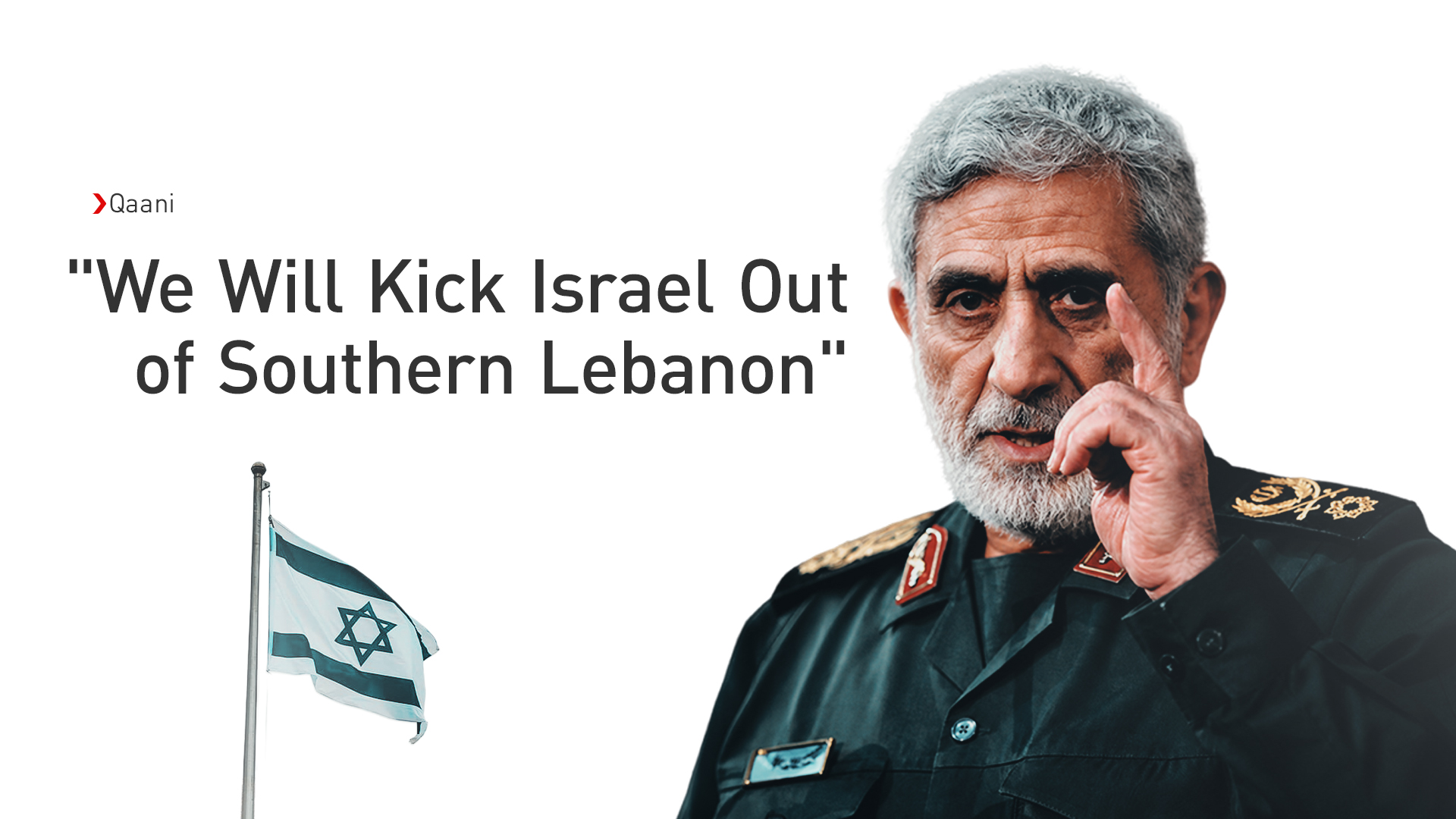
ERBIL (Kurdistan24) - "If the occupying Israel does not withdraw from Southern Lebanon on its own feet, we will kick them out in humiliation and defeat." The stark ultimatum, broadcast across social media in Persian, Arabic, Hebrew, and English, was issued by Esmail Qaani, the commander of Iran's Islamic Revolutionary Guard Corps (IRGC) Quds Force on Monday, according to Iran's state news agency IRNA.
Arriving amid a fragile and repeatedly violated ceasefire in Lebanon, the threat underscores a harsh geopolitical reality: the deeply entrenched conflict in southern Lebanon has become the ultimate proving ground for whether a broader peace between the United States and Iran can survive.
Qaani's rhetoric, which promised that Israeli forces would be "expelled in disgrace and failure" if they persist in their occupation, serves as a direct challenge to the military reality on the ground.
Over the past four days, intense Israeli strikes against Hezbollah positions in southern Lebanon have claimed the lives of over 100 Lebanese citizens, severely straining the diplomatic framework intended to halt the regional war.
The Quds Force commander's fiery statement arrives at an exceptionally sensitive diplomatic moment. High-level delegations from the United States and Iran convened in Switzerland on Sunday in a desperate bid to salvage a preliminary peace agreement.
According to a separate Kurdistan24 analysis, Iranian Foreign Minister Abbas Araghchi claimed that "major progress" was achieved through Qatari and Pakistani mediation.
Read More: Iran Claims 'Major Progress' in High-Stakes Switzerland Talks with the U.S.
The mediators confirmed the establishment of a 60-day roadmap toward a final deal and, crucially, the creation of a "Lebanon de-confliction cell."
This specialized mechanism reflects Tehran's absolute linkage of the two theaters.
Araghchi characterized the de-confliction cell as the "1st real test" of the diplomatic process, signaling that Iran views the cessation of Israeli operations in Lebanon as an uncompromising prerequisite for finalizing a comprehensive settlement with Washington.
Read More: Iran Says It Will Not Yield to US Pressure During Switzerland Talks
The strategic friction on the ground in Lebanon is intense.
Following a deadly barrage of Hezbollah attacks that killed five Israeli soldiers, the Israel Defense Forces (IDF) have maintained a fierce operational tempo within a so-called "security zone" carved out along the Lebanese border.
Read More: Ceasefire Under Severe Strain as Lebanon Health Ministry Reports 7 Killed in Israeli Strikes
Israel views this buffer zone as an existential necessity. According to reporting by Agence France-Presse (AFP) featuring Robin Millard, Israeli Chief of Staff Lt. Gen. Eyal Zamir recently visited troops in southern Lebanon to assess their readiness.
"Hezbollah has suffered a severe and significant blow, and we are committed to remaining prepared to continue operating and prevent its rebuilding," Zamir stated, warning that the ceasefire is fragile and military forces must remain prepared for the resumption of combat.
For Hezbollah, the Israeli military presence is an intolerable violation of sovereignty.
AFP reported that Hezbollah chief Naim Qassem vehemently rejected the concept of an Israeli security buffer. "Remaining on Lebanese land is impossible.
There are no security zones for Israel," Qassem declared in a televised address, insisting that the national army alone is responsible for preserving sovereignty.
Echoing Qaani's warnings, Qassem added, "Israel will not remain in Lebanon, even if it increases its crimes, and we will defend ourselves."
The escalation in Lebanon prompted fierce warnings from Washington, threatening the delicate talks in Switzerland.
AFP reported that U.S. President Donald Trump took to social media to deliver a blunt ultimatum to Tehran: "Iran must immediately stop their highly paid PROXIES in Lebanon from causing trouble. If they don't, we'll hit Iran very hard again."
Read More: Trump Threatens Iran Over Strait of Hormuz and Hezbollah in Escalating Remarks
Yet, despite the public threats, the U.S. delegation in Switzerland appeared determined to protect the diplomatic channel. U.S. Vice President JD Vance emphasized that he had seen "great progress" in ensuring the ceasefire holds in Lebanon, telling reporters, "We're all working towards regional peace."
The complex dynamics surrounding Lebanon have even drawn in neighboring states attempting to avoid the crossfire.
Following Trump's suggestions that Syria could intervene militarily against Hezbollah, Syrian President Ahmed al-Sharaa quickly rebuffed the notion.
Read More: Al-Sharaa Leaves Door Open to Hezbollah Dialogue While Backing Lebanese State
According to AFP, Sharaa emphasized that Damascus is seeking "economic channels between Lebanon and Syria, not military ones." Rejecting any new military entanglement, he stated, "We proposed with the United States that the war must stop," highlighting the regional consensus favoring de-escalation.
The convergence of military maneuvering in southern Lebanon and high-stakes diplomacy in Switzerland illustrates the deep interconnectedness of the Middle Eastern security architecture.
For Washington and Tehran, preventing a wider war requires decoupling the immediate tactical clashes in the Levant from the strategic issues of nuclear enrichment and maritime security in the Strait of Hormuz.
Qaani's threat to forcefully eject Israeli troops reveals the immense pressure on the newly established Lebanon de-confliction cell.
Whether his rhetoric is intended as negotiation pressure, domestic signaling, or a genuine declaration of impending military escalation, it confirms that the road to a permanent U.S.-Iran settlement must pass directly through the embattled villages of southern Lebanon.