US Secretary of State Rejects Iranian Tolls On Strait of Hormuz
Washington's top diplomat rejected any attempt to impose fees on vessels transiting the Strait of Hormuz
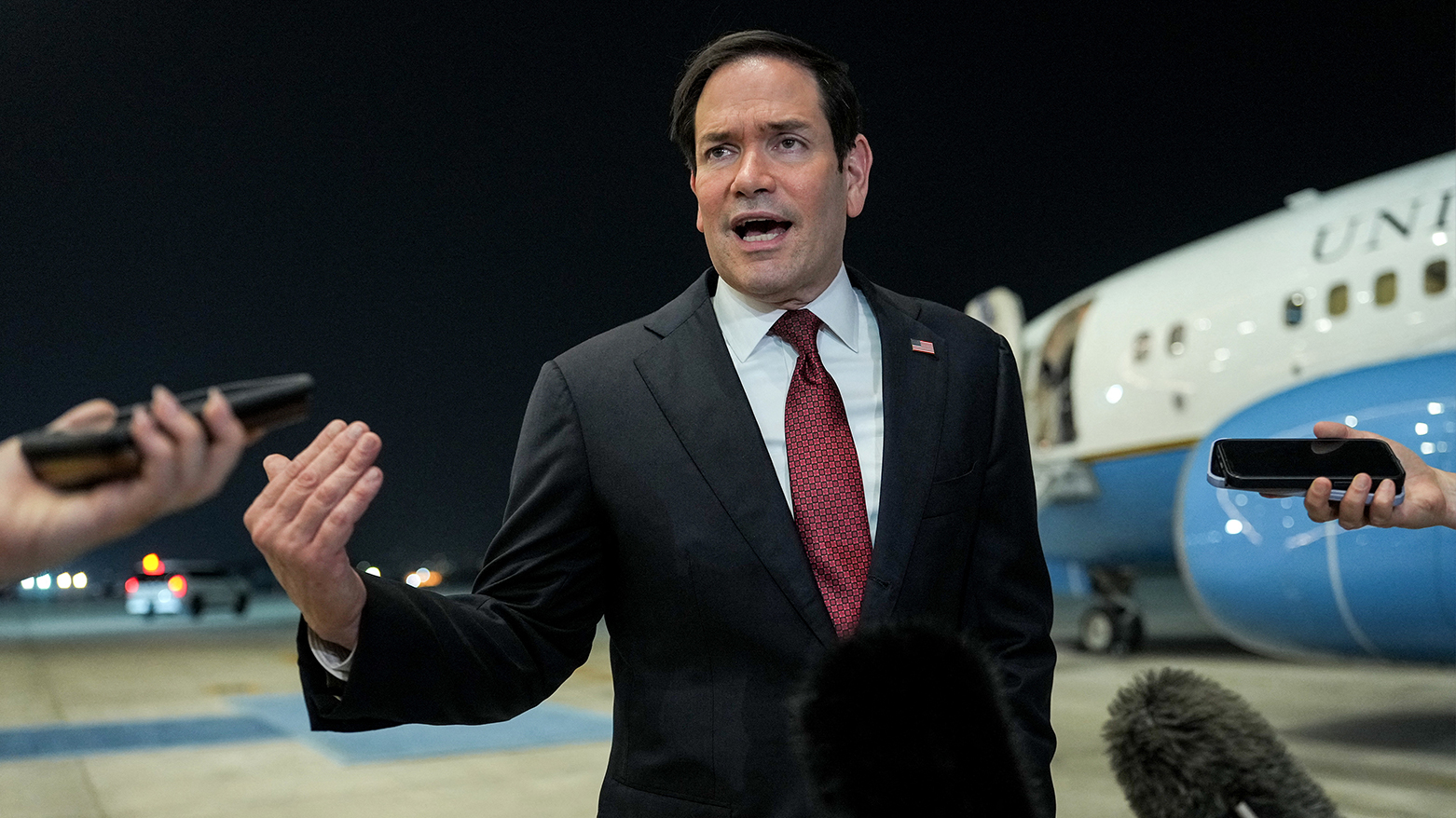
ERBIL (Kurdistan24) - The future of one of the world's most critical energy corridors emerged as a new point of contention on Tuesday, as US Secretary of State Marco Rubio declared that Washington would not accept Iranian tolls or fees on vessels using the Strait of Hormuz, despite ongoing negotiations aimed at ending months of regional tensions.
Rubio made the remarks at the start of a regional tour, responding to statements from Tehran that signaled Iran's intention to maintain authority over the strategic waterway.
"It's an international waterway. No country is allowed to charge tolls or fees on an international waterway," Rubio said, adding that he believed countries across the region shared that position.
The comments came after Iran and the United States signed a preliminary agreement to halt the conflict between the two countries and launched the first round of talks in Switzerland under a 60-day negotiation framework aimed at resolving outstanding issues, including sanctions relief and Tehran's nuclear program.
An Iranian blockade imposed during the conflict sharply reduced maritime traffic through the Strait of Hormuz and triggered a surge in global oil prices. Since the signing of the agreement, however, shipping activity has gradually increased.
Iran and Oman said in a joint statement that they would study the administration of the waterway and potential service charges while emphasizing their sovereignty over the strait.
Earlier, Iran's chief negotiator Mohammad Bagher Ghalibaf said the Strait of Hormuz "will never return" to its pre-war status, despite both sides agreeing to establish communication mechanisms to keep the route open.
The head of the UN's International Maritime Organization also announced plans to begin evacuating more than 11,000 sailors stranded by the blockade, saying the agency had secured the necessary safety guarantees in coordination with Iran, Oman, and the United States.
According to maritime tracking platforms, vessel traffic through the strait on Monday reached its highest level since the conflict began, although it remained well below normal peacetime levels.
Despite progress on broader negotiations, differences remain over Iran's nuclear program.
Iran rejected claims by US Vice President JD Vance that Tehran had agreed to allow inspectors from the International Atomic Energy Agency (IAEA) to return to facilities damaged during previous military strikes.
Foreign Ministry spokesperson Esmaeil Baqaei said Iran had neither met with the IAEA director general nor planned inspections of facilities damaged during what he described as US and Israeli attacks.
US President Donald Trump, however, insisted that Iran had "fully and completely agreed to highest level Nuclear inspections long into the future."
Iran's ambassador to the United Nations, Ali Bahreini, also said no decision had been taken to permit such inspections.
Diplomatic activity continued across the region on Tuesday.
Rubio arrived in the United Arab Emirates as part of a broader Gulf tour that will also include Kuwait and Bahrain, with discussions expected to focus on the agreement with Iran and the future of the Strait of Hormuz.
Meanwhile, Iranian President Masoud Pezeshkian traveled to Pakistan alongside Foreign Minister Abbas Araghchi, while Omani officials hosted discussions involving Iranian representatives and Sultan Haitham bin Tariq.
According to Pakistani and Qatari mediators, both sides have agreed on a roadmap designed to achieve a final agreement within the 60-day negotiation period.
Iranian state media reported that four separate negotiating groups would be established to address nuclear issues, sanctions, and other outstanding matters.
On a separate diplomatic track, Lebanese and Israeli officials opened a fifth round of talks in Washington aimed at ending the conflict between Israel and Hezbollah.
A US State Department official said the objective of the negotiations was "to end the cycle of violence for good."
The talks come despite continuing tensions in southern Lebanon. Lebanese state media reported that two people were killed after Israeli forces opened fire in the south of the country. Israel said its troops had targeted Hezbollah operatives who had entered a self-declared security zone.
The latest developments underscore the challenges facing multiple diplomatic efforts across the region, even as negotiators seek to transform fragile ceasefires into longer-term agreements.