Iraq Offers to Host Gulf Security Summit as Baghdad Pushes to End Regional War
Araghchi said his visit was primarily to thank Iraq for its support and condemnation of attacks on Iran, while reaffirming Tehran's commitment to strengthening strategic ties with Baghdad
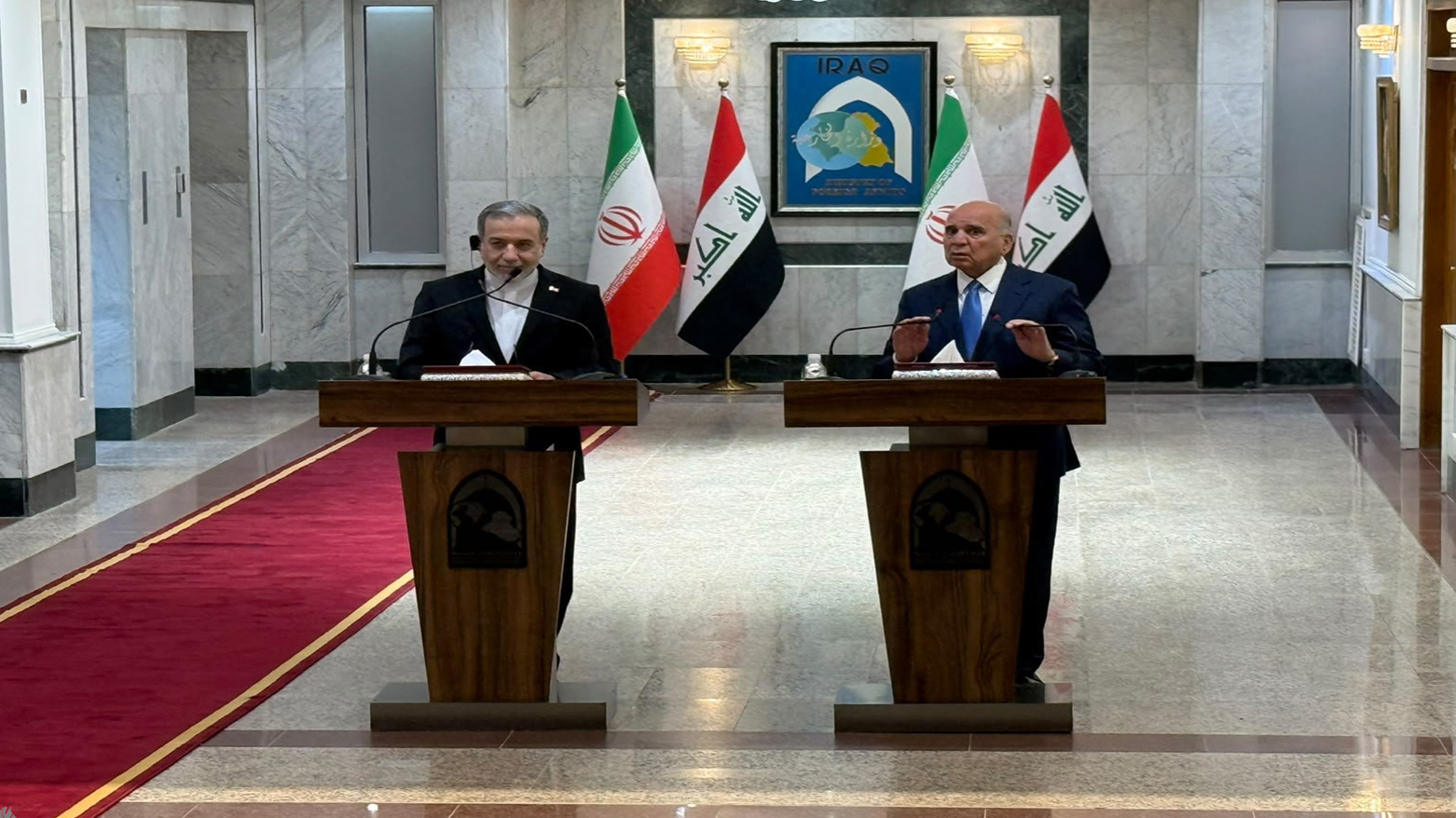
ERBIL (Kurdistan24) — Iraq on Sunday offered to host a regional summit bringing together Gulf Arab states and Iran in a fresh diplomatic push to reduce tensions and end the escalating conflict in the Middle East, as Baghdad sought to position itself as a mediator between rival regional powers.
Speaking at a joint press conference in Baghdad with Iranian Foreign Minister Abbas Araghchi, Iraqi Foreign Minister Fuad Hussein said Iraq was prepared to host talks focused on regional security and ending the war, arguing that the stability of the Middle East should be safeguarded by the countries of the region themselves.
"Iraq is ready to host the Gulf states to discuss regional security and ways to end the war," Hussein said, stressing that "the security of the region should be the responsibility of its own peoples."
The proposal comes as a fragile memorandum of understanding between Iran and the United States remains under increasing strain, with both sides accusing each other of violating the ceasefire through continued military operations and attacks around the strategically vital Strait of Hormuz.
Hussein described Araghchi's visit as particularly significant in light of the recently signed U.S.-Iran memorandum, noting that military confrontations continue despite the agreement.
He said the two ministers discussed the impact of the recent conflict on Iraq, including attacks that struck Iraqi territory during the war and the disruption of Iraqi oil exports after the closure of the Strait of Hormuz.
"The closure of the Strait of Hormuz halted the flow of Iraqi oil, affecting Iraq's financial and economic situation," Hussein said.
The Iraqi foreign minister reiterated Baghdad's longstanding position that disputes should be resolved through dialogue rather than military confrontation, expressing regret over recent U.S. strikes on Iran.
He also revealed that Iraq had played an important role in facilitating the understanding reached between Washington and Tehran, highlighting Baghdad's strong relations with both countries.
"Our relations with both the United States and Iran are excellent, and we are ready to work with both sides to end the war," Hussein said, thanking Araghchi for keeping Iraqi officials informed throughout the negotiations with Washington.
For his part, Araghchi said his visit was intended primarily to thank the Iraqi government and people for their support and condemnation of attacks against Iran, while reaffirming Tehran's commitment to expanding strategic cooperation with Baghdad.
He said the memorandum of understanding with Washington provides for a ceasefire across all fronts, particularly in Lebanon, and called for an immediate end to Israeli military operations there.
Araghchi also demanded Israel's withdrawal from territories it occupies in Lebanon, arguing that ensuring such a withdrawal is the responsibility of the United States.
Addressing the Strait of Hormuz, the Iranian foreign minister insisted that no outside party should interfere in its administration, saying the strategic waterway remains under Iranian control.
"Hormuz is under Iran's administration, and after the obstacles are removed, the situation will return to normal," he said, adding that any attempt to alter those arrangements would violate the memorandum reached with Washington.
Araghchi said he had briefed Hussein on the latest developments in Iran's negotiations with the United States as well as the situation surrounding the Strait of Hormuz, while thanking Iraq for what he described as its supportive stance toward the Iranian people.
He also said another objective of his visit was to coordinate with Iraqi authorities on arrangements for the funeral procession of "the martyred Sayyid Ali Khamenei" at Iraq's holy shrines.
The meeting came as regional diplomacy continues alongside a fragile U.S.-Iran ceasefire, with repeated military exchanges and tensions around the Strait of Hormuz threatening efforts to reach a broader and more lasting settlement.