Iraqi Foreign Minister Arrives in Damascus for Talks on Security, Trade, and Regional Cooperation
Visit comes amid renewed efforts by Baghdad and Damascus to deepen ties through border coordination, economic cooperation, and counterterrorism
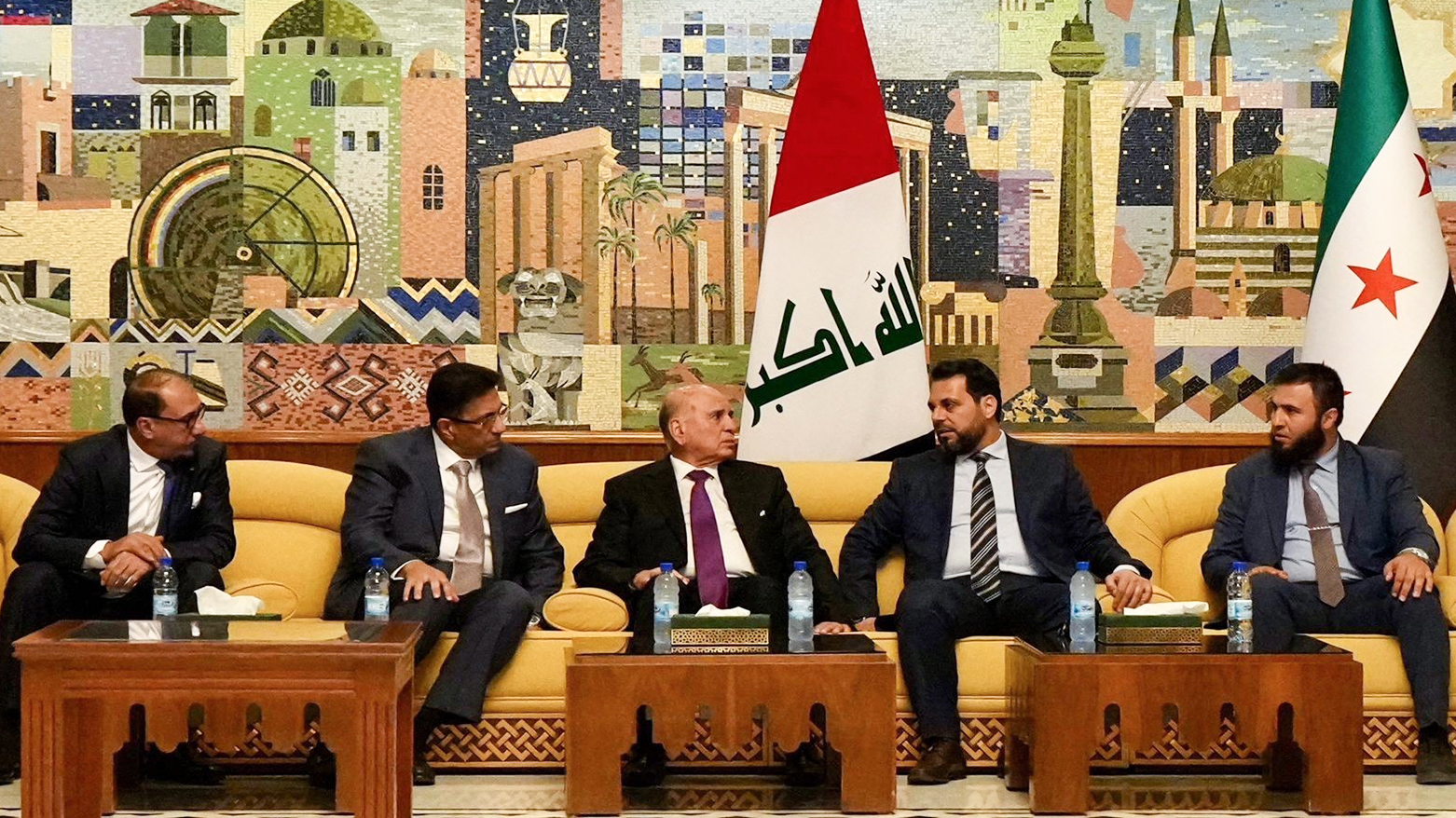
ERBIL (Kurdistan24) — Iraqi Foreign Minister Fuad Hussein arrived in Damascus on Monday for an official visit aimed at strengthening bilateral relations and expanding cooperation with Syria, as the neighboring countries seek to deepen engagement on security, trade, and regional stability following a series of high-level diplomatic exchanges.
According to Iraq's Foreign Ministry, Hussein's visit comes at the invitation of Syrian Foreign Minister Asaad al-Shaibani and will include meetings with senior Syrian officials to discuss ways to enhance political, security, economic, and commercial cooperation between the two countries.
The talks are also expected to address regional and international developments, improve coordination on shared challenges, and explore mechanisms to strengthen bilateral cooperation in support of regional security and stability, the ministry said.
The visit follows a meeting between Hussein and al-Shaibani on the sidelines of the Arab League ministerial meetings in Amman last week, where the Syrian foreign minister extended the formal invitation to visit Damascus. During that meeting, the two sides discussed expanding bilateral cooperation and reaffirmed their commitment to strengthening relations between the neighboring countries.
Building Momentum in Bilateral Ties
Hussein's trip reflects a broader effort by Baghdad and Damascus to rebuild and institutionalize relations following Syria's political transition and the emergence of its new government under President Ahmed al-Sharaa.
Relations between the two countries have steadily improved over the past year, driven by shared security concerns, the reopening of trade routes, and a mutual interest in restoring economic connectivity after years of conflict disrupted cross-border commerce.
A significant milestone came in June 2025 when Iraq reopened the strategic al-Qaim border crossing with Syria, restoring the movement of goods and passengers after months of closure. Iraqi officials described the crossing as vital for bilateral trade and regional transport, while Syrian officials viewed its reopening as an important step toward normalizing economic relations.
Earlier, in March 2025, al-Shaibani made his first official visit to Baghdad since the change of government in Damascus, where he urged Iraq to reopen the border and emphasized that Syria and Iraq shared common security interests, particularly in combating the Islamic State (ISIS). Hussein similarly stressed the need for continued regional and international coordination against the extremist group.
Security Remains a Central Issue
Security cooperation is expected to feature prominently during Hussein's visit, with both countries continuing to confront the threat posed by ISIS remnants operating in remote areas along their nearly 600-kilometer shared border.
Although the militant group lost its territorial "caliphate" in Iraq and Syria several years ago, it continues to carry out attacks and exploit gaps in border security.
Both governments have repeatedly stressed the importance of intelligence sharing, coordinated border patrols, and joint efforts to prevent militants from moving across the frontier.
In recent months, Baghdad and Damascus have expanded security contacts, including discussions on counterterrorism cooperation and border management, reflecting growing recognition that stability in one country is closely tied to stability in the other.
Expanding Economic Cooperation, Reviving the Kirkuk–Baniyas Pipeline
Beyond security, the visit is also expected to focus on increasing trade and investment and improving regional connectivity.
The two governments have expressed interest in reviving long-dormant infrastructure projects, including the rehabilitation of an oil pipeline linking Iraq to Syria's Mediterranean coast.
The Kirkuk–Baniyas pipeline is an old Iraqi oil export route that last operated regularly prior to 2003, before being shut down following the Iraq War due to security concerns, political tensions between Baghdad and Damascus, and a shift toward alternative export routes through Turkey and southern Iraq.
Although occasionally discussed in later years as a potential strategic corridor and subject to limited rehabilitation proposals, the pipeline has remained non-operational for more than two decades.
Iraqi officials have also explored broader plans to integrate Syria into regional transport and energy corridors, viewing improved connectivity as a means of stimulating economic growth and facilitating access to international markets.
For Syria, rebuilding economic ties with Iraq is considered an important component of post-war reconstruction, while Baghdad sees closer cooperation with Damascus as contributing to greater regional stability and expanding trade opportunities across the Levant.
Hussein's visit is expected to build on that momentum as the two countries seek to transform improving diplomatic relations into more concrete cooperation across security, economic, and political sectors.