Nocturnal Raids Tighten Grip on Baghdad as Iraq Widens Anti-Graft Sweep
Iraq intensifies overnight anti-corruption raids in Baghdad as Green Zone security tightens, arrests expand, and investigators recover millions in public assets.
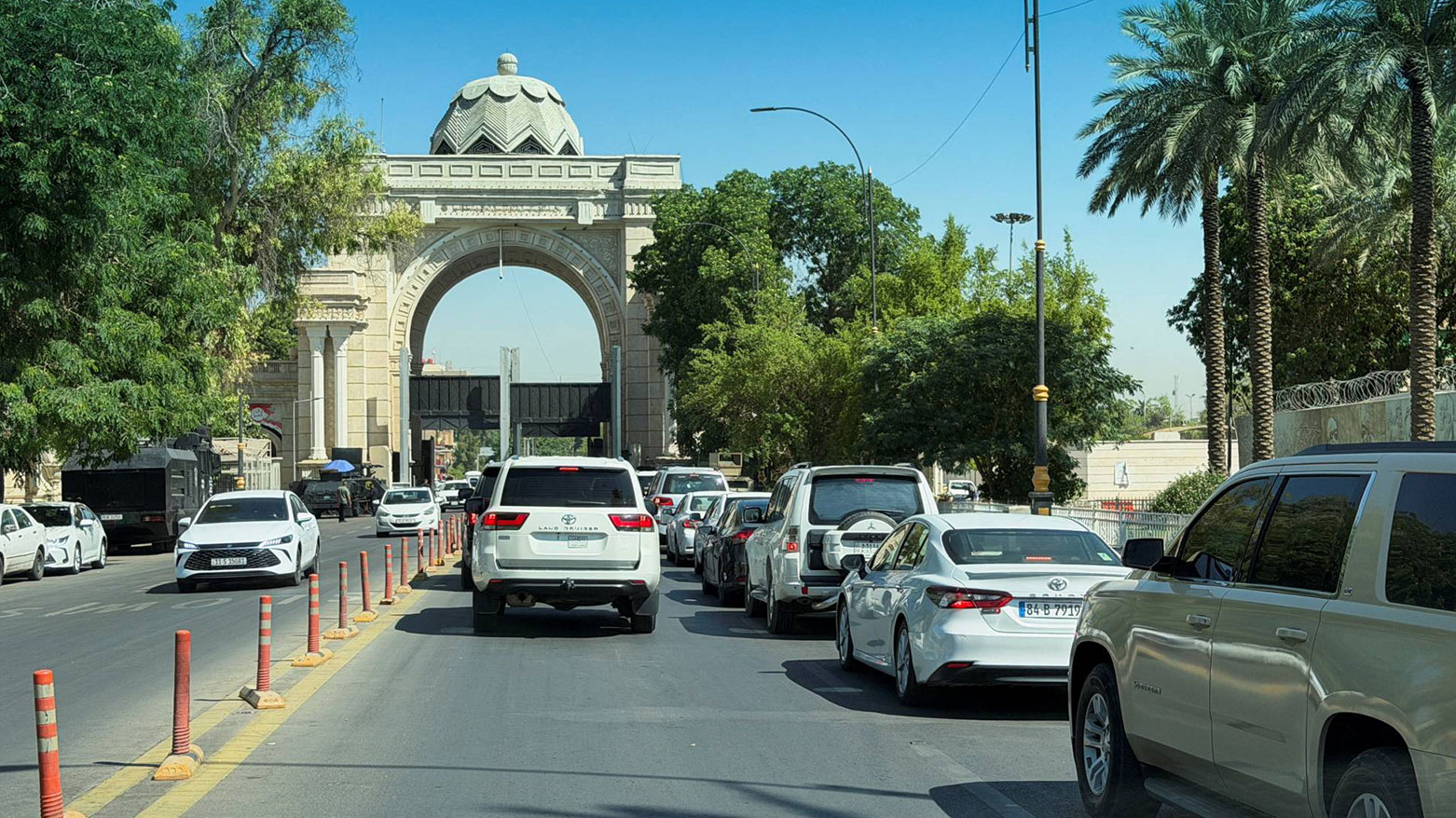
ERBIL (Kurdistan24) - After midnight, Baghdad's streets have taken on an unfamiliar rhythm. Traffic thins around the capital's fortified center, military vehicles replace the usual stream of civilian cars, and checkpoints remain active well into the early hours. Inside the Green Zone, the heavily protected district housing Iraq's senior political leadership, state institutions, and foreign diplomatic missions, security inspections have become markedly stricter as investigators pursue what has evolved into one of the country's broadest anti-corruption operations in recent years.
The campaign has unfolded largely under the cover of darkness. Rather than relying on daytime summonses, security units have concentrated many of their operations after 1 a.m., when investigators believe individuals under scrutiny are more likely to be at their residences.
The approach has coincided with tighter movement controls across the Green Zone and an expanding series of coordinated searches targeting officials suspected of financial corruption and the misappropriation of public funds.
According to Kurdistan24 reporting, the latest overnight operations resulted in additional arrests, bringing the number of detainees to nearly 70.
The widening investigation extends beyond senior officials themselves to include close associates and staff members, including drivers employed by several primary suspects. Investigators have also removed digital surveillance storage equipment from multiple residences, seeking video evidence that could clarify movements, communications, and potential links to broader financial networks.
The operational tempo has distinguished the current campaign from many previous anti-graft efforts, which often relied primarily on administrative investigations before public arrests occurred. This time, multiple security agencies appear to be working in closer coordination with judicial authorities as evidence collection and detention efforts proceed simultaneously.
The heightened security presence has transformed daily routines inside Baghdad's most protected district. Every vehicle entering the Green Zone, including those carrying senior political figures and members of parliament, is now reportedly subject to comprehensive inspection.
Avesta Mam Yahya, a member of the Kurdistan Democratic Party (KDP) bloc in the Iraqi parliament, told Kurdistan24 that such inspections were virtually unheard of before the recent operations began. The new procedures, he said, now apply uniformly regardless of official status, reflecting the extraordinary security measures accompanying the investigations.
Beyond the arrests themselves, authorities are increasingly emphasizing the recovery of public assets believed to have been acquired through illicit enrichment. Earlier Tuesday, Finance Minister Falih al-Sari met Supreme Judicial Council President Faiq Zidan to discuss mechanisms for strengthening cooperation between financial institutions and the judiciary in tracing, confiscating, and ultimately returning recovered assets to the state treasury.
The discussions underscored a broader institutional objective: ensuring that judicial proceedings are accompanied by effective financial recovery rather than ending solely with criminal prosecutions. Officials described the protection of public wealth as both a constitutional and institutional responsibility requiring close coordination across government bodies.
The investigations continue to produce new discoveries. Security personnel operating at a checkpoint between Salahuddin and Diyala provinces reportedly intercepted a sport utility vehicle carrying approximately $4 million in cash. While authorities confirmed the driver's arrest, they have not publicly identified the intended recipient or established how the money relates to the wider investigation.
The latest operations build upon developments announced a day earlier involving Deputy Oil Minister for Distribution Affairs Ali al-Bahadli. Iraq's Supreme Judicial Council said investigators confiscated more than $14 million in cash, including U.S. dollars and Iraqi dinars, as well as several properties linked to the official following his arrest. The seizures represent one of the largest publicly disclosed financial recoveries since the current campaign began.
That investigation also illustrates how the present crackdown has developed through successive corruption cases rather than isolated arrests. Iraqi authorities previously announced the recovery of more than $85 million in assets connected to an earlier Oil Ministry investigation involving official Adnan al-Jumaili.
State media indicated that information emerging from that case contributed to subsequent investigations targeting additional officials, including Bahadli.
Even as arrests increase, the precise scale of the campaign remains difficult to quantify. Iraqi institutions have released differing figures regarding the number of detainees. Earlier official statements variously cited 21, 47 and higher totals as investigations progressed, while Kurdistan24 sources now indicate the number of people detained has approached 70.
Such discrepancies reflect the fluid nature of ongoing judicial proceedings rather than finalized case outcomes.
The evolving statistics also highlight one of Iraq's enduring governance challenges. Corruption investigations have historically generated significant public attention during their initial stages but have often struggled to maintain momentum through lengthy judicial processes, particularly when politically influential individuals are involved.
That broader institutional challenge is evident beyond Baghdad.
In Kirkuk, Kurdistan24 correspondent Soran Kamaran spoke with Ali Mohammed, media officer for the Federal Integrity Commission, regarding the progress of corruption cases in the province. Although hundreds of suspects have reportedly been detained over the past year, many investigations have yet to reach final judicial resolution.
Legal specialists note that successful anti-corruption efforts depend not only on arrests but also on the ability to sustain complex financial investigations, preserve evidence, recover public assets, and complete court proceedings that withstand legal scrutiny.
Asset recovery, in particular, has increasingly become a central measure of institutional effectiveness because it directly addresses the financial damage caused by corruption while reinforcing public accountability.
To support that objective, the Iraqi government has instructed the Ministry of Finance to establish a dedicated account for assets recovered through corruption investigations. Officials say the mechanism is intended to safeguard confiscated funds pending judicial decisions and strengthen transparency in the management of recovered public wealth.
The campaign unfolds against the backdrop of one of Iraq's most persistent governance challenges. For decades, corruption has affected numerous public institutions, complicated economic reform, and weakened confidence in state administration.
Successive governments have pledged to strengthen accountability, yet investigations involving senior officials have frequently encountered legal, procedural, and political obstacles before reaching final judgment.
Whether the current operations ultimately produce lasting institutional change will depend on developments that extend well beyond the dramatic scenes unfolding during Baghdad's early morning hours.
The continued coordination between investigators, prosecutors, financial authorities, and the judiciary, and their ability to transform arrests into completed legal proceedings and recovered public resources, will likely determine the long-term significance of the country's latest anti-corruption campaign.
|
Summary Baghdad's overnight anti-corruption raids continue to expand as Green Zone security tightens, arrests increase, and investigators recover millions in suspected illicit assets. The operations underscore growing judicial coordination while highlighting the long-term challenge of translating investigations into lasting accountability. |