PUK-NGM Pact Tests Opposition Unity and Political Credibility
The PUK-New Generation alliance has reshaped Kurdistan Region politics, triggering internal resignations, opposition criticism, and debate over its impact on government formation, parliamentary legitimacy, and the future credibility of opposition movements.
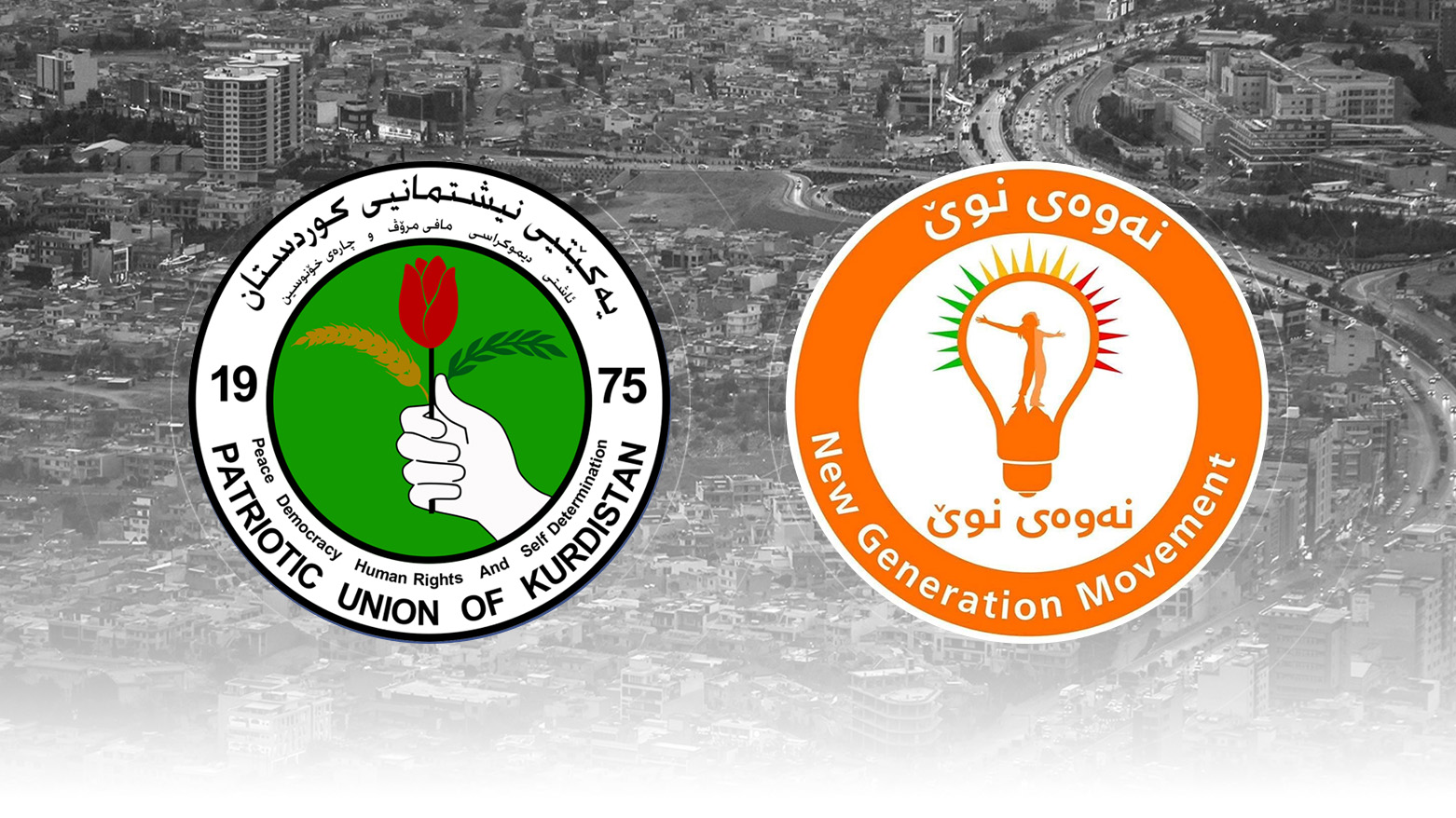
ERBIL (Kurdistan 24) - For nearly a decade, the New Generation Movement presented itself to the Kurdish electorate as a voice of discontent. Built on populist anti-establishment rhetoric, the movement appealed to voters frustrated by economic stagnation and what it described as the entrenched dominance of the Kurdistan Region's traditional ruling parties.
Yet, in a dramatic political realignment that has triggered senior resignations and widespread criticism, the movement has formally allied itself with the Patriotic Union of Kurdistan (PUK), the very political establishment it was founded to challenge.
The agreement came after New Generation leader Shaswar Abdulwahid was detained in Sulaimani on fraud-related allegations and released shortly before the alliance was announced.
Critics argue that the sequence of events raises serious questions about the circumstances surrounding the deal.
Beyond the controversy surrounding its timing, the agreement represents more than a tactical parliamentary arrangement.
It signals a broader political realignment with potentially significant implications for the stalled government formation process, the future of opposition politics, and the evolving balance of power between Erbil and Sulaimani.
The timing is particularly significant.
Months after the October 2024 parliamentary elections, the Kurdistan Region remains in political deadlock. Parliament has yet to reconvene, and negotiations to form a new cabinet remain stalled amid deep political disagreements.
By bringing New Generation's 15 parliamentary seats into closer coordination with the PUK, the agreement strengthens the latter's negotiating position in discussions with the Kurdistan Democratic Party (KDP).
Supporters of the alliance argue that cooperation between parliamentary blocs is a legitimate feature of democratic politics and could help advance negotiations over government formation.
Critics, however, contend that the agreement is more likely to reinforce the current impasse than resolve it, transforming parliamentary representation into a bargaining tool rather than a mechanism for governance.
The Opposition Narrative Under Pressure
For the New Generation Movement, the internal repercussions were immediate. The agreement prompted senior officials to resign publicly while questioning the movement's political direction and its founding principles.
Bashdar Sangawi, the movement's coordinator for the Garmian region, announced his resignation after eight years, describing the alliance as a "betrayal of moral and political principles."
In a sharply worded statement, Sangawi criticized what he described as the movement's rapid transition from condemning the ruling parties as corrupt to aligning itself with one of them.
"New Generation was founded on the rejection of subservience to ruling parties and the defense of the poor," he stated. "I refuse to be part of a servile political process."

In Erbil, the head of the movement's office, Sebur Mantk, offered an even stronger critique.
Mantk alleged that the alliance was not the product of political strategy but rather part of an arrangement intended to secure Abdulwahid's release from detention.
He further claimed that the agreement, allegedly facilitated by political figures outside the Kurdistan Region, effectively exchanged the movement's 15 parliamentary seats for the closure of Abdulwahid's legal cases and protection for his private business interests, including the controversial Chavy Land project.
"Voters are rightly asking: did they vote for New Generation or for the PUK?" Mantk said, predicting that the movement could suffer significant electoral losses in future elections.

These criticisms reflect broader concerns among sections of New Generation's traditional support base in Sulaimani, where opposition movements have historically drawn much of their electoral strength.
Residents interviewed by Kurdistan24 expressed disappointment with the alliance, with several comparing it to the trajectory of the Gorran (Change) Movement, whose political influence declined after entering formal cooperation with the PUK.
"The opposition won the votes of the disgruntled by promising to correct the political course," one Sulaimani resident observed. "Now we see them forced into an agreement in prison for political gain. We have lost all hope in this kind of opposition."
The backlash has also extended to civil society.
Rahman Ghareeb, coordinator of the Metro Center for Journalists' Rights and Advocacy, accused Abdulwahid of employing what he described as "intellectual terrorism" against critics of the agreement.
Referring to Abdulwahid's past populist rhetoric, Ghareeb argued that the movement must bear political responsibility for abandoning the principles on which it built its public support.

Read More: Metro Center Director Accuses New Generation Leader of 'Intellectual Terrorism'
A "Prison Agreement" and the Politics of Leverage
Criticism has also come from within KDP circles, where several officials have portrayed the alliance as the product of political pressure rather than strategic cooperation.
KDP officials have rejected comparisons between Abdulwahid's detention and that of historical political prisoners.
"Nelson Mandela was imprisoned for a national cause and the rights of his people," said Sangar Kanabi, head of the KDP's Branch 23. "In contrast, Shaswar Abdulwahid was detained over 15 to 20 cases involving fraud and financial disputes with ordinary citizens. Comparing the two is a grave insult to history."

Kanabi argued that the agreement marked the end of New Generation's role as an independent opposition force, claiming the movement had effectively surrendered its political position to the PUK.
He also maintained that the KDP remained confident in its electoral standing, arguing that the party has historically expanded its support during periods of heightened political polarization.
Former KDP Branch 10 head Rebwar Babkayi similarly described the arrangement as a "prison agreement," alleging it had been reached under duress.
"This is not a political alliance; it is a massive contradiction," Babkayi said. "You cannot claim to be the opposition while joining a party that has been in power for 33 years."
Taken together, these criticisms reflect the KDP's broader argument that the alliance is unlikely to alter the Region's long-term political balance despite changing the immediate parliamentary arithmetic.

Parliamentary Arithmetic vs. Political Reality
Veteran Kurdish politician and former PUK official Azad Jundiyani offered a broader assessment of the agreement during an interview with Kurdistan24's Basi Roj on Thursday.
Drawing on decades of political experience, Jundiyani argued that the agreement is more likely to prolong the current political crisis than resolve it.
"According to the election law, a major parliamentary bloc is what emerges from the election, not what is formed afterward," Jundiyani explained.
His remarks reflect a broader debate over whether post-election alliances can fundamentally reshape political legitimacy or whether electoral mandates remain the decisive source of negotiating authority.
Jundiyani further argued that the PUK's approach to negotiations resembled the use of institutional deadlock as political leverage, drawing a comparison to Hezbollah's tactics in Lebanon.
Addressing suggestions that a united PUK-New Generation front could pressure the KDP into major concessions, he invoked a well-known saying by late PUK founder Jalal Talabani: "We have seen wolves too, and we were not afraid."
"If it's a bet on whether this agreement is meant to frighten the KDP, I can say with certainty that the KDP is not afraid," Jundiyani stated.

He argued that the KDP has survived far greater political and security challenges since its founding in 1946 and remains an institution with substantial organizational cohesion.
Jundiyani also suggested that the agreement may reflect internal political calculations within the PUK itself.
"I believe any agreement with the New Generation is a sign that [the PUK's] balance is off, not to balance power in Kurdistan, but to balance their own internal situation."
The Broader Implications
The immediate consequence of the continued political deadlock remains the prolonged inability to reactivate parliament and form a new cabinet, delaying policymaking, economic initiatives, and institutional reforms while contributing to growing public frustration.
By aligning with the Region's largest opposition bloc, the PUK has undeniably strengthened its negotiating position ahead of government formation. Whether that translates into meaningful political gains, however, remains uncertain.
For the New Generation Movement, the more immediate challenge may be preserving the anti-establishment identity that fueled its rise.
The resignations of senior officials and public criticism from former supporters suggest the alliance has already complicated that effort.

More broadly, the agreement illustrates the increasingly fluid nature of post-election coalition politics in the Kurdistan Region, where parliamentary alliances can reshape negotiations even as debates continue over whether they can alter electoral legitimacy.
Whether the agreement ultimately facilitates government formation or merely deepens political polarization will depend less on parliamentary arithmetic than on its ability to withstand internal dissent, public skepticism, and the practical realities of coalition governance.
In that sense, the alliance may ultimately be remembered not simply as a parliamentary agreement, but as a defining test of the future credibility of opposition politics in the Kurdistan Region.