Thousands to Rally in Hasakah as Sere Kaniye IDPs Renew Return Demands
Displaced residents of Sere Kaniye will rally in Hasakah, renewing calls for a safe return amid Syria's unresolved displacement crisis and humanitarian hardship.
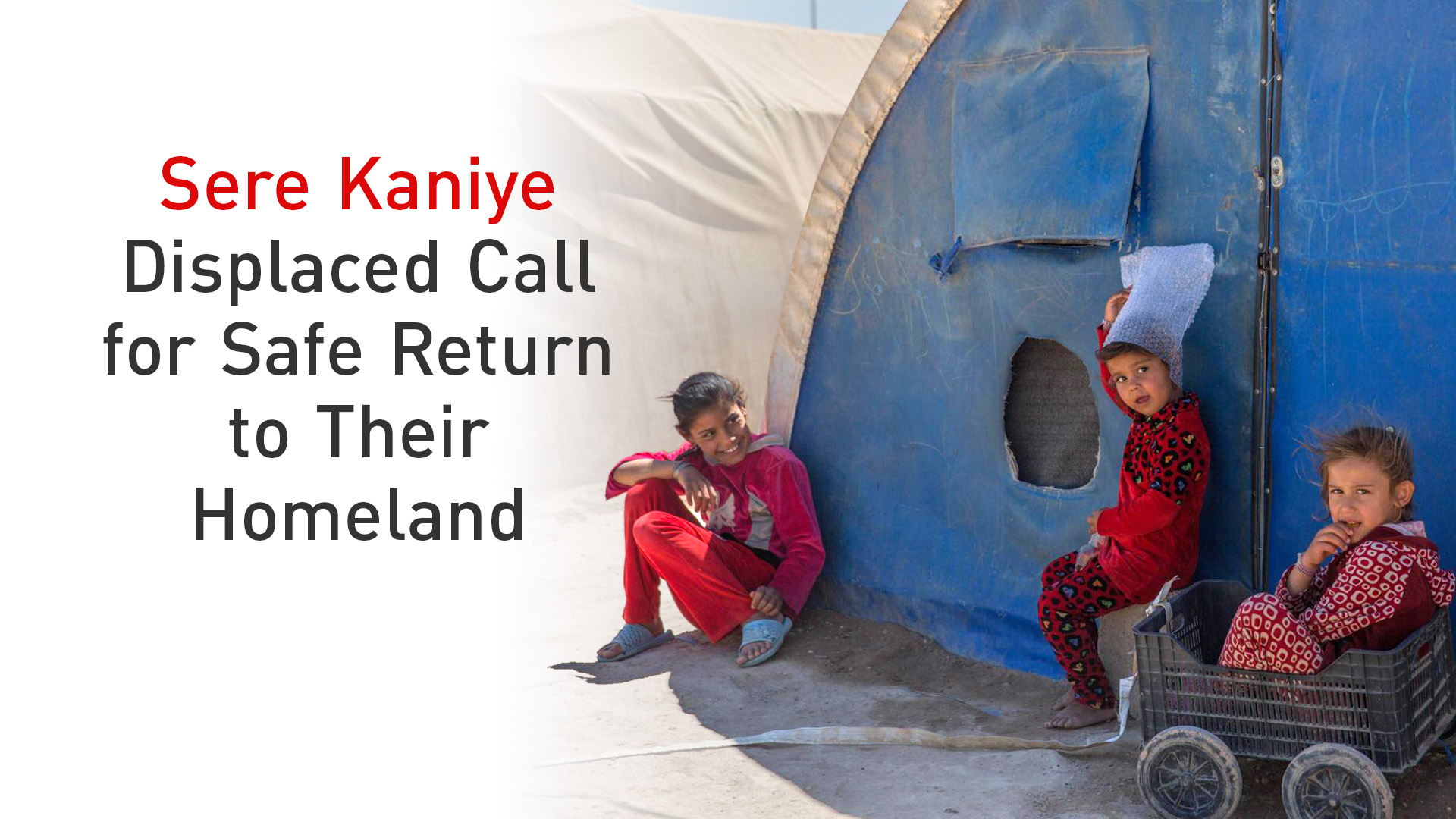
ERBIL (Kurdistan24) - Nearly seven years after conflict forced them from their homes, displaced residents of Sere Kaniye (Ras al-Ayn) are once again taking their demands into the public square, arguing that the right to return safely has remained out of reach despite years of ceasefire arrangements, humanitarian intervention and changing conditions across parts of northeast Syria.
According to Kurdistan24's correspondent in Hasakah, Akram Salih, thousands of displaced residents are expected to gather at 10:00 a.m. on Tuesday outside the Hasakah Governorate building.
Organizers say the assembly is intended to reinforce longstanding calls for a safe and dignified return to their homes and properties after years spent in displacement camps and scattered communities across Syria and neighboring Iraq.
The planned gathering carries significance beyond a single demonstration. It reflects mounting frustration among Syrians displaced by the country's prolonged conflict who continue to find themselves unable to return even as parts of northern Syria undergo demining operations, some roads reopen and discussions about stabilization gradually resume.
For many international observers, the question of whether displaced civilians can safely reclaim their homes has become one of the clearest measures of whether Syria's post-war recovery can move beyond military ceasefires toward lasting civilian security.
Committee representatives organizing the event argue that years of petitions to Syrian authorities have produced little tangible progress. They say repeated requests for guarantees allowing residents to return safely have not resulted in practical measures, leaving thousands in prolonged uncertainty over their future.
For families from Sere Kaniye, displacement has evolved from an emergency into a way of life. Many have spent years in the Washokani and Sere Kaniye camps near Hasakah, while others have sought refuge elsewhere in northeast Syria or in the Kurdistan Region.
Temporary shelters that were established as short-term responses have instead become long-term communities where residents continue to depend heavily on humanitarian assistance.
The effects of those years extend well beyond housing.
Families have endured interrupted education for children, shrinking employment opportunities, the loss of businesses and farmland, and persistent uncertainty over whether homes, shops and agricultural property remain intact.
Long separations have fractured extended families, while the psychological burden of prolonged displacement has become another defining feature of daily life.
Organizers say the timing of the assembly also reflects cautious optimism generated by recent developments elsewhere in northern Syria.
Some displaced residents of Afrin have recently been able to return to parts of their home region, raising hopes among people from Sere Kaniye that comparable arrangements could eventually be established for their communities.
While the circumstances differ, those returns have encouraged renewed discussion among displaced families about whether similar opportunities might emerge.
According to Salih, many residents believe that ongoing demining activities and the reopening of certain roads demonstrate that conditions have changed sufficiently to begin serious discussions about organized civilian returns. Yet, despite those developments, permission for widespread return has not materialized.
The roots of the crisis date to Oct. 2019, when Türkiye and allied Syrian opposition factions launched Operation Peace Spring, capturing Sere Kaniye and Gire Spi (Tal Abyad) after military operations across the border region.
More than 200,000 residents were displaced during the offensive, many fleeing toward Hasakah and surrounding areas. Later that month, separate ceasefire agreements brokered by the United States and Russia halted much of the fighting, but they did not lead to the large-scale return of civilians who had left their homes.
That disconnect between military agreements and civilian recovery remains one of the defining features of the displacement crisis.
While active front lines have shifted, unresolved security concerns, competing authorities, damaged infrastructure, questions surrounding property rights and the absence of comprehensive political arrangements continue to complicate prospects for return.
The humanitarian picture has also grown increasingly difficult as displacement has stretched into its seventh year.
Northeast Syria faces mounting economic pressures, including rising fuel prices, increasing costs for privately generated electricity and persistent inflation that has eroded purchasing power across the region.
Those challenges affect local communities broadly but weigh especially heavily on displaced families who often have limited incomes and remain reliant on aid.
Living conditions inside displacement camps have likewise become more difficult over time. Infrastructure originally designed for temporary occupancy has had to accommodate residents for years, while humanitarian agencies continue to confront funding pressures and expanding needs.
For many displaced households, everyday concerns now include access to reliable electricity, affordable heating fuel, healthcare and education alongside the larger question of returning home.
The continuing uncertainty also highlights broader international concerns surrounding post-conflict recovery.
Across Syria, the fate of displaced populations remains intertwined with debates over reconstruction, legal protections for property, humanitarian access and the conditions necessary for voluntary, safe and dignified return. Without durable political agreements and credible security guarantees, ceasefires alone have often proven insufficient to restore civilian life.
Against that backdrop, Tuesday's planned assembly represents more than a local expression of frustration. It underscores how one of Syria's longest-running displacement crises remains unresolved despite years of diplomatic efforts and humanitarian assistance.
Whether the demands voiced in Hasakah lead to concrete progress remains uncertain, but for thousands of former residents of Sere Kaniye, the hope of returning home continues to shape both their daily lives and the broader conversation about Syria's future.
|
Summary Years after fleeing Sere Kaniye, displaced residents are organizing a public assembly in Hasakah to demand a safe return home. Their campaign highlights one of Syria's longest-running displacement crises, exposing the gap between ceasefire agreements, humanitarian relief and meaningful post-war recovery. |