More Than 50 Houthis Killed in Southern Hodeidah, Yemeni Officials Say
Fresh fighting in southern Hodeidah has left dozens dead, adding pressure to Yemen's fragile military calm while heightening concerns over Red Sea security and international shipping.
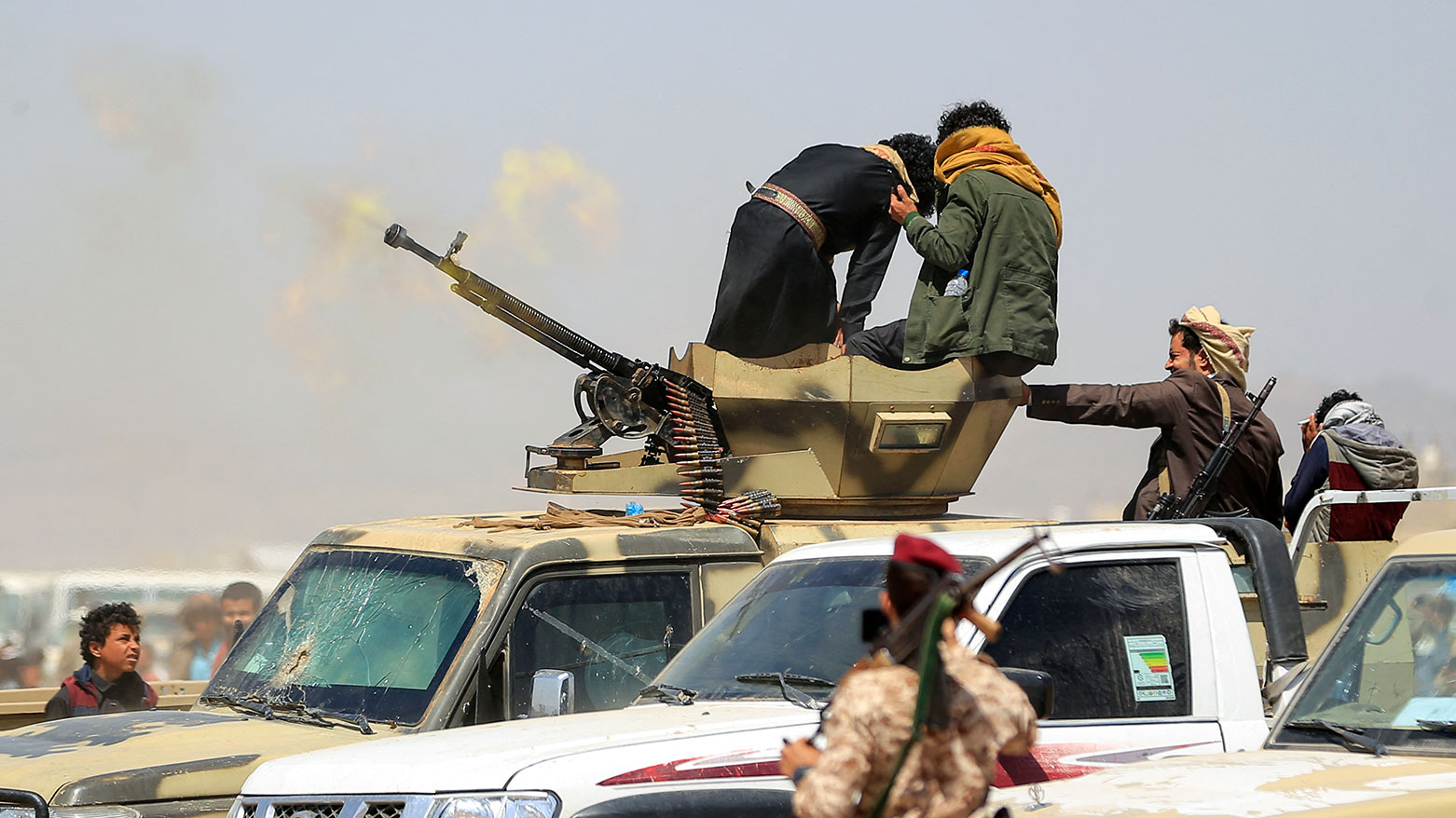
ERBIL (Kurdistan24) - Fierce fighting between Yemeni government forces and Houthi militants in southern Hodeidah has left more than 50 Houthi fighters dead, according to Yemeni officials, marking one of the deadliest confrontations in the strategic Red Sea province in recent months and raising new concerns over the stability of a conflict that has remained relatively contained since 2022.
According to Kurdistan24, the clashes erupted on the Jebel Dobas front north of Hays after Houthi forces launched what Yemeni Minister of State Walid al-Qadimi described as a large-scale assault against government positions.
The minister said the Tihami Zaraniq Brigades repelled the offensive, killing more than 50 Houthi militants, while 15 government soldiers were also killed during the battle.
Yemeni officials said the attacking force employed suicide-style tactics in an attempt to penetrate government defensive lines and push toward areas held by government forces in southern Hodeidah.
They said the assault ultimately failed, forcing the militants to withdraw after hours of fighting involving heavy and light weapons.
The latest violence carries significance well beyond Yemen's battlefield.

Hodeidah sits along the Red Sea coast near the Bab al-Mandab Strait, one of the world's most strategically important maritime chokepoints linking the Red Sea with the Gulf of Aden.
Renewed instability in the area comes as commercial shipping continues to face elevated security risks, making developments around the province closely watched by regional governments, international naval forces, and global trade operators.
Following the clashes, Rashad al-Alimi, chairman of Yemen's Presidential Leadership Council, reportedly spoke by telephone with council member Tariq Saleh, praising Yemen's government forces for their defense of frontline positions.
Alimi also called for heightened military readiness to confront any future threats to the country's stability, signaling concern that fighting could intensify despite the broader reduction in nationwide hostilities over the past several years.
The confrontation also follows another deadly incident in which at least 14 government troops were killed during a Houthi attack in Hays district, underscoring an increase in localized violence around Hodeidah.
Read More: Houthi Attack Kills 14 Yemen Government Troops Near Hodeidah
While those clashes did not significantly alter territorial control, they highlighted how quickly the front lines can become active despite the relative military stalemate established after the United Nations-brokered truce in April 2022.

Although the ceasefire formally expired, it substantially reduced large-scale offensives, leaving Yemen divided between Houthi-controlled northern territories, including the capital, Sanaa, and much of the Red Sea coastline, and government-held areas across much of the south.
Sporadic clashes have continued since then, periodically threatening diplomatic efforts aimed at reaching a more durable political settlement.
The renewed fighting comes as maritime security concerns have also intensified.
In an earlier Kurdistan24 report, the United Kingdom Maritime Trade Operations (UKMTO) said a cargo vessel came under attack approximately 30 nautical miles southwest of Hodeidah.
Armed security personnel aboard the ship returned fire, and the crew escaped unharmed, while authorities opened an investigation into the incident. No group immediately claimed responsibility.
That episode reinforced growing concerns over security in the Red Sea after the Houthis warned they could resume attacks on commercial shipping.

Read More: Cargo Ship Attacked in Red Sea off Yemen, Crew Safe
Previous assaults on vessels transiting waters near the Bab al-Mandab Strait disrupted one of the world's busiest trade corridors, forcing many shipping companies to reroute vessels around southern Africa rather than use the Suez Canal, increasing transit times and transportation costs.
The Houthis, who are backed by Iran, have also recently renewed threats against Saudi Arabia, the principal supporter of Yemen's internationally recognized government.
Those developments illustrate how localized military confrontations inside Yemen remain closely intertwined with broader regional rivalries, adding another layer of uncertainty to diplomatic efforts aimed at preventing a wider escalation.
For international audiences, the latest battle underscores that Yemen's conflict remains capable of generating consequences far beyond its borders.

Continued fighting around Hodeidah not only jeopardizes the fragile military calm established after 2022 but also heightens risks to Red Sea shipping, regional security, energy supply routes, and diplomatic initiatives seeking to stabilize one of the Middle East's most strategically significant conflict zones.
As clashes persist along the western coast, policymakers will be watching closely to determine whether the violence remains localized or signals a broader deterioration in Yemen's fragile security landscape.

|
Summary More than 50 Houthi militants were killed after Yemeni government forces repelled an assault in southern Hodeidah, officials said. The renewed fighting threatens Yemen's fragile post-2022 calm as violence near the Red Sea raises fresh concerns over regional security and global shipping. |