Report: Hamas Plans Governance Transition as Mediators Push Gaza Ceasefire Talks
According to Asharq Al-Awsat, Hamas is preparing to dissolve its de facto Gaza governing body in a move that could reshape ceasefire negotiations, humanitarian planning, and postwar governance.
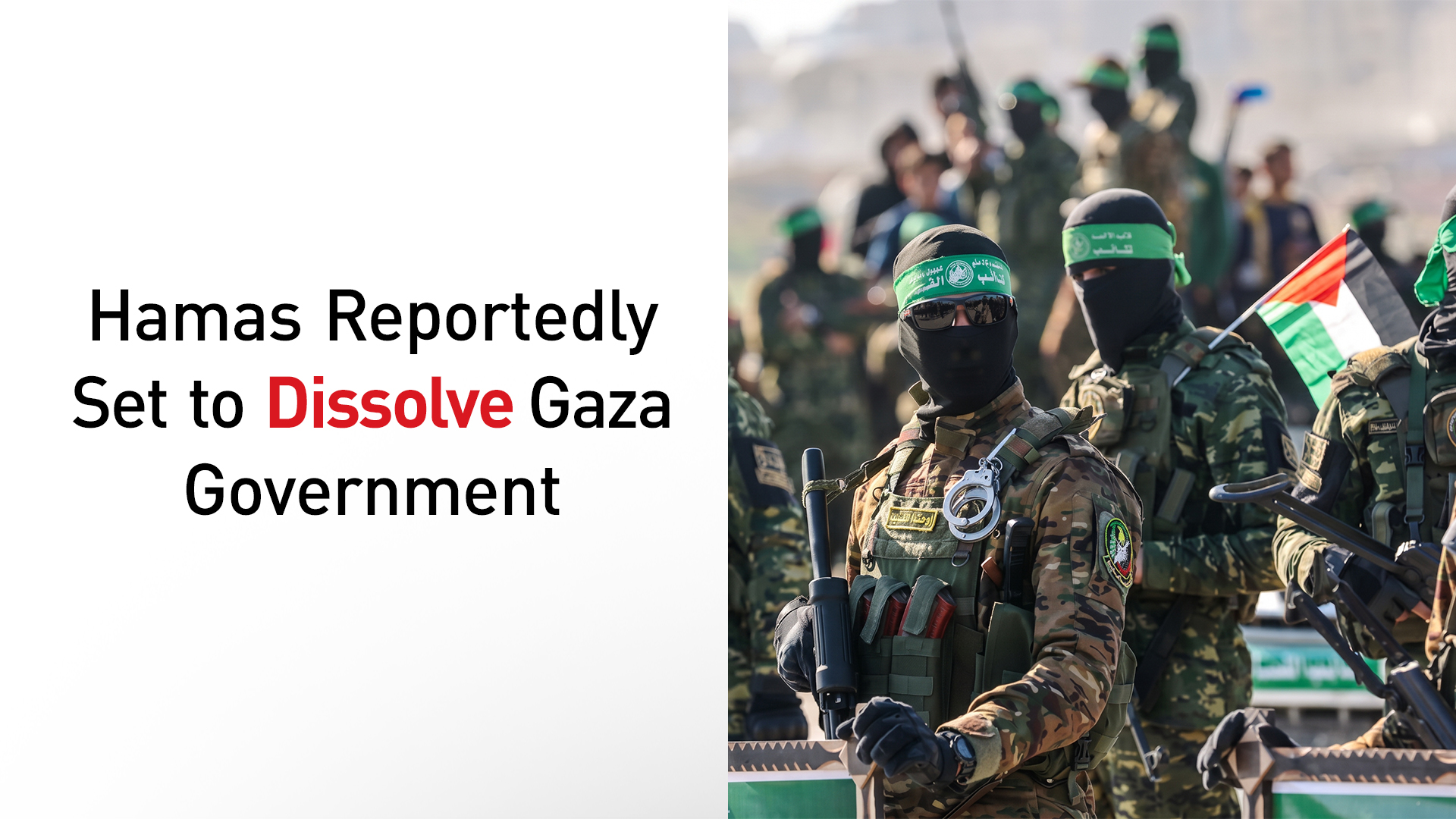
ERBIL (Kurdistan24) - Hamas is preparing to dissolve its de facto governing body in the Gaza Strip after nearly two decades in power, according to a report by Asharq Al-Awsat, in what could become one of the most consequential political developments in ongoing efforts to shape Gaza's postwar future. If implemented, the reported move would represent more than an administrative change, potentially opening a pathway for renewed ceasefire diplomacy, humanitarian coordination, and discussions over who governs the enclave after the conflict.
According to Asharq Al-Awsat, which cited two Hamas sources, the movement's leadership is moving toward dissolving the Governmental Work Follow-up Committee, the body that has overseen Gaza's civilian administration under Hamas rule.
The sources said the decision is intended to facilitate the entry of the National Committee for the Administration of Gaza, also described as a technocratic committee led by Palestinian official Ali Shaath. One source reportedly said an official announcement could come as early as Monday, while another indicated that the decision was imminent.
The reported initiative carries significance beyond Palestinian domestic politics.
Governance has become a central element of negotiations over Gaza's future, with mediators and international stakeholders increasingly linking sustainable ceasefires to credible civilian administration, humanitarian access, reconstruction planning, and long-term security arrangements.
A transition toward a technocratic body could therefore influence diplomatic calculations well beyond Gaza itself.
The Times of Israel (ToI), in reporting by ToI Staff, cited the Asharq Al-Awsat report and similarly said Hamas was preparing to dissolve its governing body to allow the National Committee for the Administration of Gaza to assume responsibility during a postwar transition.
The Israeli outlet noted that the committee has yet to enter Gaza, reflecting the broader political and security obstacles surrounding any transfer of administrative authority.
According to Asharq Al-Awsat, the reported governance shift comes as Palestinian factions prepare for another round of talks in Cairo aimed at narrowing differences over the next phase of the Gaza ceasefire process.
The newspaper said Hamas and other Palestinian groups are expected to participate in meetings mediated by Egypt, Qatar, and Türkiye as negotiators seek to preserve momentum toward a broader political framework.
The Saudi newspaper also reported that discussions remain focused on a roadmap associated with veteran diplomat Nickolay Mladenov, whose participation in the Cairo meetings had not been officially confirmed at the time of publication.
According to the report, sources indicated that his involvement would depend on progress in negotiations over unresolved provisions of the proposed agreement.
Among the most difficult issues remains the future of Hamas's weapons.
Asharq Al-Awsat reported that Hamas continues to advocate a gradual process for documenting and transferring weapons under arrangements involving a designated Palestinian authority, while insisting that Israel commit to withdrawing from areas currently under its military control.
The newspaper said negotiators are working on revised language concerning disarmament in an effort to bridge remaining differences.
Hamas spokesperson Hazem Qassem, as quoted by Asharq Al-Awsat, said the movement had approached the latest negotiations constructively and remained committed to transferring Gaza's administrative responsibilities to the National Committee.
His remarks linked governance reform to broader objectives, including ending the war, expanding humanitarian relief, and beginning reconstruction.
Israel has continued to emphasize security as a prerequisite for any reconstruction effort. Benjamin Netanyahu said over the weekend that Gaza could not be rebuilt without demilitarization, reiterating a position that has become a central element of Israel's negotiating stance.
The Times of Israel also reported that Israel continues to view Hamas's disarmament as an essential condition for implementing longer-term postwar arrangements.
Separate reporting cited by Asharq Al-Awsat indicated that pilot governance arrangements are also under consideration.
The newspaper referenced an Israel Hayom report describing plans for Palestinian police units to begin training for duties in selected areas of Rafah under international supervision, part of a broader effort to establish alternative civilian administration in portions of Gaza.
For international policymakers and humanitarian organizations, the governance question has become inseparable from ceasefire diplomacy.
Donor governments and aid agencies generally require stable administrative structures capable of overseeing reconstruction funds, coordinating humanitarian assistance, and maintaining basic public services.
Similarly, regional mediators view governance arrangements as critical to preventing renewed instability once active fighting subsides.
Experience in post-conflict settings has shown that ceasefires alone rarely produce lasting stability unless accompanied by workable political and administrative frameworks.
Disagreements over security responsibilities, civilian authority, and disarmament often determine whether peace initiatives evolve into sustainable political settlements or return to confrontation.
That dynamic helps explain why Egypt, Qatar, Türkiye, and other mediators continue to devote significant attention not only to military de-escalation but also to the future governance of Gaza.
Whether Hamas formally dissolves its governing body, as Asharq Al-Awsat reported, would mark an important political signal in Gaza's evolving landscape.
Even so, the durability of any transition will ultimately depend on progress in ceasefire negotiations, agreement on governance mechanisms, security arrangements acceptable to both sides, reconstruction planning, and broader political understandings among Palestinian factions, Israel, and the international mediators seeking to shape Gaza's postwar future.
|
Summary According to Asharq Al-Awsat, Hamas is preparing to dissolve its Gaza governing body to make way for a technocratic administration. The reported move could influence Gaza ceasefire talks, reconstruction efforts, humanitarian access, and broader postwar governance negotiations. |