Turkey Seeks Strategic Role in European Defense as NATO Summit Opens in Ankara
Ankara aims to leverage booming defense industry and growing military clout to secure deeper integration into Europe's security architecture
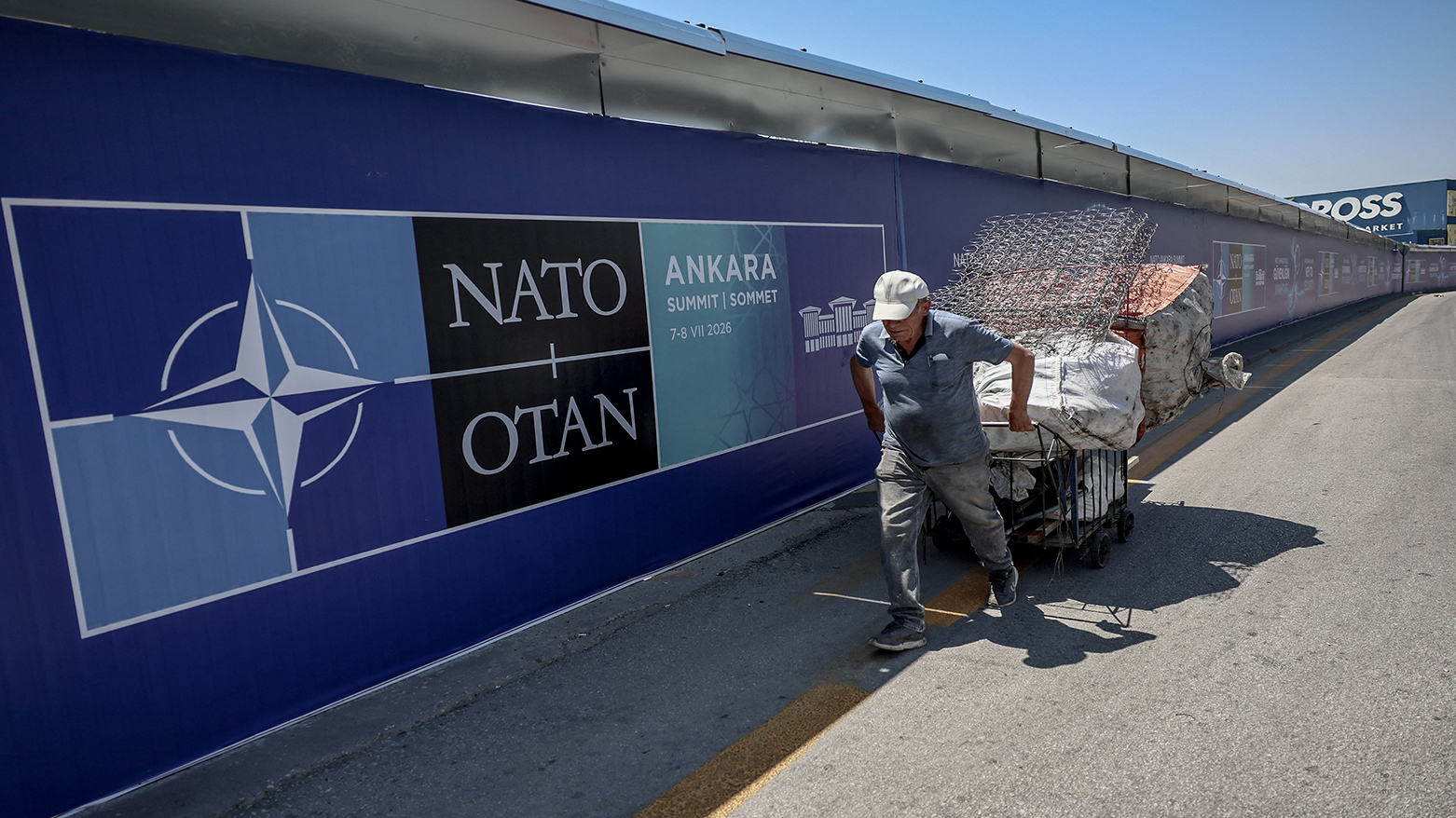
ERBIL (Kurdistan24) — Turkey is looking to use this week's NATO summit in Ankara to reinforce its position as an indispensable European security partner, as President Recep Tayyip Erdogan presses allies to grant Ankara a greater role in the continent's evolving defense architecture despite lingering political tensions.
The two-day summit opens on Tuesday with the Defense Industry Forum, an event that has grown from a peripheral gathering into a central feature of the NATO agenda.
Around 3,500 companies are expected to showcase Turkey's expanding defense capabilities, highlighting the country's ambitions to move beyond being a major arms exporter to becoming a strategic partner in Europe's defense planning.
"It is inconceivable to establish European security without Turkey," Erdogan has said while urging European governments to include Ankara in all of the continent's defense and security initiatives, including the European Union's 150-billion-euro ($176-billion) Security Action for Europe (SAFE) defense investment program.
Turkey possesses NATO's second-largest military after the United States, with approximately 355,000 active-duty personnel and another 378,000 reservists. Over the past decade, it has also transformed into one of the world's fastest-growing defense manufacturers, producing drones, armored vehicles, tanks, naval vessels, and advanced military technologies that have attracted buyers across Europe, the Middle East, Africa, and Asia.
According to the Stockholm International Peace Research Institute (SIPRI), Turkey ranks as the world's 11th-largest arms exporter, accounting for 1.8 percent of the global defense market. Turkish officials say defense exports surged by 48 percent in 2025, compared with 29 percent growth the previous year.
"We now achieve in one week what we used to achieve in one year," Erdogan said last month, pointing to rising exports of drones, tanks, armored vehicles and warships.
He noted that a recently delivered warship to Romania marked Turkey's first export of a military vessel to a fellow EU and NATO member.
Turkish officials insist the country's objective extends beyond supplying military equipment.
"We do not want to be seen only as a supplier. We want to be regarded as a strategic partner... for joint production and technology cooperation," Haluk Gorgun, head of Turkey's SSB Defense Industry Agency, told Defence24 last month.
Analysts say Ankara hopes the NATO summit will demonstrate that Turkey can contribute not only industrial capacity but also technological expertise to Europe's efforts to strengthen its defense capabilities following Russia's military operations in Ukraine and growing uncertainty over the future role of the United States in European security.
"Turkey has been largely left out of Europe-wide programs and projects. That is what Turkey wants to change... And to do that, it will use the summit to showcase its capabilities," Ozgur Unluhisarcikli, director of the German Marshall Fund's Ankara office, told AFP.
Despite its expanding defense sector, Turkey continues to face skepticism from several European allies over its strategic orientation, particularly following its 2017 purchase of Russia's S-400 air defense missile system, which triggered sanctions from Washington and led to Ankara's removal from the U.S.-led F-35 fighter jet program.
"They are asking because of Turkey's track record with Russia," Unluhisarcikli said, referring to concerns among European governments over sharing sensitive military technologies with Ankara.
Relations between Turkey and several European countries deteriorated sharply over the past decade for many different reasons, including disputes with Greece and Cyprus over maritime boundaries and energy exploration in the eastern Mediterranean.
Although analysts say relations have entered a period of gradual "detoxification"—helped by Turkey's support for Ukraine following the start of Russia's military operations in Ukraine in 2022—the unresolved S-400 issue continues to complicate ties with both Washington and parts of Europe.
Professor Mustafa Aydin, an international relations expert at Ankara's TOBB University, said Turkey has strengthened defense cooperation with Britain and several European countries but continues to face political resistance within the European Union.
"It's not working with the European Union as a whole because there are a couple of members who are blocking it," Aydin told AFP, adding that France and Germany remain the most influential opponents of broader Turkish participation.
A central objective for Ankara is securing greater access to the EU's SAFE defense program, which is intended to strengthen Europe's defense industrial base. Under current rules, companies from non-EU countries such as Turkey can supply no more than 35 percent of the components used in weapons financed through the initiative.
To gain broader access, Turkey would first need to negotiate a security partnership with the European Union and subsequently obtain unanimous approval from all 27 member states.
"The political issues blocking Ankara's access to the SAFE program are the dispute between Turkey, Greece and Cyprus, but also France's ill will," said Sinan Ulgen, a senior fellow at Carnegie Europe.
Given Europe's increasingly challenging security environment—including Russia's ongoing war in Ukraine and uncertainty surrounding long-term U.S. security commitments—Ulgen argued that excluding Turkey from major European defense initiatives would be counterproductive.
Within Europe, Turkey has already deepened defense cooperation with countries including Spain, Romania, Poland, and especially Italy. Turkish drone manufacturer Baykar has acquired Italy's Piaggio Aerospace and signed a strategic partnership with Italian defense giant Leonardo, further strengthening Ankara's industrial footprint in Europe.
Outside the European Union, Britain is partnering with Turkey on the development of the KAAN fifth-generation stealth fighter program, one of Ankara's flagship defense projects aimed at reducing dependence on foreign military aircraft.
Turkish officials also hope that next week's NATO summit, expected to be attended by U.S. President Donald Trump, could help unlock the delivery of U.S.-made jet engines needed for the KAAN program, a move that would mark another step toward expanding Turkey's role as both a military power and a key player in Europe's evolving defense landscape.