Iraq Seizes Additional 25 Billion Dinars in Expanding Jumaili Corruption Case
The latest recovery of cash, U.S. currency and gold underscores the Iraqi judiciary's expanding effort to trace allegedly diverted public assets through increasingly complex financial investigations.
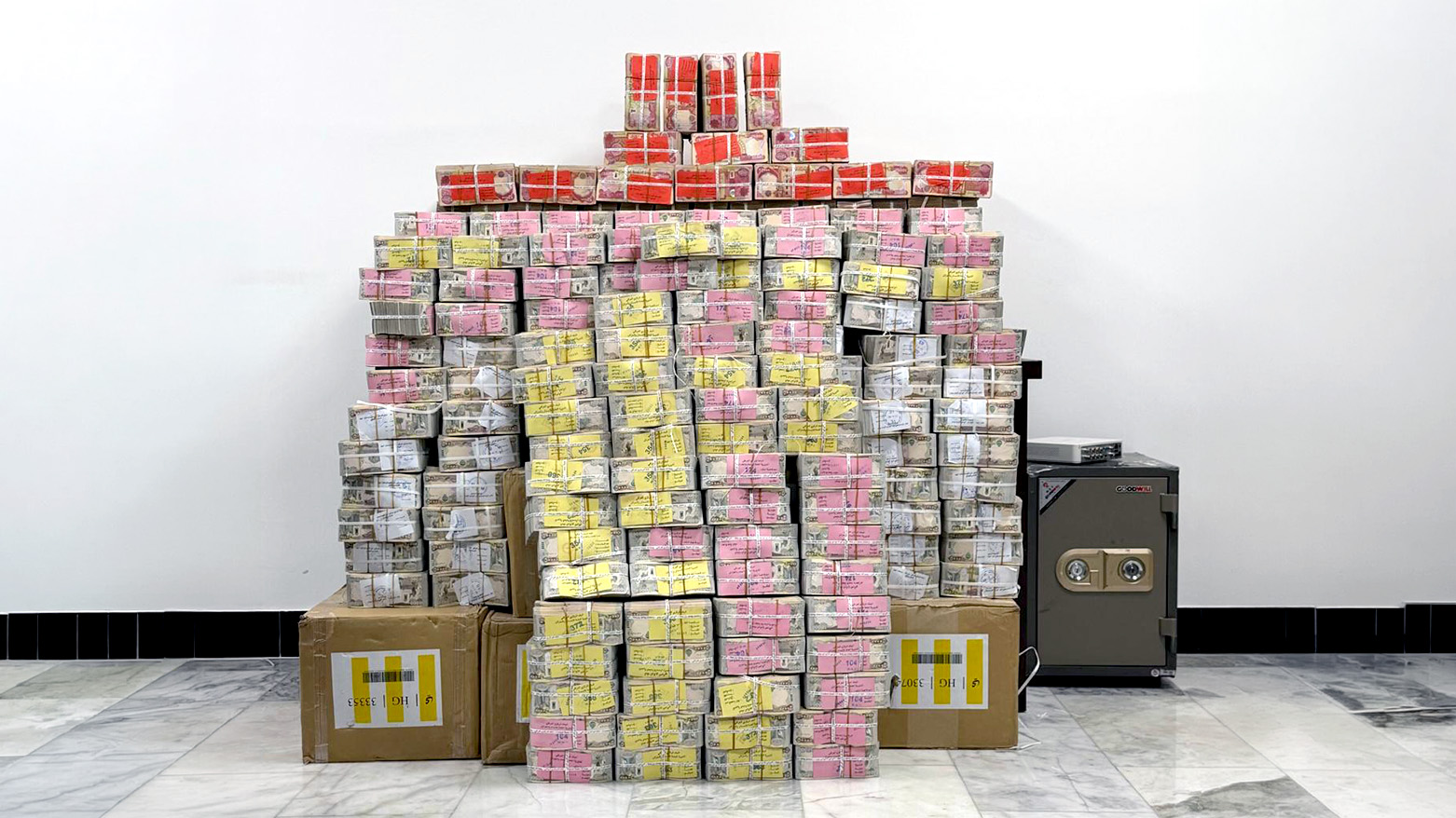
ERBIL (Kurdistan24) - Iraq's Supreme Judicial Council announced Monday that investigators have recovered an additional 25 billion Iraqi dinars, $1 million in cash and nearly five kilograms of gold during searches linked to the corruption investigation involving former Oil Ministry Undersecretary for Refining Affairs Adnan al-Jumaili, marking the latest development in one of the country's most consequential anti-corruption cases.
According to an investigative judge at the Criminal Anti-Corruption Court, the assets were discovered concealed inside plastic water containers at a residence in Tikrit after what the judiciary described as an extensive asset-tracing operation.
Authorities allege the funds were acquired through schemes that defrauded public projects. The allegations remain under judicial investigation and have not been adjudicated in court.
The latest recovery illustrates how an inquiry that began with the detention of a senior oil official has evolved into a far broader judicial effort aimed at identifying alleged corruption networks, tracing concealed wealth and recovering public assets through legal procedures.
Each successive operation has expanded both the scale of the investigation and the challenges facing investigators as they pursue assets allegedly hidden through increasingly sophisticated means.
According to the Supreme Judicial Council, the newly recovered assets raise the total value of property seized in connection with the case to 127 billion Iraqi dinars and $24 million in cash, in addition to numerous real estate holdings, luxury vehicles and substantial quantities of gold.
The investigative judge said judicial inquiries and pursuit operations remain ongoing as authorities seek to identify additional suspects and complete legal proceedings in accordance with Iraqi law.
While the latest announcement drew attention because of the volume of assets recovered, investigators have increasingly emphasized the forensic work required to locate wealth allegedly concealed outside conventional financial channels.
Modern financial crime investigations frequently rely on detailed analysis of financial records, property ownership, witness testimony and coordinated search operations rather than arrests alone.
That broader investigative approach has become increasingly visible throughout the al-Jumaili case, where authorities continue to pursue assets they believe may be linked to alleged corruption involving public-sector contracts.
Under Iraq's legal system, any determination of criminal responsibility will ultimately depend on evidence presented before the courts.
The newest seizure follows a series of earlier recoveries that have steadily broadened the investigation.
Kurdistan24 previously reported that Iraqi security forces uncovered nearly three billion Iraqi dinars buried beneath a residence in the Shirqat sub-district of Salahuddin Province while executing searches connected to the same investigation. Authorities also seized four luxury vehicles, a Toyota Hilux, BMW, Chevrolet Tahoe and Cadillac, during that operation.
Read More: Buried Cash, Luxury Vehicles Recovered in Iraq's Widening Oil Corruption Investigation
According to Kurdistan24's earlier reporting, investigators have continued identifying additional assets following al-Jumaili's arrest, with successive searches revealing wealth allegedly concealed in private properties.
Those discoveries, authorities say, have contributed to an expanding picture of how suspected illicit assets may have been dispersed or hidden.
The investigation has also acquired an international dimension. Earlier reporting by Kurdistan24 cited statements from Iraq's Communications Minister alleging that two suspects connected to the broader case fled to France with approximately $500 million.
Those allegations remain under investigation and have not been proven in court. Iraqi authorities have said they are pursuing international legal mechanisms to locate suspects and recover assets believed to have been transferred abroad.
For international observers, the significance of the case extends beyond the value of individual seizures.
Recovering allegedly diverted public funds is increasingly regarded as an important measure of institutional capacity, particularly where investigations involve complex financial transactions, concealed assets or multiple jurisdictions.
Cross-border asset recovery often requires cooperation among courts, financial regulators, law enforcement agencies and international partners before funds can be identified, frozen or repatriated.
The continuing investigation also carries broader implications for Iraq's governance agenda.
Credible judicial proceedings, transparent asset recovery and adherence to due process can influence investor confidence, reinforce institutional accountability and support wider economic reform efforts.
Equally, the complexity of tracing suspected illicit wealth illustrates the challenges governments face in addressing sophisticated financial crime.
As Iraq's anti-corruption campaign advances, the measure of its success is unlikely to rest on the size of any single seizure.
Rather, it will depend on whether judicial proceedings withstand legal scrutiny, additional public assets are lawfully recovered where evidence supports such action, and the process strengthens confidence in the country's institutions through accountability grounded in the rule of law.
|
Summary Iraq's Supreme Judicial Council says investigators seized an additional 25 billion dinars, $1 million and nearly five kilograms of gold in the Adnan al-Jumaili case. The expanding asset recovery effort has become a key test of judicial accountability, governance reform and financial crime investigations. |