Hamas Dissolves Gaza Governing Body
Hamas said it has dissolved the civilian body that governed Gaza for nearly 20 years, paving the way for a technocratic administration under a U.S.-backed ceasefire plan. The move may reshape postwar talks, but disputes over disarmament and security remain unresolved.
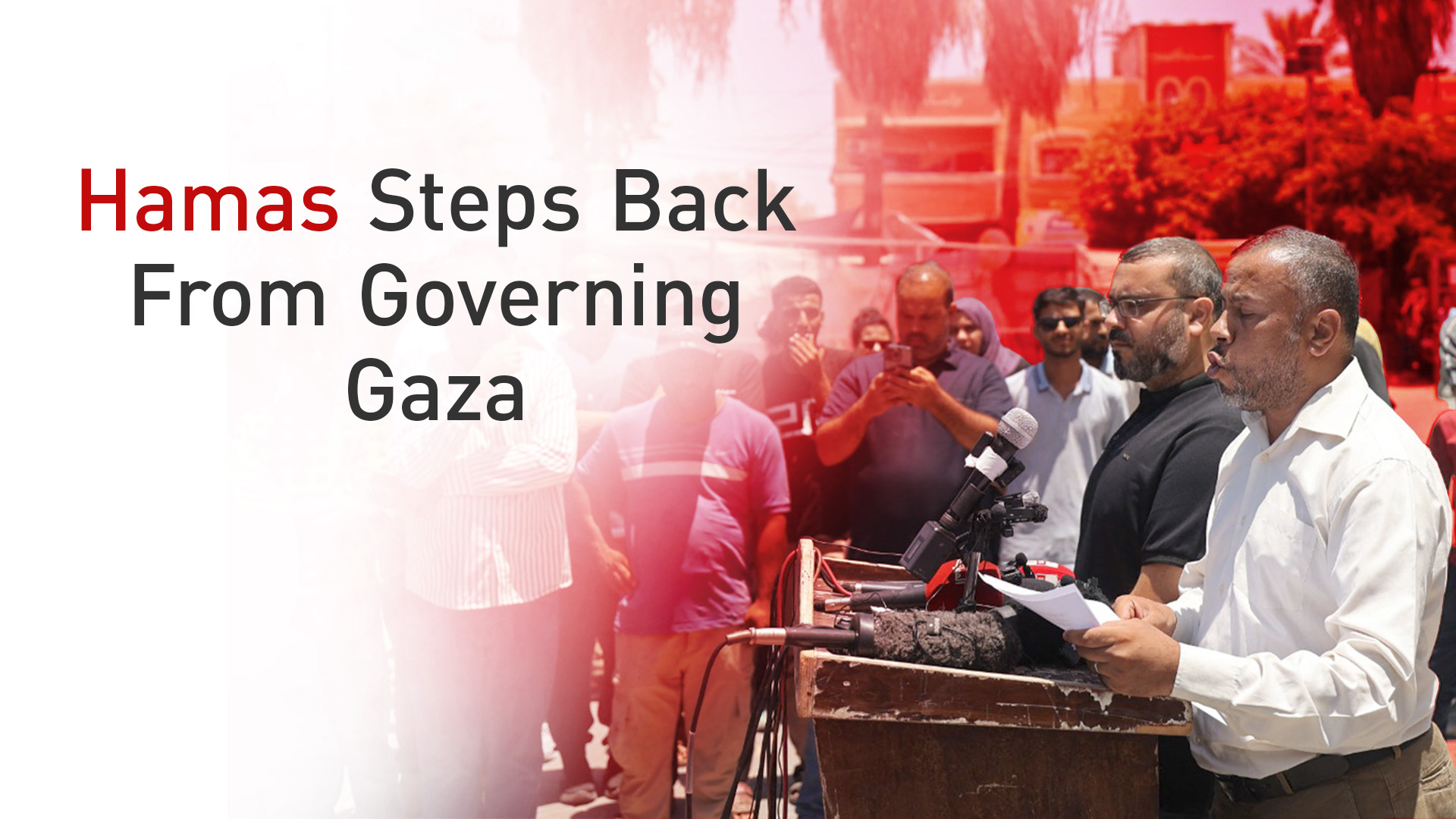
ERBIL (Kurdistan24) - Hamas announced Monday that it has dissolved the governing body that administered the Gaza Strip for nearly two decades, marking one of the movement's most consequential political decisions since seizing control of the enclave in 2007 and potentially altering the trajectory of ongoing negotiations over Gaza's postwar future.
According to Agence France-Presse (AFP), the Palestinian Islamist movement formally disbanded its Government Emergency Committee, the civilian authority that had overseen day-to-day governance in Gaza, to facilitate the transfer of administrative responsibilities to the National Committee for the Administration of Gaza (NCAG), a technocratic body created under the framework of the U.S.-brokered ceasefire initiative.
The announcement represents a significant political shift, but its practical implications remain uncertain.
While Hamas has now publicly relinquished responsibility for Gaza's civilian administration, the broader negotiations remain centered on unresolved questions surrounding security arrangements, Israeli military withdrawals, and the movement's future military capabilities.
Perhaps most striking is the timing of the decision.
For months, diplomatic efforts led by the United States and regional mediators have concentrated on securing Hamas's disarmament as part of a broader roadmap toward ending the war.
Instead of announcing movement on that issue, Hamas unveiled a unilateral decision to step away from governing the territory, introducing a new political variable into negotiations that had largely focused on military and security issues.
Equally notable is what has not happened.

As of Monday, none of the principal mediators, including Qatar, Egypt, the United States, or Israel, had publicly endorsed or commented on Hamas's announcement.
Their silence suggests the move was not presented as part of an agreed negotiating package, leaving open the question of whether it will be regarded as a meaningful concession or merely a political gesture that leaves the central dispute over disarmament unresolved.
According to AFP, Ismail al-Thawabta, head of Hamas's government media office, confirmed that Mohammed al-Farra, who headed the government's emergency committee, had formally submitted his resignation and dissolved the governing body to facilitate the transition.
"Hamas has taken a new step in that it will no longer be in charge of the Gaza Strip," Hamas spokesperson Hazem Qassem told AFP, adding that the movement hoped the technocratic committee could enter Gaza quickly and assume governmental responsibilities.
AFP also reported that Hamas had informed other Palestinian factions of its decision during recent meetings in Cairo, where negotiations over the next phase of the ceasefire have continued.
The development closely follows reporting published earlier by the Saudi newspaper Asharq Al-Awsat, which first cited two Hamas sources saying the movement was preparing to dissolve its governing structure.
That report, later highlighted by The Times of Israel (ToI) in coverage by ToI Staff, said the move was intended to clear the way for the National Committee for the Administration of Gaza to begin governing the enclave during a transitional period.

As previously reported by Kurdistan24, citing Asharq Al-Awsat and The Times of Israel, the technocratic committee has remained outside Gaza for months, largely because disagreements over Hamas's disarmament and Israeli security concerns have prevented its deployment inside the territory.
Those reports also indicated that governance had become an increasingly important pillar of ceasefire diplomacy alongside humanitarian relief, reconstruction planning, and broader political negotiations.
Read More: Report: Hamas Plans Governance Transition as Mediators Push Gaza Ceasefire Talks
The latest announcement therefore appears to transform what had been a reported proposal into official Hamas policy.
Even so, substantial obstacles remain before any administrative transition can occur.
AFP noted that negotiations over the second phase of the ceasefire have stalled for months. While the first phase secured the release of the remaining Israeli hostages held by Hamas in exchange for Palestinian prisoners detained by Israel, discussions regarding subsequent stages, including Israeli troop withdrawals and Hamas's disarmament, have failed to produce agreement.
According to AFP, Israeli forces have expanded their military presence in Gaza in recent months and now control nearly 70 percent of the territory.
Hamas, meanwhile, continues to argue that a recognized Palestinian administrative authority should first assume responsibility for civilian governance before any discussions regarding its weapons can advance.
That position mirrors earlier reporting by Asharq Al-Awsat, which said negotiators had been working to narrow differences over language relating to disarmament while Hamas sought guarantees concerning Israeli withdrawals from territory captured during the conflict.
Israeli officials have consistently maintained that demilitarization remains indispensable for any long-term settlement.
As The Times of Israel previously reported, Prime Minister Benjamin Netanyahu has argued that reconstruction of Gaza cannot proceed unless Hamas relinquishes its military capabilities, making disarmament a central Israeli condition for implementing any postwar framework.
That fundamental disagreement remains unresolved despite Monday's political announcement.

Beyond the immediate negotiations, the governance question carries wider implications for humanitarian operations and reconstruction.
International donors and aid organizations have repeatedly emphasized the need for a credible civilian administration capable of managing reconstruction funding, restoring public services, and coordinating humanitarian assistance after years of devastating conflict.
A functioning technocratic authority could therefore provide an institutional framework that many international partners consider essential for long-term stabilization.
Whether Hamas's decision ultimately advances that objective will depend less on the announcement itself than on how the principal negotiating parties respond.
If mediators conclude that relinquishing civilian administration represents a meaningful political concession, it could inject new momentum into stalled ceasefire diplomacy.
If, however, Israel and the mediating governments continue to regard Hamas's military disarmament as the indispensable condition for any lasting settlement, Monday's announcement may prove to be only one step in a negotiation whose most difficult issues remain unresolved.
For now, Hamas has altered the political landscape surrounding Gaza's future governance. Whether that change becomes a turning point in the ceasefire process, or simply another chapter in an extended diplomatic impasse, will become clearer as regional mediators and the parties to the conflict reveal their response in the days ahead.
|
Summary Hamas announced the dissolution of the body that governed Gaza for nearly two decades, clearing the way for a technocratic administration. The move could reshape ceasefire diplomacy, though mediators and Israel have yet to indicate whether it changes demands over Hamas's future role. |