Renewed U.S.-Iran Strikes Put Fragile Ceasefire Under Intensifying Pressure
Fresh military exchanges across the Middle East have heightened concerns over regional stability even as diplomatic channels toward a permanent agreement remain open.
ERBIL (Kurdistan24) - A new round of military exchanges between the United States and Iran has sharply increased pressure on a fragile interim ceasefire, with strikes reported across multiple countries on Thursday raising fears that efforts to prevent a broader regional conflict could quickly unravel.
According to reporting by Jon Gambrell of The Associated Press, the United States carried out a new wave of airstrikes inside Iran, while Tehran responded with attacks targeting U.S.-aligned countries across the Gulf and the wider Middle East.
The latest escalation follows repeated violations that have strained an interim arrangement intended to halt months of fighting and create space for negotiations on a permanent settlement.
The renewed hostilities extended well beyond the immediate battlefield.
Air raid sirens sounded repeatedly in Bahrain, home to the headquarters of the U.S. Navy's Fifth Fleet, while missiles were directed toward Kuwait and Qatar. In Jordan, where U.S. forces are stationed, authorities also reported warning sirens as incoming projectiles were intercepted.
Jordanian government spokesman Mohammad al-Momani said all projectiles entering the country's airspace had been intercepted.
Iranian state television, meanwhile, reported that the Islamic Revolutionary Guard Corps had launched missiles toward a U.S. military installation in Jordan.
The Associated Press noted that there was no immediate independent confirmation of that claim.
Kuwaiti authorities said their armed forces intercepted three ballistic missiles, one cruise missile and 10 drones. Officials added that debris from the interceptions injured one person.
Bahrain also announced that it had intercepted incoming fire, though it did not provide further operational details.
There were no immediate reports of damage in Qatar, according to AP reporting.
Inside Iran, officials reported additional explosions hours after the initial U.S. strikes. Iranian authorities accused Washington of carrying out an attack near the country's only nuclear power plant at Bushehr.
State-run IRNA quoted local official Ehsan Jahanian as saying the strike occurred around midday, after U.S. Central Command (CENTCOM) had announced the conclusion of its latest operation. CENTCOM did not immediately comment on the allegation, according to AP.
Iranian state media also reported explosions in several southern cities and other locations across the country.
Iran's Health Ministry said the latest two days of U.S. strikes had killed at least 14 people and wounded another 78.
According to the ministry, most of those killed were members of the country's armed forces. Those casualty figures originate from Iranian officials and have not been independently verified by Kurdistan24.
CENTCOM said U.S. forces struck approximately 90 targets across Iran during the operation.
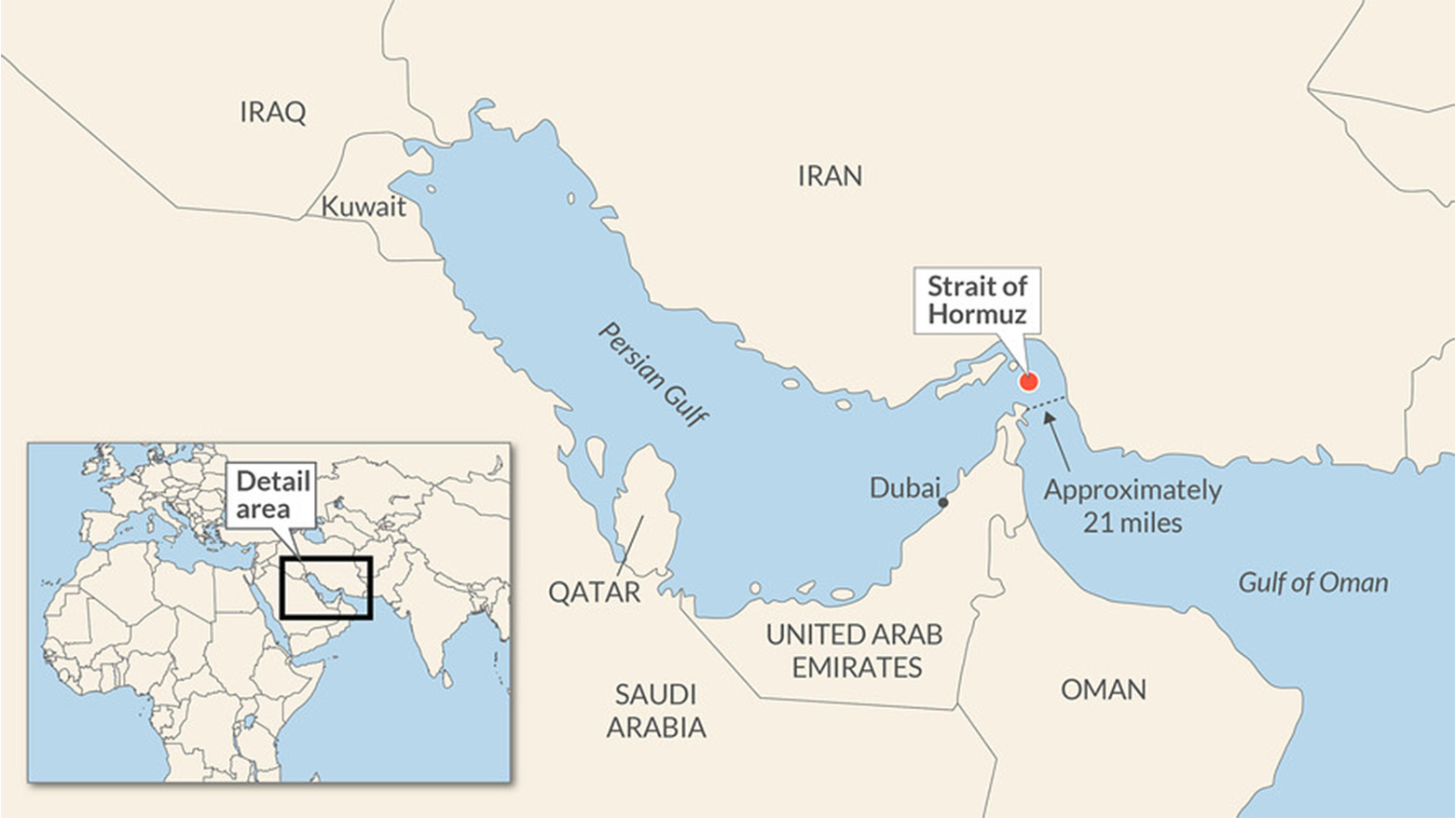
The command released footage it said showed attacks on missile launch sites and airport infrastructure, stating that the objective was to further reduce Iran's ability to threaten maritime navigation through the Strait of Hormuz.
The waterway remains central to the confrontation because of its importance to global energy markets.
Before the conflict began earlier this year, roughly one-fifth of internationally traded oil and natural gas passed through the narrow shipping corridor, according to AP reporting.
Previous attacks on commercial shipping and the risk of further disruption significantly reduced maritime traffic through the strait during the conflict, contributing to higher oil prices and increasing transportation costs that affected markets well beyond the Gulf.
Iranian media also reported that bridges were among the latest targets struck inside the country.
State outlets said a railway bridge in Golestan province was hit, while the Revolutionary Guard reported attacks on two bridges along the route leading to Mashhad, where funeral ceremonies for the late Ayatollah Ali Khamenei were taking place.
President Donald Trump linked the latest U.S. strikes to recent attacks on commercial vessels in the Strait of Hormuz.
After departing the NATO summit in Türkiye, Trump posted videos on social media that he said showed explosions inside Iran and warned Tehran against further attacks on shipping.
"This is in retribution for yesterday's bombing of ships by Iran. If it happens again, it will get much worse!" Trump wrote.
Earlier Thursday, Trump said he did not expect the latest military exchanges to develop into a prolonged campaign.
At the same time, he renewed previous warnings that the United States could target additional Iranian infrastructure, including energy and desalination facilities, as well as Kharg Island, a key export terminal for Iranian oil.
The latest confrontation followed attacks Tuesday on three tankers transiting the Strait of Hormuz, an incident that Trump cited as evidence that the interim ceasefire was under severe strain.
The military escalation has also complicated diplomatic efforts aimed at reaching a lasting agreement. According to AP, negotiations on a permanent settlement are expected to begin after ceremonies marking Khamenei's burial conclude.
Political messaging from both sides underscored the uncertainty surrounding those talks.
Iranian Parliament Speaker Mohammad Bagher Qalibaf wrote on X that the United States should expect retaliation for future military action, while Iranian Deputy Foreign Minister Kazem Gharibabadi rejected Trump's criticism of the negotiations, describing the U.S. president's remarks as evidence of the shortcomings of Washington's approach toward Iran.
The discussions are expected to address some of the conflict's most contentious issues, including restoring safe navigation through the Strait of Hormuz and addressing Iran's disputed nuclear program.
For now, however, diplomacy continues under the shadow of renewed military confrontation. While channels for negotiations remain open, Thursday's exchange of strikes illustrated how quickly the interim ceasefire can come under pressure, reinforcing concerns that further escalation could once again reshape the security landscape across the Middle East.
|
Summary Fresh U.S. and Iranian strikes across the Middle East have placed a fragile interim ceasefire under renewed strain. According to AP reporting, the exchanges affected multiple Gulf states, heightened concerns over the Strait of Hormuz and complicated efforts toward a permanent agreement. |