CENTCOM Says It Hit 90 Iranian Military Targets
The United States announced a second round of strikes against Iranian military targets, while Iranian officials reiterated warnings over the Strait of Hormuz as Gulf states responded to renewed missile and drone attacks.
ERBIL (Kurdistan24) - The military confrontation between the United States and Iran intensified further on Thursday after the US military announced another wave of strikes against Iranian military infrastructure, while senior Iranian officials warned that navigation through the Strait of Hormuz would only proceed under Tehran's conditions and Gulf states reported intercepting fresh missile and drone attacks.
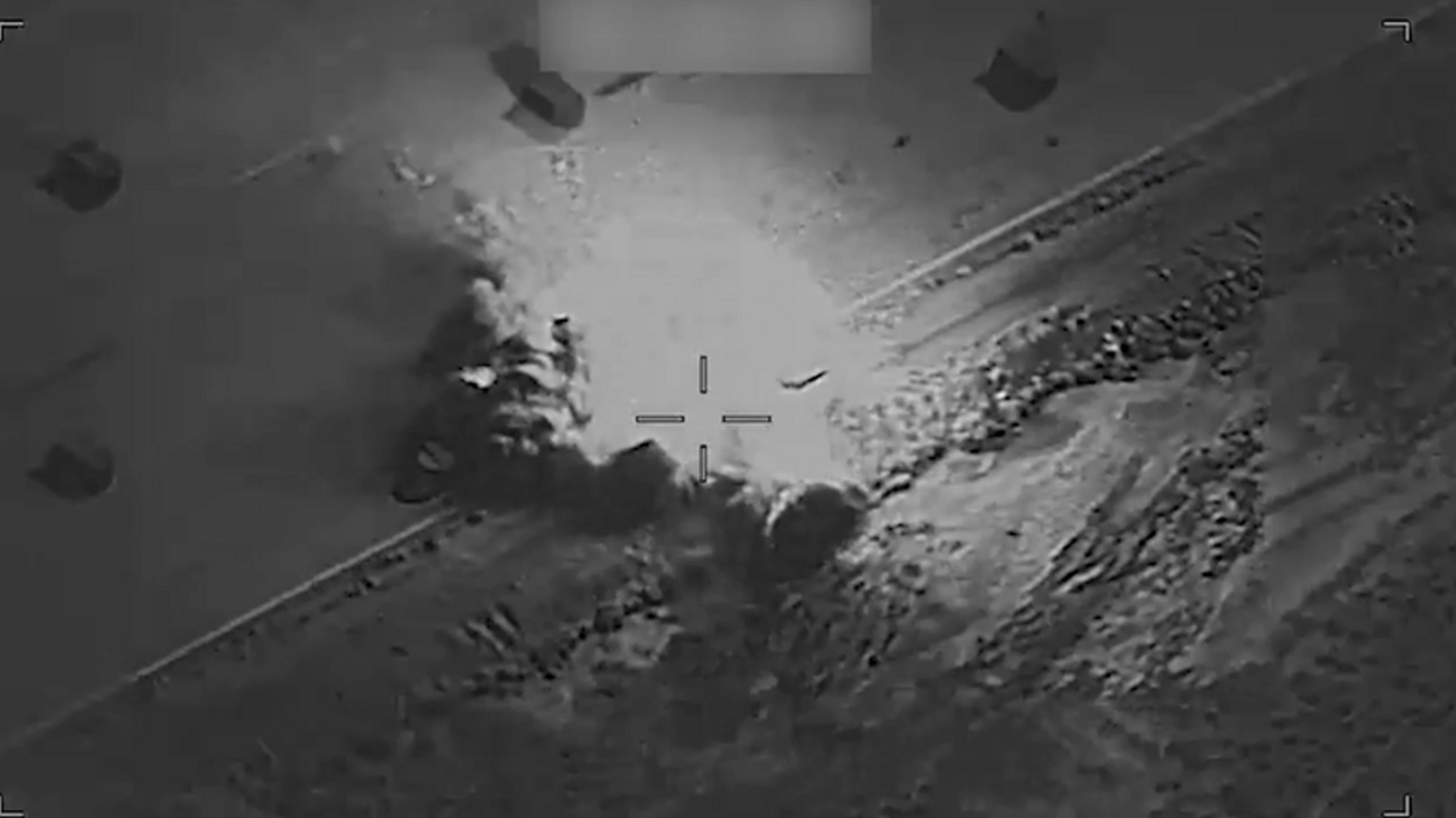
In a statement released on Thursday, US Central Command (CENTCOM) said American forces had completed another round of military strikes against Iran on July 8, aimed at further degrading Tehran's ability to attack commercial shipping and civilian mariners in the Strait of Hormuz.
According to CENTCOM, US forces struck approximately 90 Iranian military targets, including air defense systems, coastal surveillance assets, missile and drone storage sites, naval capabilities, and military logistics infrastructure along Iran's coastline.
The US military said the latest operation followed strikes carried out the previous night, when approximately 80 Iranian military targets were hit, including more than 60 small boats belonging to Iran's Islamic Revolutionary Guard Corps (IRGC).
CENTCOM said those operations were launched after Iran attacked three commercial vessels navigating the Strait of Hormuz, describing the strikes as an effort to impose heavy costs for violating the ceasefire by targeting civilian-crewed ships.
The command added that US forces remain prepared to conduct further operations if directed by the Commander in Chief.
Qalibaf says Strait of Hormuz will reopen only under Iran's conditions
Meanwhile, Iranian Parliament Speaker Mohammad Bagher Qalibaf issued a fresh warning to Washington in a post on X early Thursday.
"The Strait of Hormuz will reopen only according to Iran's conditions," Qalibaf said.
Addressing the United States directly, he added: "Let me be clear: if you attack, you will be attacked."
Qalibaf also said Washington should understand that threats and breaking commitments would no longer go unanswered.
His remarks came a day after US President Donald Trump announced that he had ordered new strikes against Iran and warned that Tehran would face more severe consequences if it continued obstructing shipping through the Strait of Hormuz.
Iranian media also confirmed that explosions had been heard along the country's southern coastline following the latest US strikes.
The Strait of Hormuz remains one of the world's most important routes for global oil and gas shipments.
According to the information provided, although an agreement had been signed last month to end hostilities and restore maritime traffic, renewed attacks on commercial vessels and the latest exchange of airstrikes have pushed the situation back toward a dangerous escalation.
The report also states that the United States has tightened measures against Iranian ports, while Iran says the waterway will not reopen until its conditions are met.
As regional tensions continued to rise, Kuwait's General Staff announced that its armed forces had once again intercepted what it described as hostile missile and drone attacks.
Bahrain also confirmed that its air defense systems had confronted Iranian attacks and successfully intercepted incoming targets.
According to the information provided, the latest attacks against Gulf states came less than 24 hours after previous Iranian strikes targeting Kuwait and Bahrain.
Observers described the renewed attacks as another indication of continuing escalation despite regional calls for calm and stability.
Separately, Qatar's Ministry of Interior announced an elevated security alert, urging citizens and residents to remain indoors, follow official safety instructions, and stay away from windows and open areas as a precaution.
The Gulf states strongly condemned the latest attacks, saying they demonstrated Iran's continued actions that undermine international and regional efforts to promote peace and resolve ongoing crises.
The latest developments come after Pakistan urged both the United States and Iran to exercise restraint and uphold the commitments contained in the Islamabad Memorandum of Understanding aimed at ending hostilities.
Pakistan's Foreign Office called on all parties to honor the agreement and avoid further deterioration of the regional security situation.
According to the background information provided, Iranian state television reported that recent US airstrikes in southern Iran killed eight members of the country's military, while US officials said the military operations were launched after Tehran allegedly attacked three commercial vessels transiting the Strait of Hormuz.
The renewed exchange of military action has heightened concerns over security in the strategically vital waterway, one of the world's most important maritime trade corridors.