UAE Condemns Iran Missile Strike on Jordan, Kuwait, and Bahrain as Regional Tensions Deepen
The UAE denounced Iran's missile and drone attacks on Jordan, Bahrain and Kuwait, reaffirming support for its regional partners as renewed military escalation heightened concerns over Middle East stability.
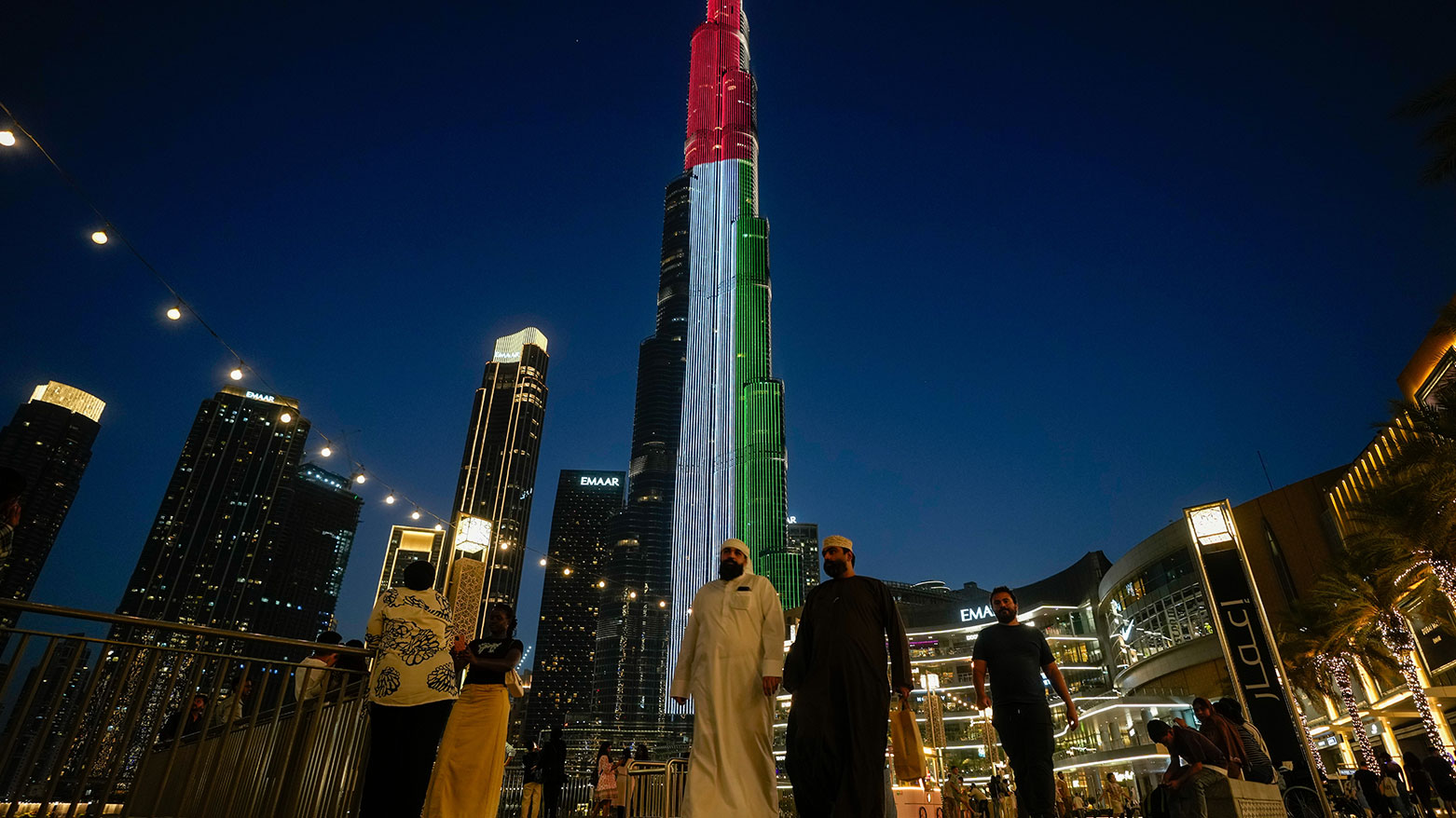
ERBIL (Kurdistan24) - The United Arab Emirates on Thursday condemned Iran's missile and drone attacks on Jordan, Bahrain and Kuwait, describing the strikes as violations of the sovereignty of neighboring states and reaffirming Abu Dhabi's support for efforts to safeguard their security amid a rapidly deteriorating regional security environment.
In separate statements issued on July 9, the UAE Ministry of Foreign Affairs (MoFA) strongly denounced the missile attack targeting the Hashemite Kingdom of Jordan as well as renewed missile and drone attacks against the Kingdom of Bahrain and the State of Kuwait.
The ministry said the attacks represented clear violations of the sovereignty of the three countries and posed a threat to their security and stability.
MoFA reiterated the UAE's full solidarity with Jordan, Bahrain and Kuwait, affirming its support for all measures undertaken by the three governments to protect their national security and preserve stability.
The statements reflected a coordinated diplomatic response at a moment when Gulf governments are confronting renewed instability across the region.
Rather than focusing on the military dimension of the crisis, Abu Dhabi framed its position around the principles of sovereignty, regional cooperation and support for neighboring states facing cross-border security threats.
The UAE's position also underscored the broader importance Gulf capitals place on presenting a united diplomatic front during periods of heightened regional tension.
Public expressions of solidarity have increasingly become a central element of regional diplomacy as governments seek to reinforce partnerships while avoiding further destabilization.
The statements came as military developments elsewhere in the region fueled concerns that recent fighting could expand beyond its current scope.
According to Agence France-Presse (AFP), Israeli Defense Minister Israel Katz said Thursday that Israel's military remains prepared to resume operations against Iran if necessary.
Speaking at a military event, Katz indicated that any future campaign would be conducted with greater force should Israeli leaders determine further action is required.
AFP reported that his remarks came as fresh fighting between the United States and Iran renewed fears that previous ceasefire arrangements could unravel.
AFP also reported that Israeli Prime Minister Benjamin Netanyahu said earlier military campaigns had significantly weakened Iran but cautioned that the broader confrontation had not yet concluded, signaling that Israeli authorities continue to prepare for a range of possible security scenarios.
The renewed military exchanges have added urgency to diplomatic messaging across the Gulf.
Reporting from Mashhad, Doha and Washington, AFP correspondents Sebastien Ricci, Callum Paton and W.G. Dunlop said the latest escalation unfolded as Iran prepared to bury Supreme Leader Ali Khamenei following several days of funeral ceremonies.
According to AFP, Iran resumed attacks targeting U.S.-aligned countries in the Gulf, including Bahrain, Kuwait, Qatar and Jordan, while Jordan's military reported intercepting incoming missiles over its territory.
At the same time, AFP reported that U.S. forces carried out strikes against approximately 90 military targets inside Iran, including air defense positions as well as missile and drone facilities.
Iranian state media also reported strikes near the perimeter of the country's Bushehr nuclear power facility and damage to a section of the railway linking Tehran with Mashhad, disrupting rail traffic as funeral ceremonies continued.
AFP further reported that tensions surrounding the Strait of Hormuz remain central to the confrontation.
Maritime tracking data cited by the agency indicated that commercial vessel traffic through the strategic waterway had declined following recent attacks on shipping, renewing concerns about regional security and the potential impact on global energy markets.
Although military operations have intensified, diplomatic uncertainty persists.
AFP reported that earlier ceasefire arrangements have come under renewed strain as exchanges of strikes continue, leaving questions about future negotiations unresolved.
Against that backdrop, the UAE's statements focused squarely on defending the sovereignty of neighboring states rather than commenting on the broader military confrontation.
By emphasizing support for Jordan, Bahrain and Kuwait, Abu Dhabi reinforced a longstanding Gulf position that regional stability depends not only on managing armed conflict but also on preserving the territorial integrity and security of individual states.
The coordinated statements also highlighted the growing diplomatic significance of Gulf solidarity as governments respond to increasingly interconnected regional security challenges.
While military developments continue to evolve, the UAE's official position centered on reaffirming support for neighboring partners and encouraging measures aimed at protecting regional stability.
As tensions continue to reverberate across the Middle East, the UAE's response illustrates how Gulf diplomacy is increasingly focused on reinforcing collective security, defending state sovereignty and maintaining regional cohesion during one of the most volatile periods the region has faced in recent months.
|
Summary The UAE condemned Iran's missile and drone attacks on Jordan, Bahrain and Kuwait, calling them violations of sovereignty and reaffirming support for the three countries. The statements came as renewed U.S.-Iran fighting and Israeli warnings deepened concerns over regional stability. |