As Southern China Reels From Deadly Floods, Recovery Efforts Race Against a New Storm
Flood cleanup continues across Guangxi after reservoir failures left dozens dead, while authorities prepare for Typhoon Bavi and renewed heavy rainfall.
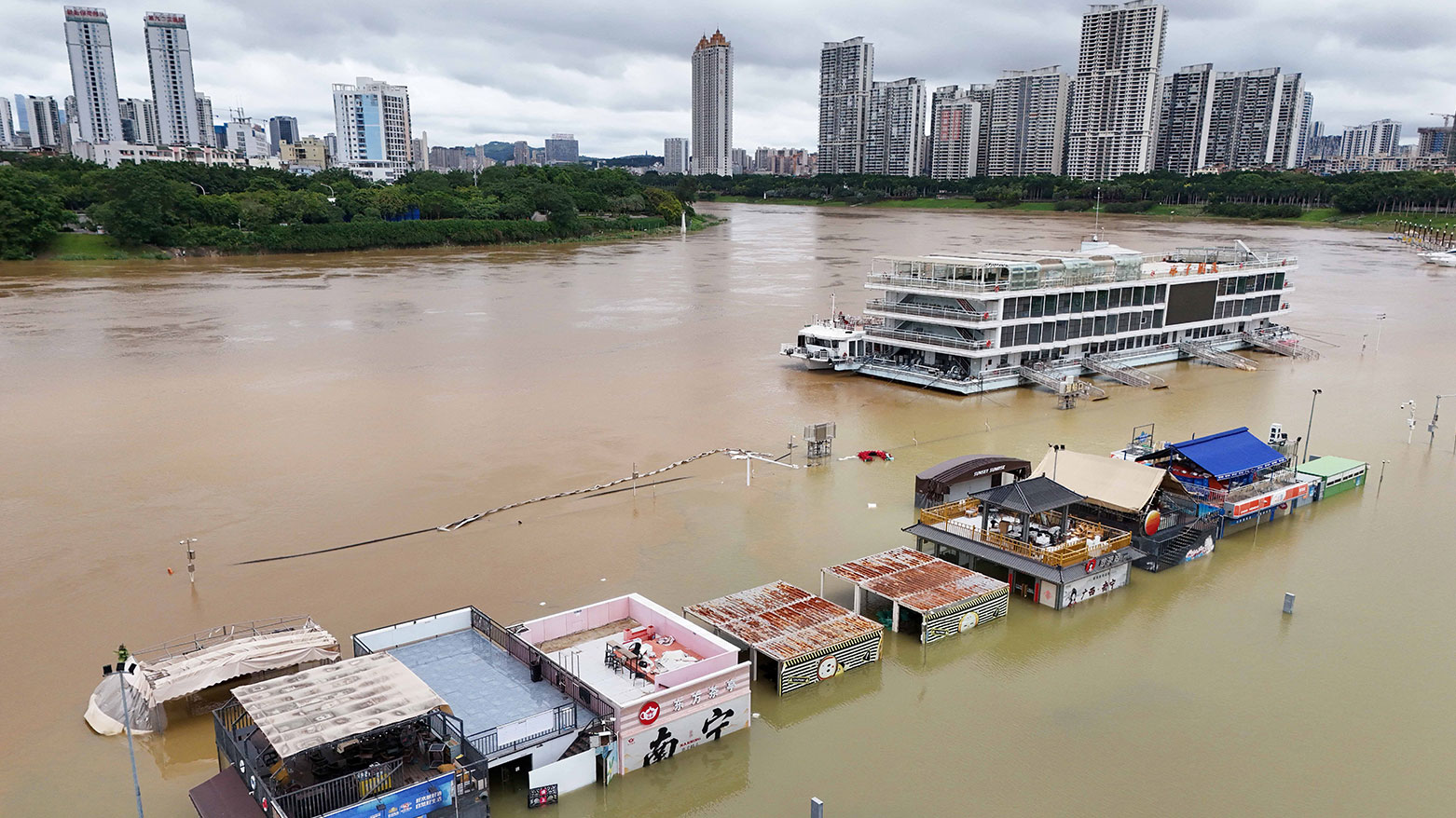
ERBIL (Kurdistan24) - Rescue teams, military personnel and residents across southern China's Guangxi region pressed ahead with recovery operations on Thursday after catastrophic flooding claimed at least 39 lives, even as forecasters warned that another major weather system could soon bring fresh rounds of torrential rain to parts of the country.
According to an Agence France-Presse (AFP) report by Agatha Cantrill, nine people remained missing as authorities expanded search efforts in communities devastated by days of intense rainfall. The deadliest losses were linked to the failure of the Liulan Reservoir, where state media reported that 26 people were killed and seven others were still unaccounted for following the breach.
The unfolding disaster has transformed villages across Guangxi into vast cleanup zones, with emergency responders and local residents working side by side to clear debris, restore access and deliver humanitarian assistance. While floodwaters have begun to recede in several locations, damaged infrastructure, isolated communities and the threat of additional storms continue to complicate recovery efforts.
The scale of the destruction has underscored the severity of one of the region's most significant flood emergencies in recent years. Even as authorities mobilize extensive rescue resources, meteorologists are warning that Typhoon Bavi is approaching eastern China, raising concerns that communities already struggling to recover could soon face another period of hazardous weather.
AFP reporters observed convoys of rescue vehicles and trucks entering Liulan through police-controlled checkpoints as emergency operations continued. Residents described widespread destruction extending beyond the reservoir itself, saying another smaller reservoir near the town of Gantang had also failed during the flooding.
For many residents, the disaster exceeded anything they had previously experienced. One local resident, identified only by the surname Huang, told AFP that people initially underestimated the danger because flooding of this magnitude had never occurred in the area before. He also said residents had not received advance warning that reflected the scale of the threat, believing earlier notification could have reduced losses.
Elsewhere in Gantang, recovery has shifted from rescue to rebuilding. Furniture, household belongings and damaged possessions lined muddy streets as families worked to salvage what remained of their homes. AFP reported that residents spent the day removing thick layers of mud left behind after floodwaters receded.
Among them was Bi Yunchun, 52, who told AFP the water had climbed to the second floor of buildings for the first time in his memory. Having injured his foot during the flooding, he joined neighbors assessing damage while reflecting on the unprecedented extent of the disaster.
Nearby communities remain heavily affected. In Dutian village, adjacent to the Liulan Reservoir, approximately 600 residents were sheltering safely but remained cut off after floodwaters destroyed transport links, according to Chinese state broadcaster CCTV, AFP reported. The flood surge severely damaged homes, with some structures reduced almost entirely to their foundations. Authorities said many residents had managed to evacuate after official alerts were issued before the worst flooding struck.
China has deployed substantial emergency resources as recovery continues. AFP reported that the country's Ministry of National Defense sent more than 2,400 military personnel, supported by over 5,500 militia members, to assist rescue operations and disaster relief across the affected areas. Large drones have also been used to transport food and other essential supplies to isolated communities separated by damaged rivers and roads.
The flooding has also disrupted local wildlife and agriculture. According to AFP, officials at Guigang Zoo appealed to the public for help locating more than 100 escaped animals after floodwaters damaged enclosures, including zebras, alpacas and miniature pigs. Earlier in the week, Chinese media also reported that hundreds of snakes escaped from a breeding facility in Hengzhou after floodwaters swept through the site.
As cleanup continues, attention is increasingly turning toward the weather forecast. Beijing issued an orange rainstorm warning on Thursday, advising schools to suspend classes where necessary and encouraging remote work in areas expected to face severe rainfall.
Typhoon Bavi, which has weakened from its earlier super typhoon status, is forecast to approach or pass Taiwan before moving toward China's Fujian and Zhejiang provinces. Chinese meteorological authorities, cited by AFP, said the expansive storm system is expected to generate heavy to torrential rainfall across parts of northern and northeastern China during the coming days.
The latest emergency comes amid growing scientific concern over increasingly frequent and intense extreme weather events. China regularly experiences destructive summer floods, but climate researchers have warned that rising global temperatures are increasing the likelihood and severity of such events, placing greater pressure on disaster preparedness, infrastructure resilience and emergency response systems.
|
Summary At least 39 people have died and nine remain missing after severe China floods devastated Guangxi, according to AFP. Cleanup and rescue operations continue around the Liulan Reservoir as authorities prepare for Typhoon Bavi, renewed heavy rain and further extreme weather risks. |