Shaqlawa's Sork Park Signals Kurdistan's Push for Green Tourism and Urban Growth
One of Kurdistan's top summer destinations is preparing for a transformation that could redefine the visitor experience.
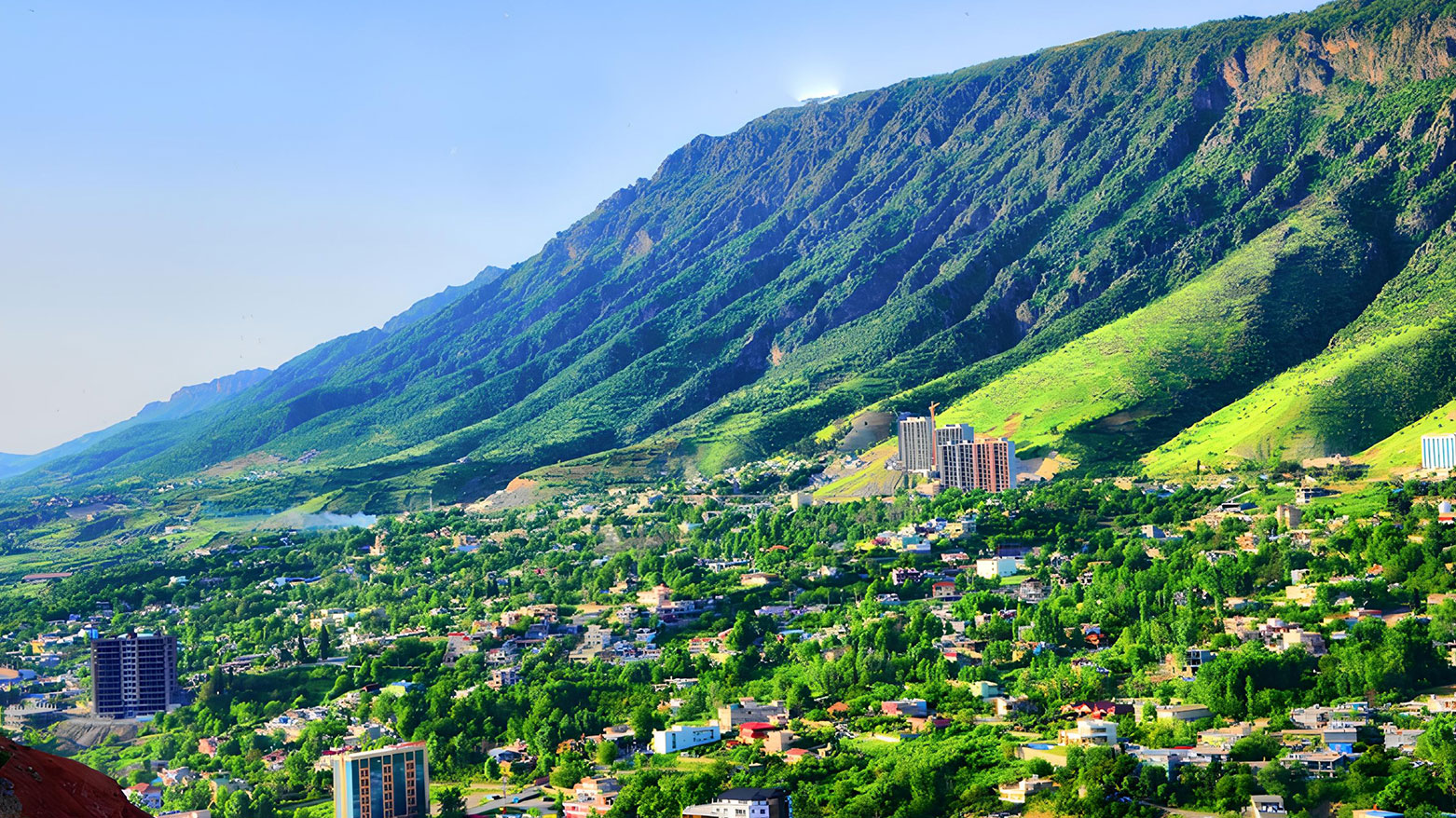
ERBIL (Kurdistan24) - As Sork Park rises on the town's edge, the project reflects a larger shift in how the Kurdistan Region is planning for tourism, public life and a greener urban future.
In Shaqlawa district, northeast of Erbil, where summer visitors have long crowded the bazaar and nearby streets in search of shade, coffee and cool air, a different kind of destination is beginning to rise.
The Kurdistan Region's largest tourist park in the town, Sork Park, is now under construction, and its significance reaches well beyond a new place for families to stroll. It signals a broader shift in how Shaqlawa imagines itself: not only as a busy mountain retreat, but as a more modern, greener and more carefully planned tourism center.
Mayor Rekan Hassan told Kurdistan24 on Saturday that work has begun on the park, which he described as good news for residents and for Erbil Governorate more broadly.
The project covers about 10 acres (40 dunams) in total, with the first phase already underway on 4.4 acres (18 dunams) and scheduled for completion within two months. When finished, the park is expected to expand in stages and ultimately accommodate hundreds of families in a landscaped setting designed for leisure, not just transit.
That matters in a town like Shaqlawa, where tourism has traditionally clustered around the central bazaar. The old pattern helped make the town famous, but it also concentrated visitors in one narrow corridor.
Sork Park is intended to change that. By creating a large public green space on the edge of the town's tourism map, local officials say the project will draw pressure away from the bazaar, offer residents and visitors a modern recreational alternative, and increase the amount of open, usable green space in the district.
The park's importance is also strategic. Shaqlawa sits within Erbil Governorate's tourism ecosystem as one of the Kurdistan Region's most recognizable summer destinations, drawing crowds from across the region and from central and southern Iraq when temperatures elsewhere become punishing. Its cool climate and mountain setting have long given it an advantage.
What the new park represents is a more deliberate attempt to convert that natural advantage into a durable public asset, one that can support tourism without depending entirely on the rhythms of seasonal commerce.
Seen in that light, Sork Park is not just a construction project.
It is part of a larger civic argument being made by the Ninth Cabinet of the Kurdistan Regional Government under Prime Minister Masrour Barzani: that public parks, green corridors and recreational spaces are no longer decorative extras, but essential infrastructure for healthier and more competitive cities.
Read More: PM Barzani: Kurdistan Region Will Continue Investing in Green Projects and Better Public Services
In recent remarks, Prime Minister Barzani said his government would keep investing in green projects and better public services, casting such work as central to public health, environmental sustainability and the effort to soften the effects of climate change.
That philosophy has been visible in Erbil itself.
Just days before the Shaqlawa announcement, Prime Minister Barzani inaugurated Ganatha D Babel Park in the capital, a major public space presented as both a recreational destination and a demonstration of modern urban planning.
Read More: Prime Minister Barzani Inaugurates Ganatha D Babel Park in Erbil
Spanning nearly 59,000 square meters, the park was designed as a landmark for families, young people and visitors, reflecting the same assumption now shaping projects like Sork Park: that a city's quality of life is measured not only by roads and buildings, but by whether people have places to gather, breathe and move.
This is where tourism policy and urban policy begin to converge.
The Kurdistan Region has increasingly treated parks, promenades and public landscapes as part of the same development language used for roads, hotels and investment zones.
That approach is especially visible in Erbil Province, where the government is trying to expand tourism beyond the historical and commercial center of the capital and into surrounding districts that offer climate, scenery and room to grow.
Shaqlawa sits near the heart of that ambition. Its appeal has always rested on nature and weather; now the public sector is trying to add planning and infrastructure to that natural gift.
The broader investment landscape reinforces that shift.
Kurdistan24 has reported that the KRG has opened 24 tourism projects for investment across different provinces and administrations, in what amounts to an infrastructure-first model of development.
Read More: KRG Opens 24 Tourism Investment Opportunities with Tax-Free Incentives
The government has secured the land and utilities for those sites, reducing some of the early risks that often discourage private capital. In practical terms, it is an attempt to turn tourism planning into a serious economic engine rather than a series of isolated gestures.
That model matters because tourism is doing double work for the region. On one level, it helps diversify the economy beyond oil, a longstanding strategic priority in a region and a country vulnerable to energy-price volatility.
On another, it shapes the built environment in ways that can improve daily life.
Parks generate jobs in construction and maintenance, support hospitality and retail activity, and encourage family recreation. They also create a public setting in which health, environment and urban identity reinforce one another. In hot and increasingly climate-stressed cities, shade and open space are not luxuries. They are part of resilience.
Erbil Province has become a testing ground for this approach. The investment roadmap presented by the KRG highlights the province's tourism potential, from the ancient Citadel in the capital to the cooler highland districts around Shaqlawa and Mount Safin.
It also includes prepared zones such as the Cheniran Village project near Shaqlawa, the Tawska eco-tourism site on the slopes of Mount Safin, and the Gopal Riverside Tourism Complex along the Erbil-Duhok route. Each is different in character, but all follow the same logic: build the foundations first, then invite development that can last.
Sork Park fits neatly into that larger framework. It is local in scale but regional in meaning.
A park on its own will not transform Shaqlawa, yet projects like this can gradually reshape how a town functions, how visitors move through it and how residents experience it outside the pressure of peak season.
A wider network of green public spaces can make a tourism town less fragile and more attractive, less dependent on a single commercial artery and more able to distribute the benefits of visitors across neighborhoods and businesses.
That is why the construction of Sork Park feels like a marker rather than an isolated event. It points to a Kurdistan Region that is increasingly trying to marry landscape with policy, and tourism with planning.
In Shaqlawa, that means turning a famous summer retreat into a place with more room for families, more balance in visitor flow and more space for public life.
In Erbil, it means pairing green projects with investment readiness. Across the region, it suggests a longer horizon: one in which parks, if they are done well, become part of the same development story as roads, utilities and resorts.
For Shaqlawa, the immediate promise is simple enough. More shade. More space. More ways to welcome the crowds that arrive each summer.
But the larger promise is more ambitious. If Sork Park succeeds as planned, it may help define a version of tourism in Kurdistan that is cleaner, more resilient and more intentionally built, one in which a park is not merely a place to pass the afternoon, but a piece of the region's future.
|
Summary Shaqlawa's new Sork Park is more than a park: it is the latest sign of a regional strategy tying tourism, green space and public investment together. Behind the construction site lies a bigger question about how Kurdistan wants its cities, visitors and long summers to breathe more freely now. |