Iran Strikes Gulf Neighbors After U.S. Attacks as Strait of Hormuz Closure Deepens Regional Crisis
Iran launched missile and drone attacks on Gulf neighbors and declared the Strait of Hormuz closed after recent U.S. strikes, including CENTCOM's operation targeting about 140 Iranian military sites.
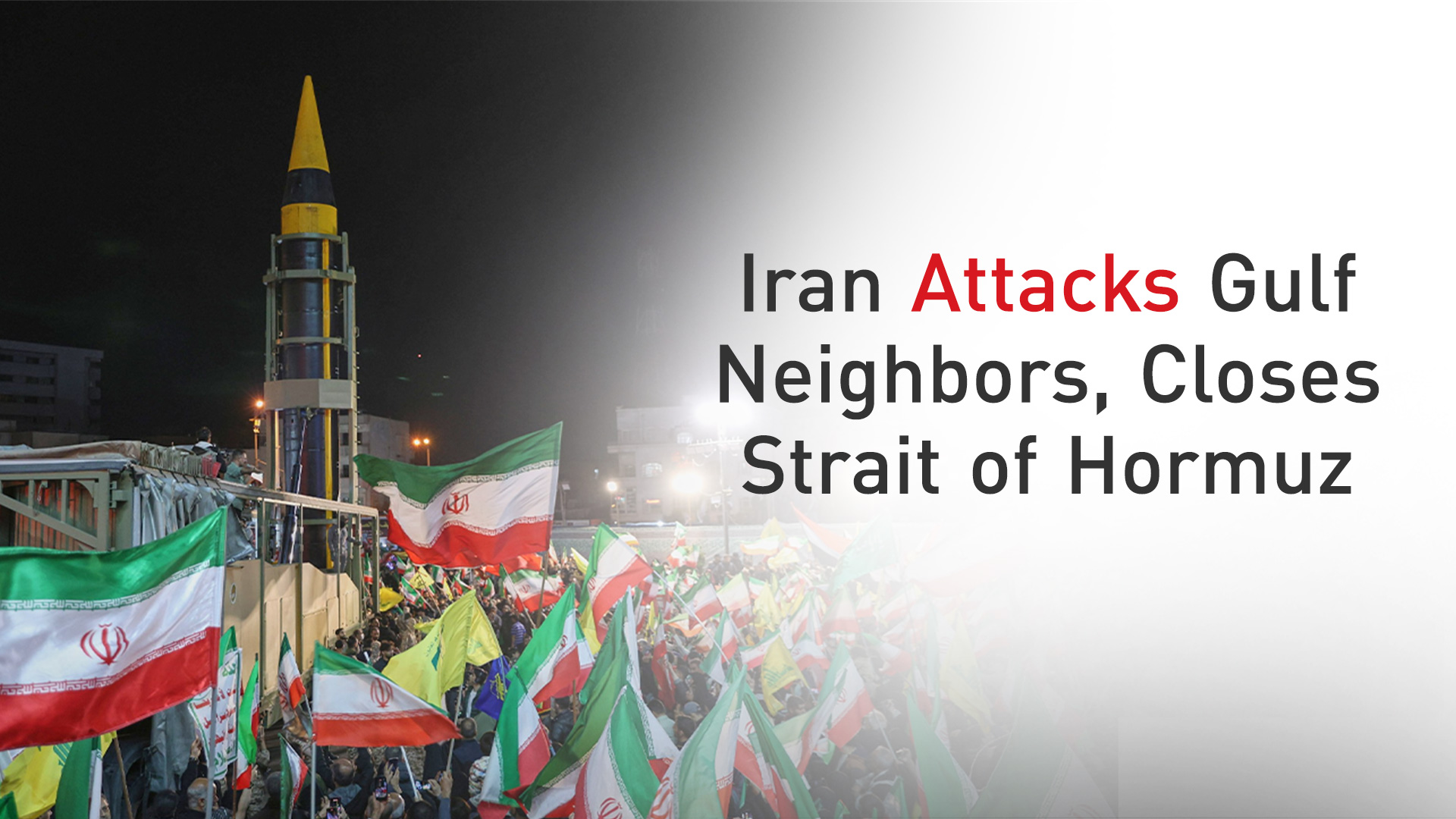
ERBIL (Kurdistan24) - Iran expanded its confrontation with the United States on Sunday by launching missile and drone attacks toward several Gulf neighboring states and declaring the Strait of Hormuz closed "until further notice," marking a significant widening of a crisis that is increasingly affecting regional security and one of the world's most critical maritime trade routes.
According to Agence France-Presse (AFP), air raid sirens and explosions were reported in Qatar, the United Arab Emirates and Bahrain after Tehran's latest military response, while authorities in Qatar and the UAE said incoming missiles had been intercepted.
AFP journalists also reported warning sirens in Bahrain as Gulf states activated emergency measures amid rapidly escalating tensions.
The latest developments came hours after a new U.S. military operation against Iran, which Washington said was carried out in response to an attack on a commercial vessel transiting the Strait of Hormuz.
The exchange marked another sharp escalation in a confrontation that has increasingly centered on maritime security and freedom of navigation through the strategically vital Gulf waterway.
Iran's Revolutionary Guards said, according to the state news agency IRNA, that they had halted a vessel which they said was using an unauthorized shipping route through the strait.
The Guards subsequently announced that the Strait of Hormuz would remain closed "until further notice" and until what they described as the end of U.S. military intervention in the region.
The United States has presented a markedly different account of the incident.
According to AFP and U.S. Central Command (CENTCOM), Iranian forces attacked the Cyprus-flagged container ship M/V GFS Galaxy, leaving the vessel disabled by fire and damage to its engine room.
CENTCOM said one crew member was reported missing, while the United Kingdom Maritime Trade Operations (UKMTO) said the crew abandoned the ship and evacuated aboard a lifeboat after the incident east of Oman.
According to Kurdistan24's earlier reporting, the reported attack on the merchant vessel prompted one of the largest U.S. military operations against Iran in the current crisis.
CENTCOM said American forces struck approximately 140 Iranian military targets using precision-guided munitions launched from land- and sea-based aircraft, drones and naval vessels.
The U.S. military said the operation targeted missile and drone launch sites, naval assets, ammunition depots, communications infrastructure and coastal surveillance systems that Washington says support Iran's ability to threaten commercial shipping.
According to CENTCOM, the strikes represented the third round of U.S. military operations against Iran within a week and were conducted under the direction of President Donald Trump.
Washington has consistently framed the campaign as an effort to protect civilian mariners and preserve freedom of navigation through the Strait of Hormuz, one of the world's busiest maritime corridors for oil and liquefied natural gas exports.
U.S. War Secretary Pete Hegseth reinforced that message in a post on X, writing: "Iran made a poor choice. Now they pay."
Iranian authorities had not independently confirmed the U.S. account of the merchant vessel incident.
Separately, Iranian media reported explosions in Bandar Abbas, Sirik, Jask, Qeshm Island and Khuzestan province following the U.S. strikes, although the reported locations and causes of those blasts had not been independently verified.
According to Iranian state media, the Revolutionary Guards later announced retaliatory strikes using ballistic missiles and drones against what they described as U.S. bases and radar installations in Bahrain, Qatar, Kuwait and Jordan.
Those claims had not been independently verified at the time of publication, and U.S. authorities had not immediately released a comprehensive assessment of the reported attacks.
The closure of the Strait of Hormuz has added a new dimension to the crisis because the narrow waterway serves as a critical transit route for a substantial share of global energy exports.
Any sustained disruption to commercial traffic through the strait has the potential to affect shipping costs, energy markets and broader international supply chains, making developments in the Gulf closely watched by governments and the maritime industry.
At the same time, diplomatic efforts continue alongside the military escalation.
AFP reported that regional mediators remain engaged in attempts to preserve dialogue between Washington and Tehran despite the latest exchange of strikes. Iranian media also reported that a Qatari delegation had visited Tehran as part of mediation efforts.
For now, however, the latest military actions underscore how rapidly the confrontation has broadened beyond direct exchanges between the United States and Iran.
With Gulf neighbors now drawn into the crisis through reported missile interceptions and heightened security alerts, the conflict has entered a more expansive regional phase while competing narratives from Washington and Tehran continue to shape international understanding of events.
|
Summary Iran launched missile and drone strikes on Gulf neighbors and declared the Strait of Hormuz closed after recent U.S. strikes. CENTCOM said it had targeted about 140 military targets in Iran following the reported attack on the M/V GFS Galaxy, intensifying regional tensions. |