Jordan, Kuwait Come Under Iranian Missile Attack as Gulf Air Defenses Engage Amid Escalating Regional Conflict
IRGC claims strike on U.S. base in Jordan, while missiles and drones trigger interceptions across Kuwait, Qatar, the UAE, and Bahrain as Iran expands retaliation and closes the Strait of Hormuz
ERBIL (Kurdistan24) — Iran widened its military campaign across the Gulf on Sunday, with Jordan reporting that three Iranian missiles landed inside its territory and Kuwait activating its air defense systems to intercept an ongoing attack, as missile and drone threats spread across multiple countries following a sharp escalation between Tehran and Washington.
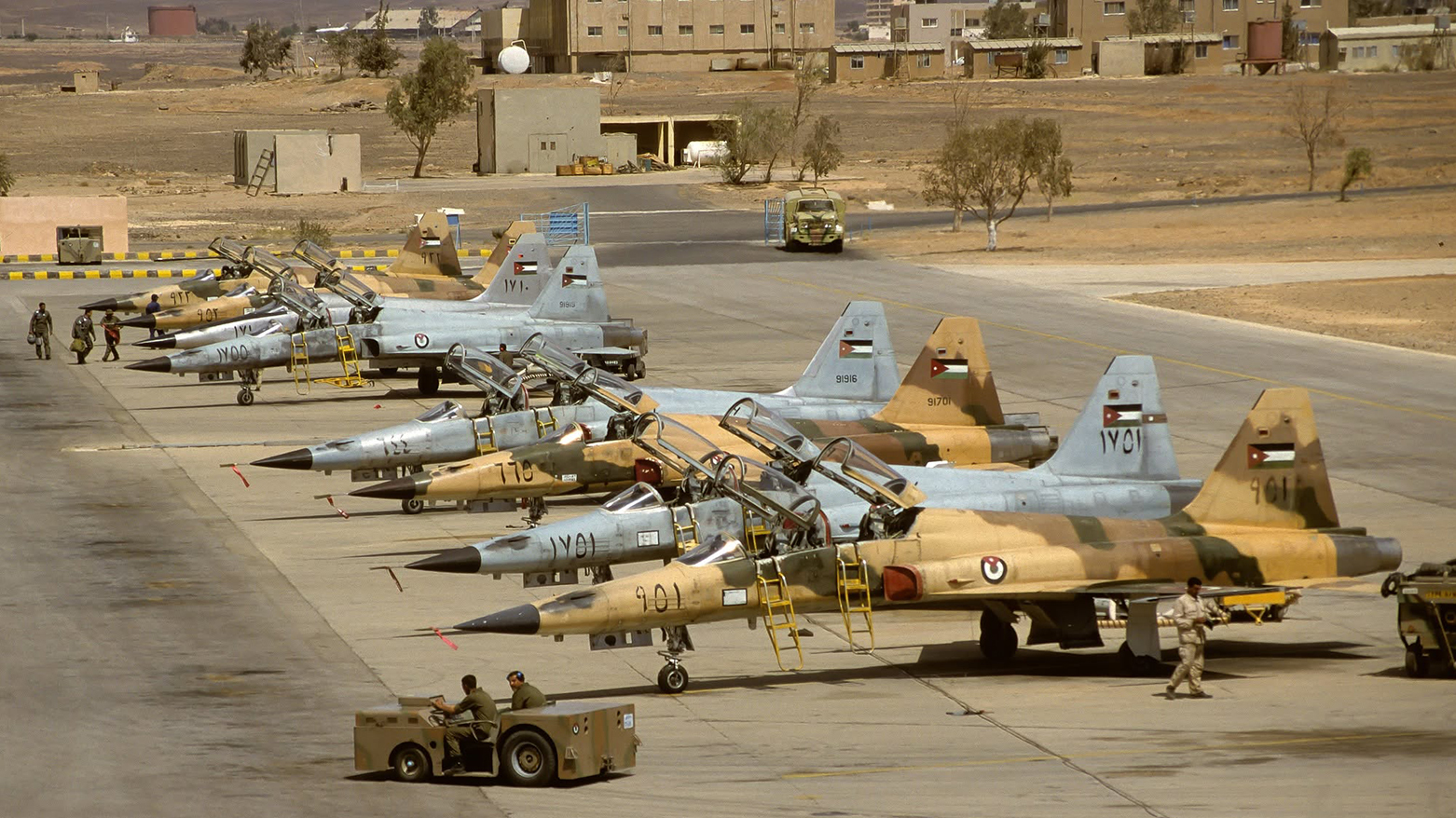
Jordan's military confirmed that three Iranian missiles fell inside the country, while Iran's Islamic Revolutionary Guard Corps (IRGC) claimed responsibility for a strike targeting the U.S.-used Prince Hassan Air Base in eastern Jordan.
In a statement carried by Iranian state broadcaster IRIB, the IRGC said its aerospace forces launched several ballistic missiles at the airbase, claiming they destroyed a command-and-control center and hangars housing MQ-9 Reaper drones.
"Three missiles fired from Iranian territory fell at dawn in several locations across the kingdom, causing no casualties. Damage was limited to minor material losses," a military source said, according to a statement by the Jordanian army.
Meanwhile, Kuwait's General Staff of the Army announced that its air defense forces were intercepting hostile missiles and drones targeting the country.
"The General Staff of the Army notes that any explosion sounds heard are the result of air defense systems intercepting hostile attacks," the military said in a statement posted on social media.
The attacks formed part of a broader wave of missile and drone launches that rippled across the Gulf.
In the United Arab Emirates, the Ministry of Defense said air defense systems were actively engaging incoming missile and drone threats, explaining that explosions heard across the country were the result of interception operations.
Neighboring Bahrain activated air raid sirens, with the Interior Ministry urging citizens and residents to remain calm and seek the nearest safe shelter.
Explosions were also heard over Qatar's capital, Doha, where AFP journalists witnessed air defense interceptions lighting up the night sky. Authorities simultaneously sent emergency alerts to residents, instructing them to remain indoors and stay in safe locations.
The IRGC later announced it had also targeted a U.S. military base in Qatar, while Iranian state media reported that the Guards had struck a second commercial vessel in the Strait of Hormuz.
According to statements carried by Iranian state television and the IRNA news agency, the vessel was accused of violating Iranian navigation regulations after allegedly using an unauthorized shipping route. The Guards said the ship ignored repeated warnings before being hit by warning shots and forced to stop.
Following the incident, the IRGC declared that the Strait of Hormuz would remain closed "until further notice," warning that no vessels would be permitted to transit the strategic waterway until what it described as "the end of American interventions in this region."
The announcement marked another significant escalation after Iran had already imposed restrictions on maritime traffic during its war with the United States and Israel, severely disrupting one of the world's most critical energy corridors.
The Strait of Hormuz carries roughly one-fifth of global oil and liquefied natural gas trade, making any disruption a major threat to international energy markets. Previous closures and military confrontations in the waterway have triggered sharp increases in global oil prices and forced commercial shipping to reroute or suspend operations.
Iran maintains that it has the sovereign right to regulate shipping through the strait and has announced plans to impose transit fees on vessels using the route. Tehran has repeatedly stated there will be no return to the previous system of unrestricted navigation.
The United States rejects Iran's position, insisting that commercial vessels must continue to enjoy freedom of navigation through the international waterway. Under customary international law, countries are generally not permitted to impose tolls or restrict transit through straits used for international navigation.
The latest cross-border attacks underscore the widening regional dimensions of the conflict, with military activity now stretching from the Strait of Hormuz to Jordan and across the Gulf states, raising fears of a broader regional war involving multiple countries and strategic energy infrastructure.