Iranian Newspaper Lists Trump, European Leaders as ‘Targets’ Following Khamenei’s Vengeance Message
A conservative Iranian newspaper published an infographic identifying U.S. President Donald Trump and several European leaders as figures who should "await the vengeance of the Iranian nation," echoing recent rhetoric from Supreme Leader Mojtaba Khamenei.
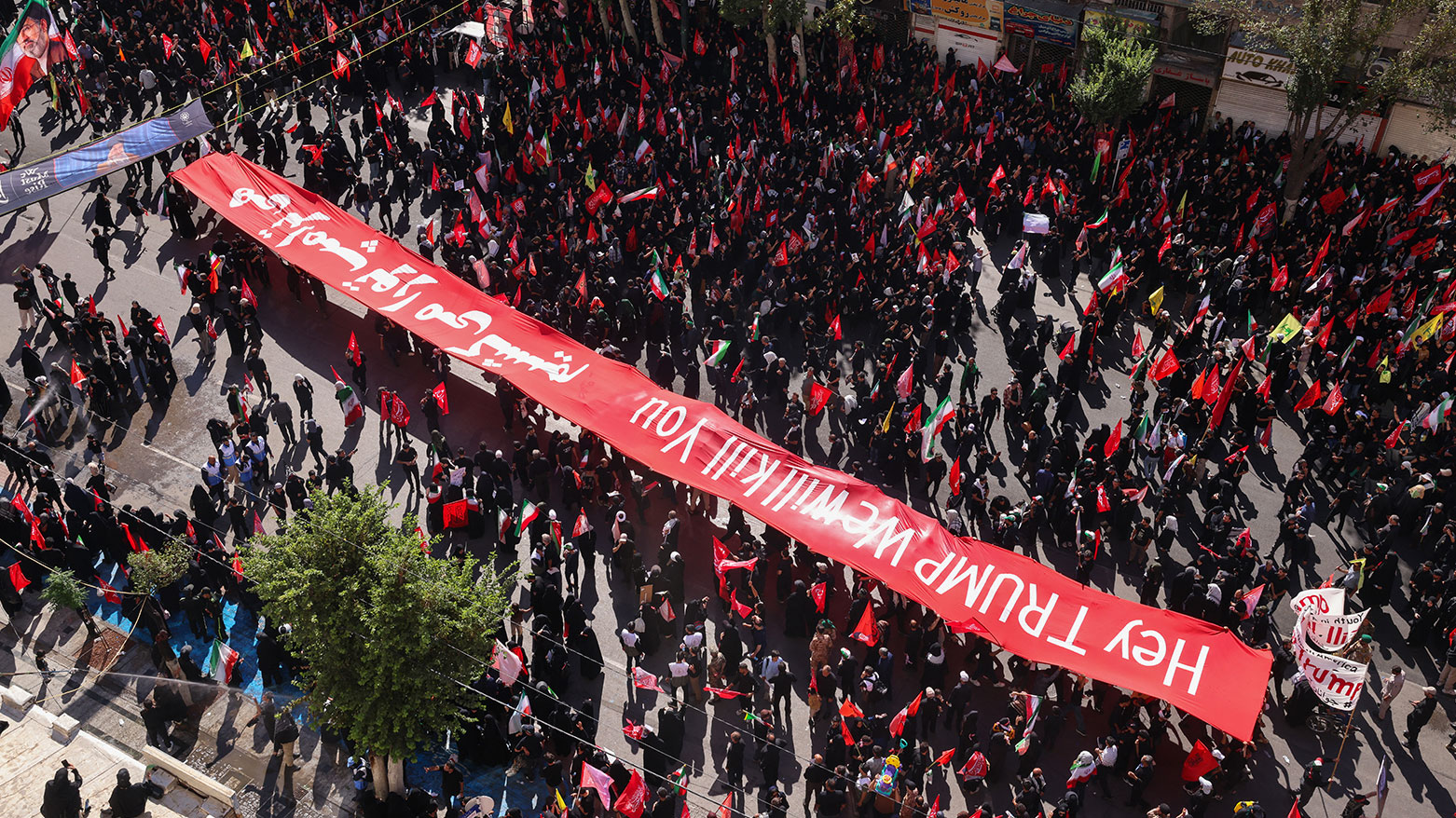
ERBIL (Kurdistan24) - An Iranian conservative newspaper has intensified already heightened rhetoric between Tehran and Washington by publishing an infographic identifying U.S. President Donald Trump and several European leaders among figures it said should "await the vengeance of the Iranian nation," a message that appeared to build directly on recent statements by Iran's Supreme Leader, Seyyed Mojtaba Hosseini Khamenei.
The infographic, published Sunday by Hamshahri Online, carried the headline, "The List of Those Who Must Await the Vengeance of the Iranian Nation."
It cited remarks attributed to Khamenei, who declared in a message issued a day earlier that revenge for those killed during the recent conflict was both a national demand and an unavoidable obligation.
According to the newspaper, those it described as "criminals" would never enjoy a peaceful end, repeating language that closely mirrored Khamenei's earlier statement.
The publication did not indicate that the list represented an official position of the Iranian government, but its release reflected the increasingly confrontational tone emerging from media outlets aligned with Iran's conservative establishment.
Among the leaders pictured alongside Trump and Netanyahu are Italian Prime Minister Giorgia Meloni, French President Emmanuel Macron, British Prime Minister Keir Starmer, German Chancellor Friedrich Merz, and several other Western leaders.

The infographic appeared one day after Khamenei issued a message linking recent wartime casualties to a broader narrative of resistance and retribution following the U.S.-Israel-Iran conflict that began on Feb. 28.
As previously reported by Kurdistan24, Khamenei vowed that Iran would seek vengeance for what he described as the blood of the country's "martyrs," declaring that retaliation was not simply a personal objective but "the demand of our nation" and "must inevitably be carried out."
He also asserted that individuals responsible for the deaths had already been identified, saying that "a list" existed from top to bottom and warning that those named would "take their wish for a peaceful death in their beds to their graves."
The message framed retaliation as an enduring national mission rather than one dependent on any individual leader, arguing that others would continue pursuing that objective regardless of changes in Iran's political leadership.
The publication of Hamshahri's infographic suggests that elements within Iran's conservative media are amplifying that message by publicly identifying individuals they portray as legitimate targets of future retaliation.
The development comes as relations between Tehran and Washington remain under severe strain despite ongoing diplomatic contacts.
On Saturday, President Donald Trump issued one of his administration's strongest warnings to Iran, saying the United States was prepared to respond with overwhelming military force if Tehran attempted to assassinate him.
Writing on Truth Social, Trump declared that "1000 Missiles are Locked and Loaded" and warned that the United States would "completely decimate" Iran in response to any assassination attempt against him.
His remarks extended beyond personal security concerns, reinforcing a broader administration strategy that links military deterrence, sanctions, maritime security in the Strait of Hormuz and nuclear diplomacy into a single negotiating framework.
The warning followed additional statements from Trump asserting that the previous ceasefire framework between Washington and Tehran had effectively collapsed, even as both sides continued signaling a willingness to pursue talks through regional mediators.
According to previous Kurdistan24 reporting, the United States has insisted that any renewed diplomatic progress will require Iran to guarantee freedom of navigation through the Strait of Hormuz and halt attacks on commercial shipping.
Washington has also expanded its military posture across the Gulf while maintaining that further negotiations remain possible if maritime security concerns are addressed.
Iran, however, has rejected U.S. accusations that it violated previous understandings.
Iranian officials continue to argue that Tehran has honored its commitments while accusing Washington of undermining diplomacy through renewed sanctions and increased military deployments.
Against that backdrop, Khamenei's message, and the subsequent publication by Hamshahri, illustrate how official rhetoric and media messaging inside Iran continue to emphasize themes of resistance, martyrdom and retaliation even as diplomatic channels technically remain open.
The language also reflects the increasingly uncompromising narratives being presented by both sides.
While Iranian leaders describe vengeance as an inevitable national duty, Trump has repeatedly emphasized that any direct threat against the United States or its leadership would trigger an overwhelming military response.
The parallel messaging highlights the fragile state of current diplomacy.
Although mediators continue working to preserve dialogue, increasingly confrontational public statements from both Washington and Tehran risk narrowing the already limited space for negotiations.
Whether Hamshahri's publication represents symbolic political messaging or foreshadows a broader hardening of Iran's public posture remains unclear.
For now, however, the newspaper's decision to publicly identify Trump and European leaders in the context of Khamenei's call for vengeance underscores how political rhetoric surrounding the U.S.-Iran confrontation continues to intensify, even as both governments remain engaged, at least formally, in efforts to prevent the crisis from escalating into a broader regional conflict.
|
Summary An Iranian conservative newspaper published a graphic naming U.S. President Donald Trump and several European leaders among figures it said should face the "vengeance of the Iranian nation," amplifying Supreme Leader Mojtaba Khamenei's recent rhetoric amid worsening U.S.-Iran tensions. |