KRG Extends Focus on Farmers as Duhok Weather Delays Final Wheat Harvest
Kurdistan Region trade officials say a requested extension of the wheat procurement deadline will allow late-harvesting farmers in Duhok to deliver their crops while procurement continues across government silos under a broader agricultural modernization program.
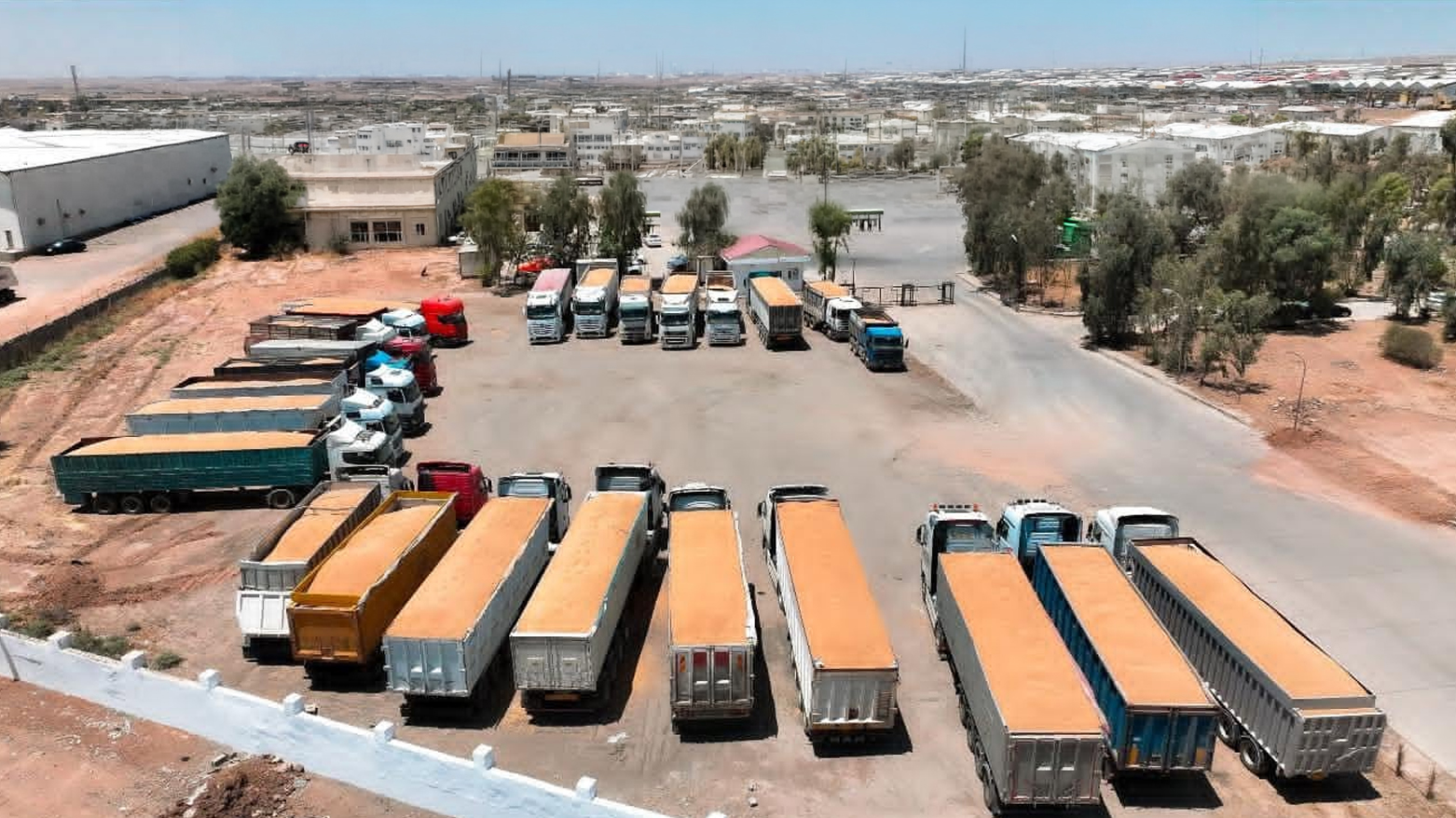
ERBIL (Kurdistan24) - The Kurdistan Regional Government has formally requested an extension of this year’s wheat procurement deadline after weather-related delays left parts of Duhok province still harvesting their crops, according to Nawzad Sheikh Kamil, Director General of Trade in the Kurdistan Region.
Speaking to Kurdistan24 on Monday, Sheikh Kamil said the 2026 procurement campaign has progressed successfully across most of the Kurdistan Region, but authorities want additional time to ensure farmers in late-harvesting areas are not excluded from the government purchasing program.
"In several parts of Duhok, heavy rainfall and lower temperatures slowed the ripening process," Sheikh Kamil said. "Many farmers have only recently begun harvesting, so we requested a multi-day extension to make sure the remaining wheat can be received."
The current procurement deadline is set for July 15. Officials said the extension request is intended to protect farmers whose harvest schedules were pushed back by unusual weather conditions rather than to alter the overall procurement plan.
The request comes as the Kurdistan Region’s wheat collection campaign enters its final stage.
According to official figures released last week, the KRG had procured approximately 333,000 tons of wheat by July 10, completing about 86% of its target for the 2026 season. Procurement remains underway at 13 government silos across Erbil, Sulaimani, Halabja, and Duhok.
Wheat is considered one of the Kurdistan Region’s most strategic crops because it supports food security while providing income for thousands of rural families.
The Iraqi federal government has approved the purchase of up to 400,000 tons of wheat from farmers in the Kurdistan Region during the current season.
Alongside the extension request, the KRG is also working to address the issue of wheat produced outside the official procurement quota.
Sheikh Kamil said Prime Minister Masrour Barzani directed the formation of a specialized committee to help market surplus grain that cannot immediately enter the government silo system.
The committee has already held discussions with private-sector companies, including Khoshnaw, Qaiwan, and 11 other firms, to create mechanisms for purchasing excess wheat from farmers at fair market prices.
"The goal is to ensure that farmers do not suffer losses because of marketing constraints," Sheikh Kamil said.
The effort reflects a broader government strategy aimed at strengthening agricultural markets while encouraging continued domestic production.
Sheikh Kamil also addressed concerns about outstanding payments from previous procurement seasons. He said more than 141 billion Iraqi dinars from the 2025 wheat campaign remain unpaid to eligible farmers.
According to the trade directorate, the Iraqi federal government is expected to release monthly budget allocations that will be used to continue distributing those payments until all outstanding dues are settled.
"The process will continue systematically until every eligible farmer receives his or her entitlement," Sheikh Kamil said.
One of the most significant operational changes this season has been the introduction of a mobile application that allows farmers to reserve delivery times before arriving at government silos.
In previous years, long lines of trucks often formed outside storage facilities, creating delays and increasing transportation costs.
Sheikh Kamil said the digital booking system has substantially reduced congestion, shortened waiting times, and lowered operating expenses for farmers.
"This was a major relief for farmers," he said. "They can now schedule deliveries in advance instead of spending days waiting outside the silos."
The procurement campaign is unfolding against the backdrop of wider agricultural reforms pursued by the Ninth Cabinet.
KRG officials say recent policies, including seasonal import restrictions, subsidies for seeds and fertilizers, mechanization programs, and investment in storage infrastructure, have strengthened local production and expanded export opportunities.
According to the Erbil Directorate General of Agriculture, nearly two-thirds of the Kurdistan Region’s agricultural output is now sold to markets elsewhere in Iraq or abroad, marking a significant shift from earlier years when production was focused primarily on domestic consumption.
Officials view this year’s wheat campaign as part of that longer-term strategy to diversify the economy, support farmers, and reduce dependence on imported food products.
For now, the immediate priority remains completing the harvest in Duhok and ensuring that late-ripening wheat reaches government silos.
The requested extension, together with digital procurement systems, surplus-marketing arrangements, and continued government support, illustrates the KRG’s broader effort to modernize the agricultural sector while protecting farmers’ livelihoods and strengthening long-term food security across the Kurdistan Region.
|
Summary Kurdistan Region wheat officials have requested an extension of the wheat procurement deadline after weather delayed the Duhok harvest, Nawzad Sheikh Kamil said. The KRG says procurement continues across 13 wheat silos while agricultural reforms aim to strengthen food security and support local farmers. |