Iran Parliament Advances Strait of Hormuz Bill as Gulf Tensions Escalate
Iran's legislature resumes work with a new Strait of Hormuz security bill as renewed U.S. strikes, maritime incidents, and widening regional tensions place the strategic waterway at the center of the confrontation.
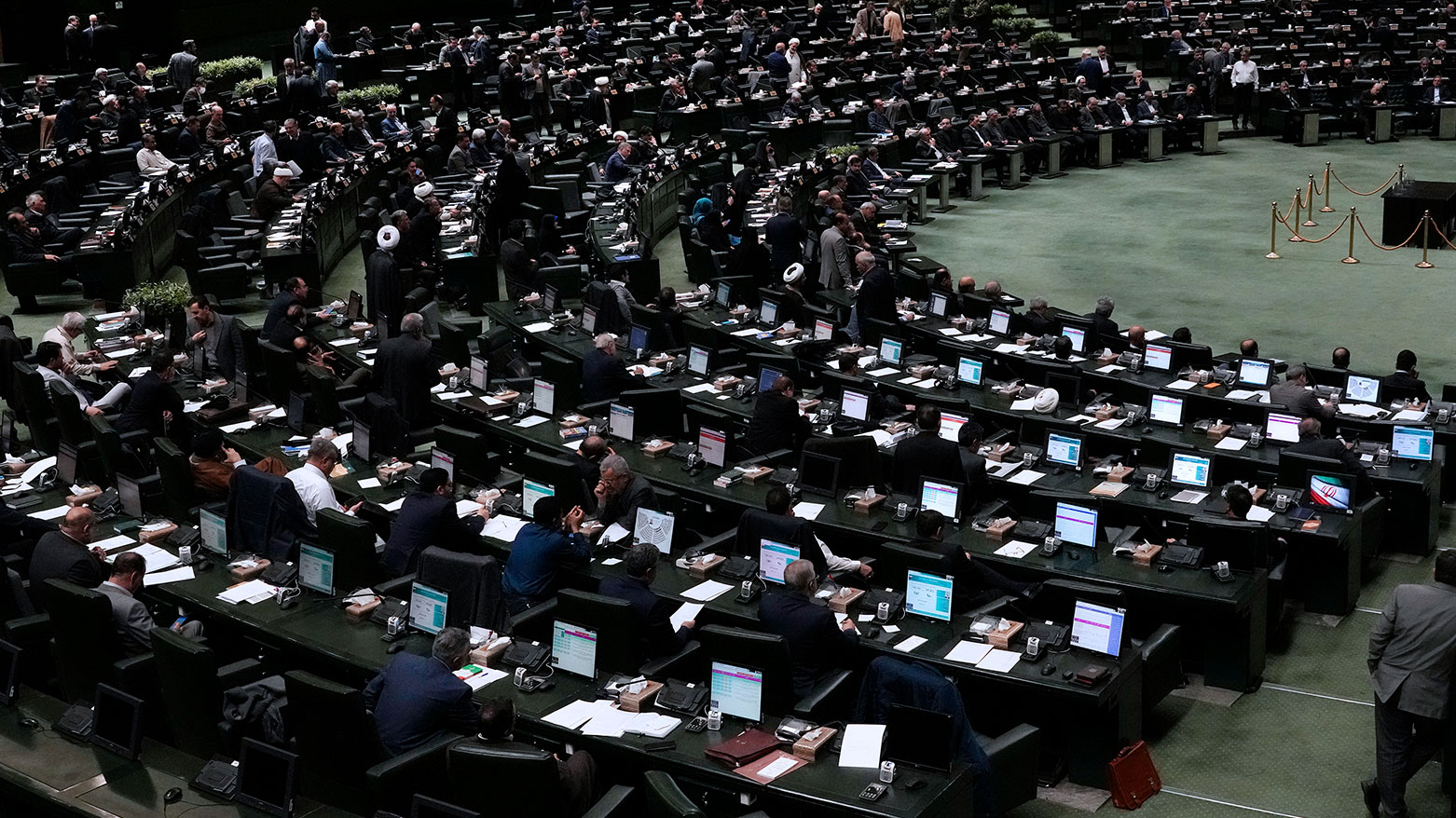
ERBIL (Kurdistan24) - Iran's parliament has launched work on legislation aimed at the future management and security of the Strait of Hormuz, marking one of Tehran's most significant political responses since fighting with the United States intensified again over the strategically vital waterway.
The parliamentary initiative comes as the confrontation increasingly extends beyond Iranian territory.
Missile exchanges involving U.S. regional partners, aerial interceptions over neighboring states, renewed attacks affecting commercial shipping, and heightened security measures across the Gulf have underscored how developments surrounding the Strait of Hormuz now carry consequences well beyond Iran's borders.
According to Agence France-Presse (AFP), Ebrahim Azizi, head of the Iranian parliament's security committee, announced that lawmakers had formally introduced legislation titled the "Strategic Action for the Security and Sustainable Progress of the Strait of Hormuz and the Persian Gulf."
In remarks published on X, Azizi described the proposal as an initial step in a broader legislative effort, saying Iran remained committed to defending what it considers its "red lines" regarding management of the Strait of Hormuz and indicating that additional measures would follow.
The proposal represents more than a procedural parliamentary exercise.
It signals that Tehran is increasingly using legislative institutions to reinforce its position on one of the world's most important maritime corridors after military tensions with Washington reignited over competing visions for the waterway's future.
The renewed dispute follows disagreements over how the strait should be administered after a framework understanding signed last month sought to halt broader regional fighting.
According to AFP, Tehran has argued that it should oversee the passage through the waterway and impose fees on vessels transiting the route, while Washington has firmly opposed that approach.
The dispute intensified further after U.S. President Donald Trump announced that the United States would assume control over securing the Strait of Hormuz, while also declaring a renewed blockade of Iranian ports and proposing a 20 percent fee on cargo moving through the corridor.
Iran, which had previously reopened the waterway during negotiations with Washington, announced on Sunday that the strait was once again closed, placing one of the world's most critical energy and commercial shipping routes at the center of the confrontation.
The parliamentary debate also carries domestic political significance.
Iran's legislature resumed sessions only this week after parliamentary activity had been suspended following the outbreak of war in late February.
Its return immediately placed the Strait of Hormuz at the forefront of lawmakers' agenda, illustrating how closely domestic policymaking has become intertwined with the country's external security challenges.
Parliament is led by Mohammad Bagher Ghalibaf, who also serves as Iran's chief negotiator in discussions with Washington.
His dual responsibilities have elevated parliament's profile as both a legislative institution and a venue where national security policy is increasingly debated.
According to AFP, not all lawmakers support continued engagement with the United States.
Some members have questioned negotiations with Washington and voiced concern that parliament had little involvement in approving the earlier memorandum of understanding between the two countries, highlighting broader debates over institutional oversight during a period of rapidly changing regional dynamics.
The legislative initiative is unfolding against a backdrop of escalating military operations throughout the Gulf.
The United States conducted a third consecutive night of strikes targeting Iranian military infrastructure along the country's southern coastline, with U.S. Central Command saying the operation focused on missile sites, drone facilities, coastal defense systems and maritime capabilities that Washington said threatened commercial shipping through the Strait of Hormuz.
Read More: U.S. Launches Third Consecutive Night of Strikes on Iran, Targets Coastal Military Sites
At sea, maritime security concerns have continued to mount.
AFP reported that a tanker was struck off the coast of Oman, adding to growing anxiety surrounding commercial navigation near the strategic waterway.
Separate regional reports also described attacks affecting shipping in the Strait of Hormuz, reinforcing concerns over the safety of international maritime traffic.
The deteriorating security environment has prompted wider diplomatic precautions.
The United States Embassy in Abu Dhabi and the U.S. Consulate General in Dubai suspended routine consular appointments through July 15, citing worsening regional security conditions while maintaining only limited emergency services.
Read More: U.S. Embassy in UAE Suspends Consular Appointments as Regional Security Crisis Deepens
Meanwhile, military exchanges have spread across the Gulf.
Iran's Revolutionary Guards said they had launched missile and drone strikes on Bahrain, while Jordan's armed forces reported intercepting four Iranian missiles after they entered Jordanian airspace.
The incidents illustrate how the confrontation increasingly involves regional partners beyond the immediate U.S.-Iran dispute.
Against that backdrop, Iran's parliamentary initiative reflects both domestic political positioning and a broader effort to formalize Tehran's approach toward one of the world's most strategically significant maritime chokepoints.
While the legislation remains in its early stages, its introduction demonstrates that the future governance of the Strait of Hormuz has become central not only to military planning but also to Iran's legislative agenda.
With maritime security, global energy supplies and regional diplomacy under growing strain, parliamentary deliberations in Tehran are likely to remain closely watched as the next phase of the crisis unfolds.
|
Summary Iran's parliament has introduced a Strait of Hormuz security bill as renewed U.S. strikes, maritime incidents, and regional military escalation deepen Gulf tensions. The AFP-reported initiative highlights Tehran's evolving strategy while global concern grows over shipping, energy security, and diplomacy. |