Baghdad Pursues Investment and Long-Term Defense Partnership With Washington
Prime Minister Ali al-Zaidi's Washington visit underscores Baghdad's effort to strengthen economic cooperation while building a new long-term military partnership with the United States.
ERBIL (Kurdistan24) - Prime Minister Ali al-Zaidi's first official visit to Washington since taking office marks a pivotal moment in Iraq's evolving relationship with the United States, as Baghdad seeks to broaden a partnership long shaped by security concerns into one increasingly defined by economic cooperation, investment, and institutional development.
At the center of the government's agenda is a strategy that treats economic recovery and national security as mutually reinforcing priorities.
Iraqi officials argue that sustainable growth depends on a stable security environment, while stronger economic performance, diversified investment, and resilient institutions are essential to preserving long-term stability.
Together, those objectives have become the framework guiding Baghdad's latest engagement with Washington.
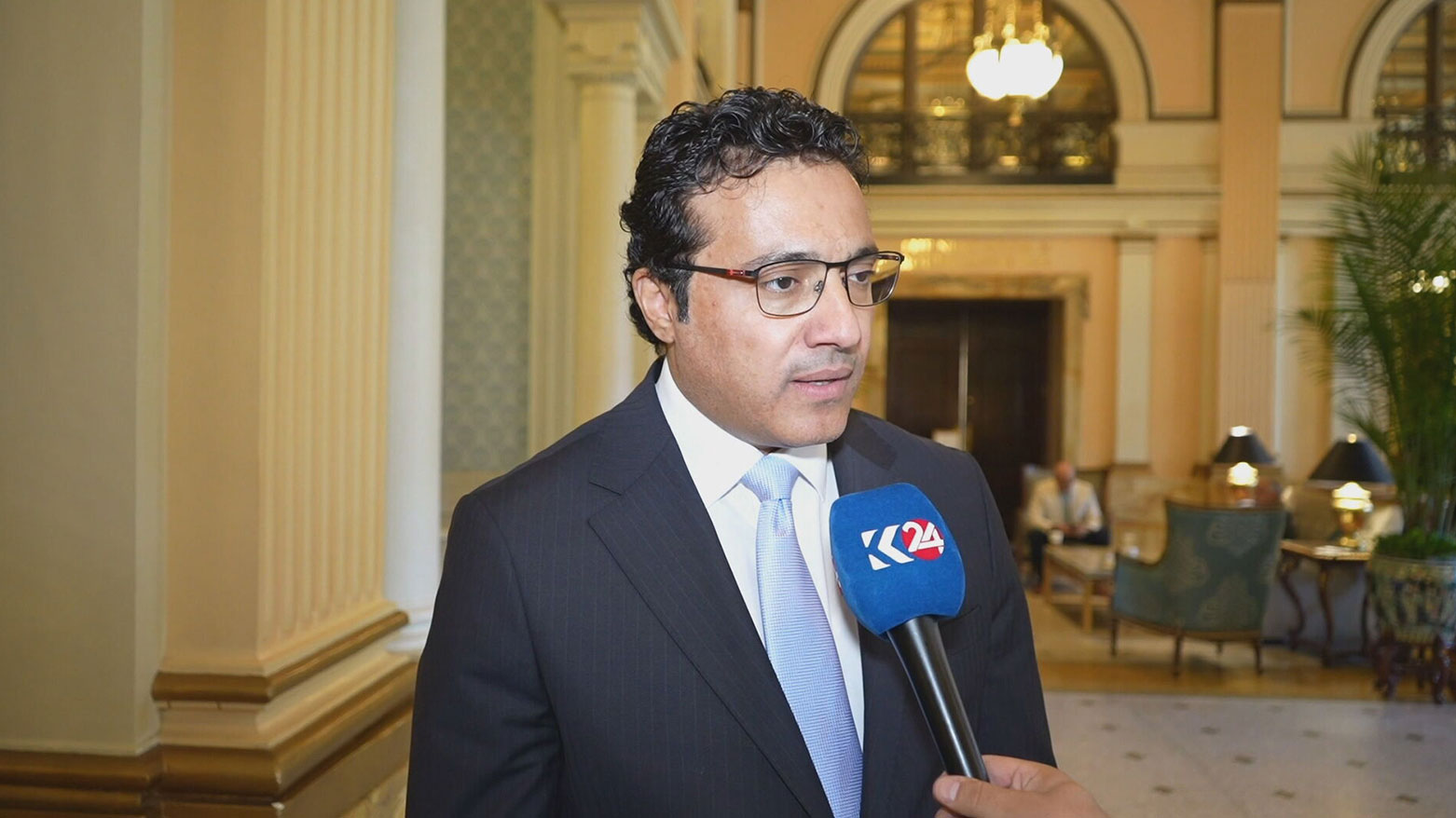
Speaking to Kurdistan24 correspondent Issa Hassan in Washington, government spokesperson Haider al-Aboudi said Iraq intends to place economic cooperation at the forefront of its bilateral relationship with the United States.
While security cooperation remains important, he suggested that partnerships built primarily around military issues risk becoming limited to managing crises rather than advancing broader national development.
Instead, Baghdad is seeking to strengthen commercial ties that can support reconstruction, encourage long-term investment, and expand cooperation across strategic sectors.
Officials view those efforts as essential to positioning Iraq as a more influential international partner while creating a stronger foundation for future relations with major global economies.
The emphasis on investment reflects the government's assessment that Iraq must accelerate economic diversification following the damage caused by recent conflict.
Al-Aboudi said attracting foreign capital is necessary to help offset wartime losses and reduce the country's exposure to external shocks.
Officials acknowledge that Iraq's heavy dependence on a limited number of revenue sources has left the economy particularly vulnerable during periods of regional instability.
Expanding investment beyond traditional income streams has therefore become a central element of Baghdad's economic planning.
That objective is expected to feature prominently during meetings in Washington.
Iraqi officials anticipate the signing of memoranda of understanding in the oil and gas sectors aimed at encouraging greater participation by American companies while exploring additional export opportunities.
Although energy remains a key pillar of the economy, the broader objective is to strengthen resilience by deepening international commercial partnerships rather than relying on a narrow economic base.
The government's economic agenda is closely linked to another major objective of the Washington visit: defining the future of military cooperation with the United States after the International Coalition concludes its mission.
According to Sabah al-Numan, spokesperson for the Iraqi General Command of the Armed Forces, Baghdad is working toward a long-term bilateral defense partnership that would shift cooperation from coalition operations to institutional collaboration.
Discussions are expected to focus on military training, defense modernization, intelligence sharing, and continued capacity-building for Iraq's armed forces.
Officials present the proposed framework not as a continuation of wartime arrangements but as an evolution toward a more structured partnership between two sovereign states.
Such cooperation, they argue, would strengthen Iraq's national defense institutions while supporting the country's broader development priorities.
Central to that approach is the government's effort to consolidate all weapons under state authority. Numan emphasized that this policy is an independent Iraqi decision rooted in national sovereignty rather than external pressure.
He said the initiative enjoys political backing from parliament, public support, and endorsement from the country's religious leadership, with the prime minister placing it among his highest priorities.
To advance that objective, authorities have established a committee led by the Deputy Commander of Joint Operations to oversee implementation.
Officials also indicated that additional armed groups are expected to be integrated into state security institutions in the near future, reinforcing the government's effort to centralize security responsibilities within official structures.
For Iraqi policymakers, these institutional reforms extend beyond military considerations.
Numan argued that improvements in domestic security send an important signal to international businesses evaluating Iraq as an investment destination.
Greater confidence in the country's security environment, officials believe, can encourage foreign companies to undertake long-term projects while supporting broader economic modernization.
That connection between security and investment has emerged as a recurring theme throughout Baghdad's discussions with Washington.
Rather than pursuing separate economic and defense agendas, Iraqi officials increasingly describe both as components of a single national strategy aimed at strengthening governance, improving institutional credibility, and creating conditions conducive to sustained growth.
Al-Zaidi's visit therefore represents more than a series of diplomatic meetings.
It reflects Baghdad's attempt to redefine the foundations of its relationship with the United States by pairing post-coalition security cooperation with an expanded economic partnership centered on investment, reconstruction, and institutional development.
As Iraq seeks to strengthen its international standing, government officials are presenting security reform and economic diversification as complementary goals.
Their message in Washington is that lasting stability depends not only on capable security institutions but also on an economy that attracts investment, broadens opportunity, and becomes less vulnerable to future regional crises.
|
Summary Prime Minister Ali al-Zaidi's Washington visit highlights Iraq's effort to redefine ties with the United States through investment, reconstruction and a new post-coalition military partnership. Baghdad says stronger security institutions, economic diversification and foreign investment are central to long-term stability. |