Netanyahu Warns Iran of 'Decisive' Retaliation Amid Renewed Regional Escalation
"I will say it to the leaders of Iran: Do not count on things remaining quiet if you attack us," Netanyahu said during a conference, according to a video released by his office.
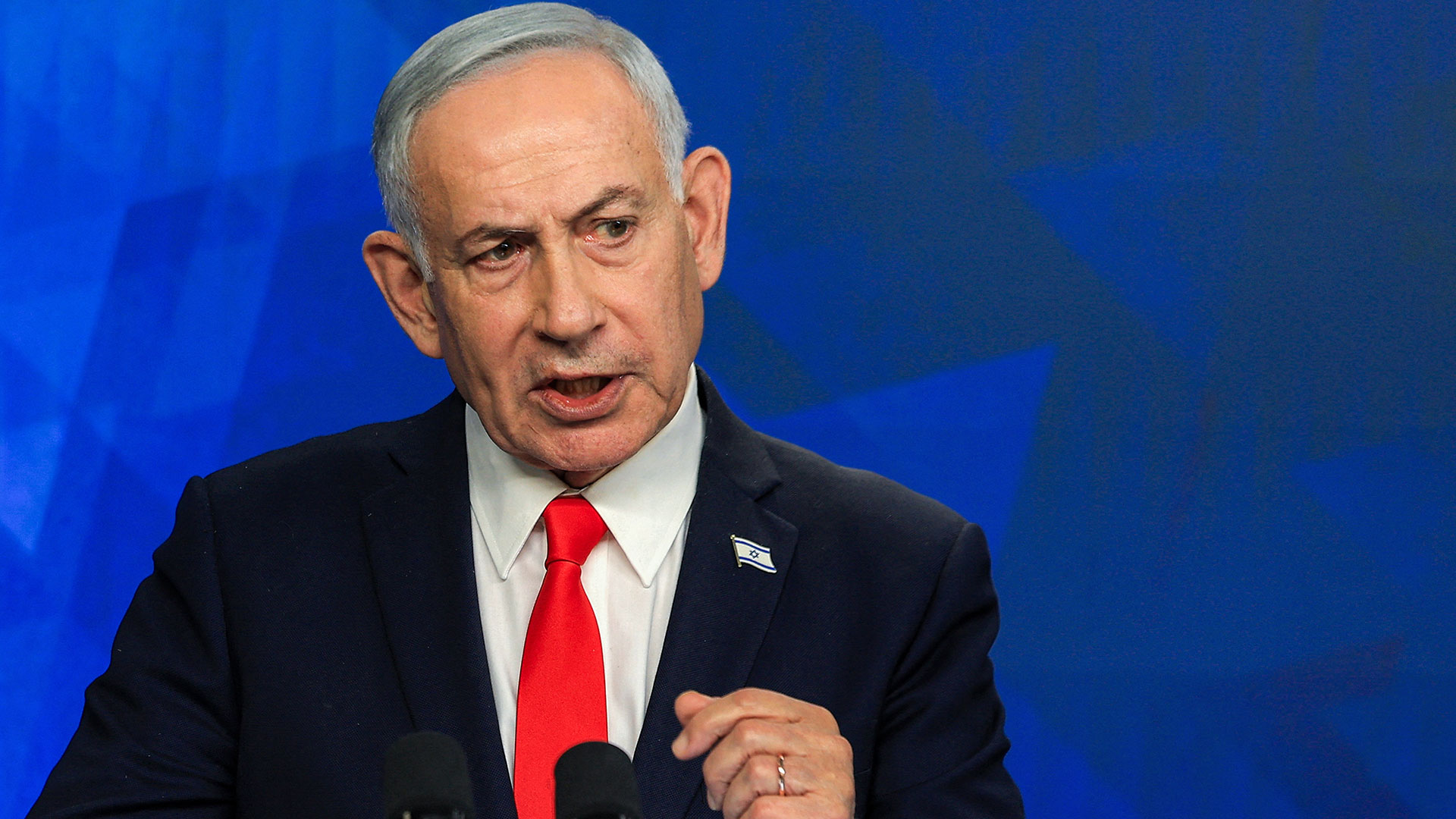
ERBIL (Kurdistan24) – Israeli Prime Minister Benjamin Netanyahu on Tuesday warned Iran that any new attack on Israel would be met with a powerful response, as tensions continue to rise across the Middle East.
"I will say it to the leaders of Iran: Do not count on things remaining quiet if you attack us," Netanyahu said during a conference, according to a video released by his office. "The days are over when someone strikes us and we don't hit back with a decisive blow."
His remarks come as the regional conflict has intensified following Iran's large-scale missile and drone attacks on several Gulf nations. The Islamic Revolutionary Guard Corps (IRGC) said the strikes targeted U.S. military infrastructure across Gulf Cooperation Council (GCC) states in retaliation for recent U.S. Central Command (CENTCOM) airstrikes on southern Iran.
The latest escalation has effectively ended the fragile ceasefire reached in June.
On July 6, the IRGC opened fire on commercial vessels in the Strait of Hormuz, including a Qatari liquefied natural gas tanker, claiming Iran had the right to regulate and tax maritime traffic under its interpretation of a June memorandum of understanding (MoU) with the United States.
On July 8, U.S. President Donald Trump declared the ceasefire over, after which U.S. forces launched multiple waves of precision airstrikes against Iranian drone, missile, and radar facilities along Iran's southern coast.
Between July 12 and July 14, Iran expanded its retaliation by launching extensive missile and drone attacks into the territories of five Gulf nations and Jordan while announcing the closure of the Strait of Hormuz, further escalating the regional crisis.
In response, the six member states of the Gulf Cooperation Council (GCC) held an emergency meeting and issued a joint declaration pledging to "take all necessary measures to defend their security," leaving open the possibility of a collective response to the attacks.
Meanwhile, President Trump announced that the United States would reinstate a naval blockade on Iranian ports and impose a 20% transit fee on all commercial cargo passing through the Strait of Hormuz, saying the measures are intended to ensure freedom of navigation.
The escalating conflict has also rattled global energy markets, with Brent crude oil climbing above $86 per barrel as mounting security concerns prompted widespread cancellations of commercial shipping routes through the Gulf.