Iran Says Six Strategic Bridges Were Destroyed in U.S. Strikes
Iranian authorities say U.S. strikes damaged key transport links in Hormozgan, southern Iran, disrupting access to southern ports and highlighting the growing focus on strategic infrastructure.
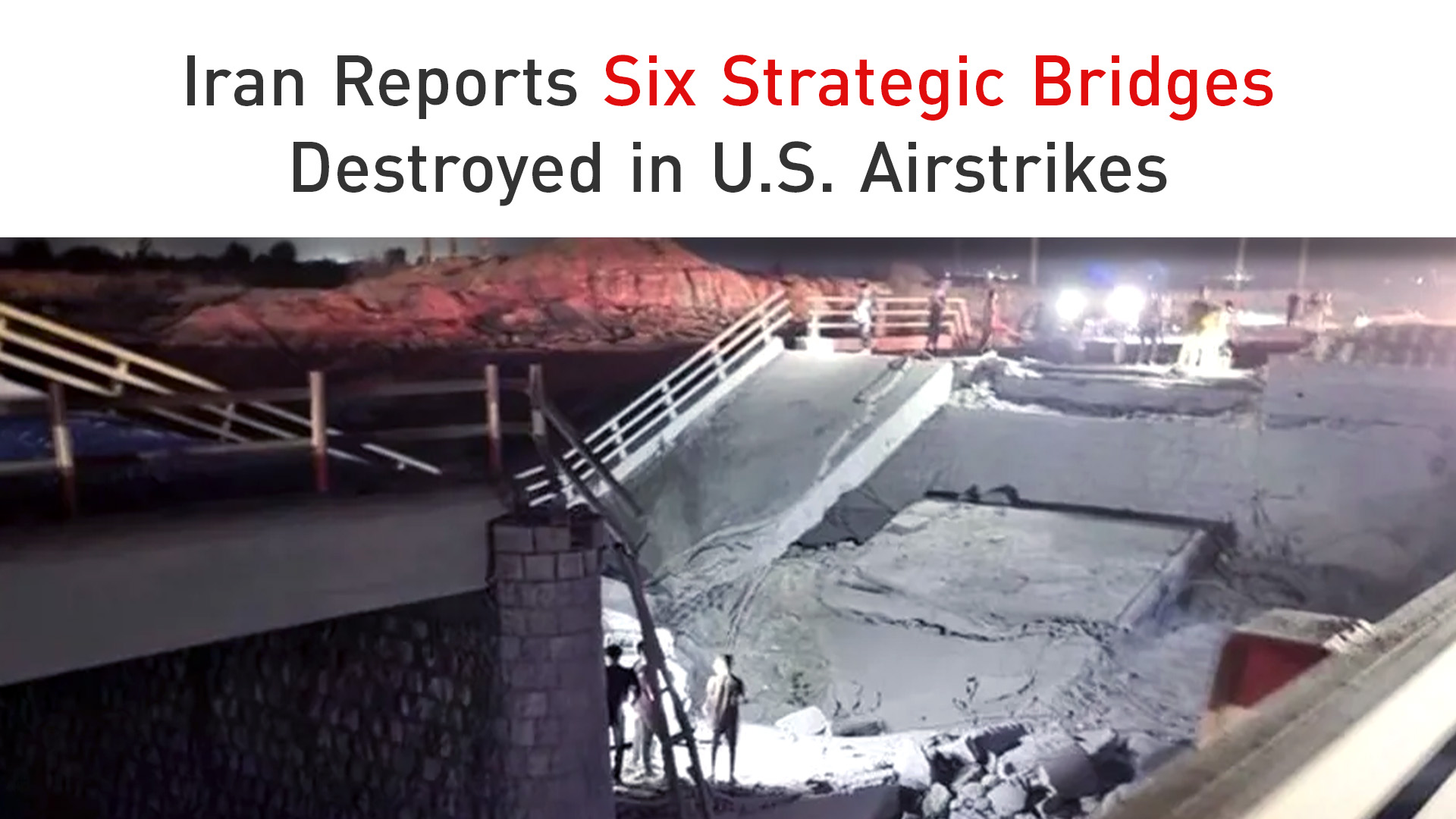
ERBIL (Kurdistan24) - Iranian authorities say the latest wave of U.S. airstrikes has severely damaged or destroyed six strategic bridges in the southern province of Hormozgan, an area that serves as a critical gateway to the country's largest ports and the Strait of Hormuz. The reported attacks underscore a growing emphasis on transportation infrastructure as a central target in the escalating military confrontation between Washington and Tehran.
According to the Hormozgan provincial administration, multiple bridge crossings in the Khamir district were struck during overnight operations, including the Griveh and Latidan bridges, two principal bridges along the Kahurestan-Lar route, a partially completed crossing on the Bandar Khamir-Kashar-Bandar Abbas corridor, and the Maro Village Bridge.
Iranian officials said the damage prompted the immediate closure of affected roads, with civilian traffic prohibited from entering the area while emergency crews and security personnel assessed the situation and worked to secure the damaged infrastructure.
The reported strikes carry significance beyond the loss of individual crossings. Hormozgan occupies a pivotal position along Iran's southern coastline, connecting Bandar Abbas and other coastal centers with inland transport routes.
Interruptions to those corridors have the potential to complicate military logistics, delay emergency operations, restrict civilian travel and disrupt commercial traffic serving some of the country's most strategically important maritime facilities.
Iranian authorities portrayed the bridge attacks as evidence that the U.S. campaign is increasingly focused on infrastructure with operational value rather than solely on conventional military installations.
The closures announced after the strikes reflect concerns that additional attacks could follow while repairs remain underway.
The reported damage also comes as transportation networks have assumed greater importance in a conflict increasingly tied to control of southern maritime access.
Background reporting from The Associated Press indicates that the latest U.S. operations extended beyond the reported bridge strikes, with additional attacks affecting facilities near Bandar Khamir and the port of Chabahar on the Gulf of Oman.
AP also reported the apparent collapse of a tower used to oversee maritime activity at the port, illustrating the broader emphasis on transportation and logistical assets.
While Iranian authorities described the Chabahar structure as part of the port's commercial operations, the facility also holds strategic significance because of its location along key regional shipping routes.
U.S. Central Command (CENTCOM) said its latest wave of operations struck dozens of military-related objectives during the sixth consecutive night of American attacks, part of a campaign Washington says is intended to reduce Iran's military capabilities and respond to threats against commercial navigation.
The infrastructure campaign unfolds against the backdrop of a broader contest over the Strait of Hormuz, one of the world's most strategically important maritime corridors.
The waterway has become a central point of contention as military operations increasingly intersect with concerns over regional trade, energy exports and shipping security.
According to AP, recent hostilities have been accompanied by continued exchanges of military action between the United States and Iran, with Gulf states also experiencing heightened security pressures as the conflict expands beyond its original front lines.
At sea, the United States has maintained enhanced maritime enforcement measures, including inspections of commercial vessels and actions aimed at enforcing restrictions around Iranian shipping.
Those operations complement the broader military effort targeting infrastructure viewed as supporting Iran's operational capabilities.
For Iran, the reported damage in Hormozgan represents more than localized disruption. The affected bridges form part of a transportation network linking ports, industrial facilities and inland regions, making them important to both civilian commerce and strategic mobility.
Although the full extent of the damage remains independently unverified, the reported destruction of multiple bridges highlights an apparent evolution in the conflict, with transportation infrastructure emerging as a prominent element of military strategy.
As reciprocal operations continue, the latest strikes illustrate how the struggle over access, logistics and mobility is becoming increasingly central to the wider confrontation unfolding around the Strait of Hormuz and across the Gulf.
|
Summary Iran says U.S. airstrikes damaged or destroyed six strategic bridges in Hormozgan Province, disrupting transport routes linked to the Strait of Hormuz. The reported attacks highlight an expanding campaign against infrastructure amid escalating regional tensions. |