Iraq, Chevron Set to Sign Energy MoU as Baghdad Pursues Sector Overhaul
The planned agreement covering West Qurna 2 and Nasiriyah reflects Baghdad's broader strategy to modernize its energy sector, diversify export routes, and attract long-term international investment.
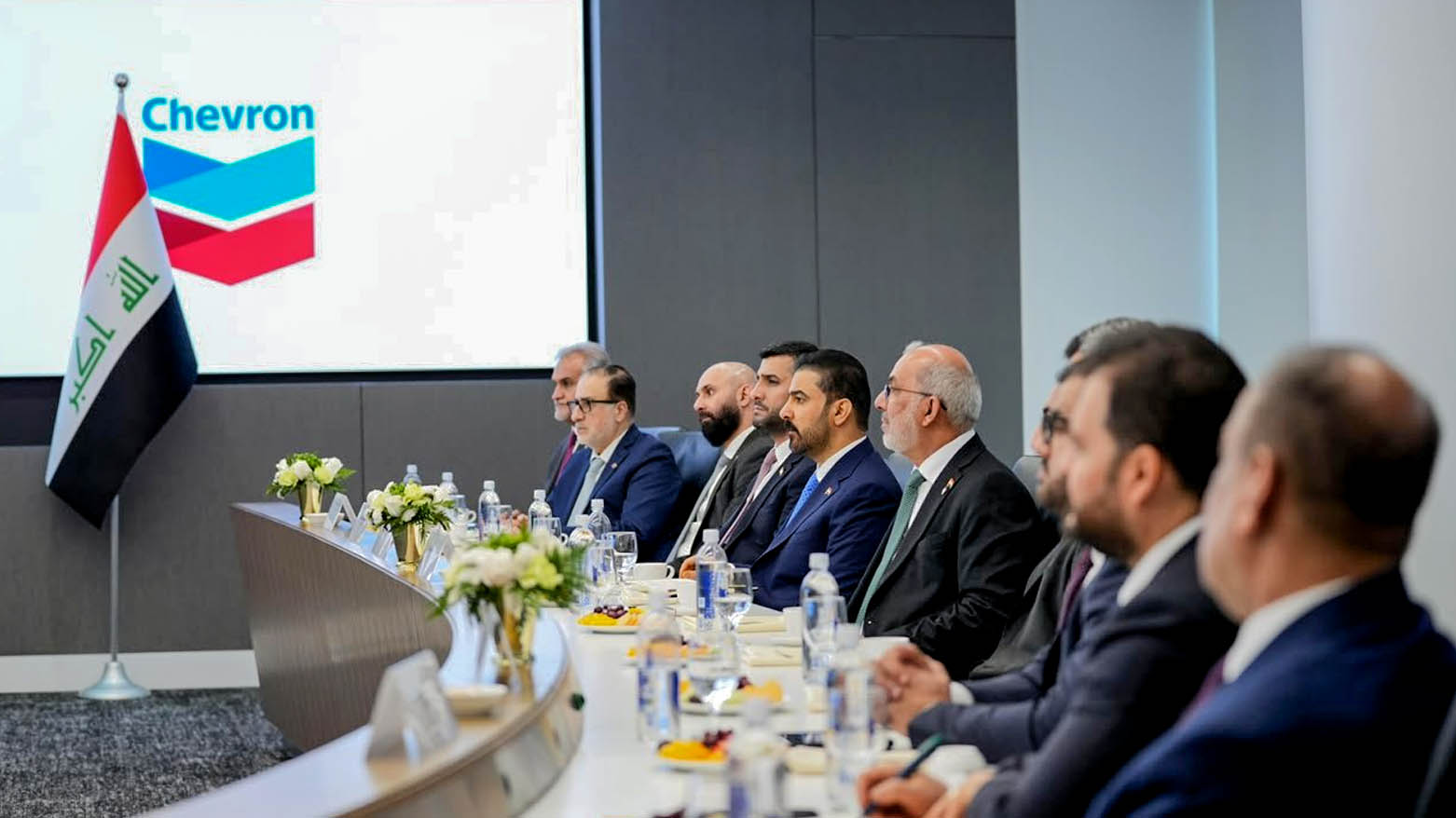
ERBIL (Kurdistan24) - Iraq is preparing to deepen its partnership with one of the world's largest energy companies as Baghdad and Chevron move toward signing a Memorandum of Understanding that government officials view as part of a broader effort to modernize the country's oil industry, attract long-term investment, and strengthen the resilience of its energy infrastructure.
According to Reuters, the agreement, expected to be signed on Friday, establishes a framework for advancing cooperation on the West Qurna 2 and Nasiriyah oil fields.
The memorandum is also intended to support continued negotiations toward a comprehensive development agreement while opening discussions on a technical feasibility study for a pipeline that could provide Iraqi crude with export routes beyond the Strait of Hormuz.
The planned accord arrives as Iraq pursues a wider transformation of its energy sector that extends well beyond increasing crude production.
During his visit to Houston, Prime Minister Ali Falih al-Zaidi outlined an integrated vision centered on expanding upstream development, refining capacity, gas processing, electricity generation and strategic infrastructure through sustained cooperation with international investors.
His announcement of the proposed "Energy City" project in Faw reflected that long-term strategy, positioning major investment and industrial modernization as complementary elements of Iraq's economic agenda.
Within that broader framework, the Chevron memorandum represents more than a commercial understanding.

It signals Baghdad's intention to secure experienced international partners for the development of strategic oil assets while creating the conditions for future investment across the wider energy value chain.
West Qurna 2 and Nasiriyah rank among Iraq's significant oil assets, making their continued development an important component of the country's plans to increase production capacity and reinforce its position as a leading global energy producer.
Reuters reported that the memorandum would serve as a preliminary mechanism for refining commercial terms before negotiations advance toward a final contract under which Chevron could assume development responsibilities.
The discussions surrounding a potential pipeline project add another strategic dimension to the agreement.
According to Reuters, Chevron and Iraqi officials are examining the feasibility of infrastructure that would enable crude exports through alternative routes bypassing the Strait of Hormuz.
Although still at an early technical stage, the proposal reflects growing attention to export diversification at a time when security concerns surrounding one of the world's most important maritime energy corridors have intensified.
The planned cooperation also builds on an earlier understanding reached between Baghdad and Chevron regarding development of the Nasiriyah oil field, indicating that both sides are seeking to broaden an existing relationship rather than initiate an entirely new partnership.
The memorandum aligns closely with the Iraqi government's wider policy of cultivating durable relationships with leading global energy companies.
During meetings in Houston, Prime Minister al-Zaidi emphasized that Iraq aims to establish long-term strategic partnerships with international firms capable of contributing advanced technology, industrial expertise and investment.
Discussions with executives from several major energy companies focused on expanding oil and gas development while creating an investment climate designed to support large-scale projects.
Energy policy has likewise expanded beyond crude production.
Government officials have repeatedly identified associated gas investment as a national priority, arguing that capturing gas currently lost through flaring is essential to reducing dependence on imported supplies used to generate electricity.
During meetings with ExxonMobil, al-Zaidi reaffirmed Baghdad's objective of strengthening refining capacity, expanding exports and accelerating industrial modernization through cooperation with international partners possessing advanced technological capabilities.
The Chevron memorandum fits squarely within those ambitions by reinforcing Iraq's strategy of combining upstream development with broader infrastructure investment and energy-sector reform.
The initiative also comes amid renewed momentum in U.S.-Iraq economic cooperation.
During Prime Minister al-Zaidi's visit to Washington, President Donald Trump expressed confidence in Iraq's economic potential and encouraged expanded collaboration between American companies and Iraq's energy sector.
Trump said additional agreements would support production growth and create employment opportunities in both countries, while al-Zaidi reaffirmed that cooperation would benefit all parts of Iraq, including the Kurdistan Region.

Although the memorandum remains an initial framework rather than a final development contract, it illustrates the direction of Iraq's long-term energy policy. By linking investment in major oil fields with infrastructure planning, export diversification, technological modernization and broader international partnerships, Baghdad is seeking to position its energy sector for sustained growth while strengthening its resilience in an increasingly complex regional environment.
|
Summary Iraq and Chevron are set to sign a memorandum covering West Qurna 2 and Nasiriyah, marking a key step in Baghdad's strategy to modernize the energy sector, diversify oil export routes, attract long-term U.S. investment, and advance broader reforms spanning production, gas and infrastructure. |