KRG Expands Water Infrastructure as Ninth Cabinet Advances Long-Term Water Security
Large-scale investments in potable water production, distribution networks, and wastewater treatment are reshaping the Kurdistan Region's long-term approach to water security and sustainable development.
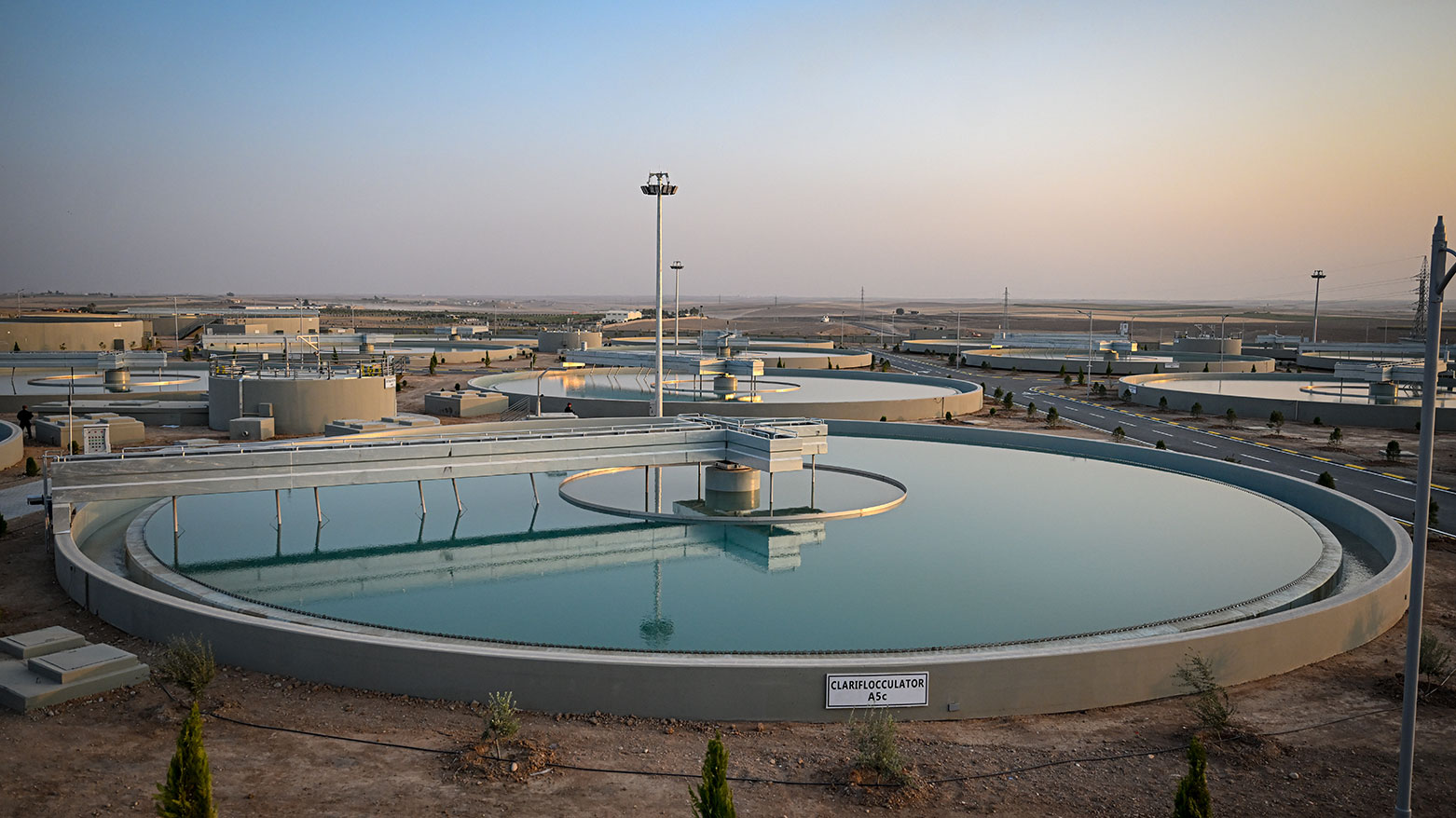
ERBIL (Kurdistan24) - Facing mounting pressure from recurring droughts, population growth, and rising demand for reliable public services, the Kurdistan Regional Government (KRG) has accelerated a broad transformation of its water sector, positioning infrastructure investment as a central pillar of its long-term development agenda.
According to official figures released by the KRG, the Ninth Cabinet has substantially expanded the Region's capacity to supply clean drinking water, with daily potable water production now reaching 1,197,000 cubic meters.
The increase reflects years of investment in treatment facilities, transmission networks, and strategic water projects designed not only to meet immediate needs but also to strengthen resilience against future environmental challenges.
At the center of that effort is the Erbil Emergency Water Project, one of the largest public utility investments undertaken in the Region in recent years.
Valued at 720 billion Iraqi dinars, the project is capable of producing 480,000 cubic meters of drinking water each day, significantly increasing supply for the capital and surrounding areas as urban expansion continues.
Supporting that investment is an ongoing project to extend Erbil's water distribution system through an additional 411 kilometers of pipeline infrastructure, broadening access to treated water while improving the efficiency and reliability of the existing network.
Rather than relying on isolated projects, the government's approach has evolved into a coordinated regional strategy stretching well beyond Erbil.
Across the Kurdistan Region, construction and expansion efforts are progressing simultaneously, illustrating an attempt to build a more integrated and resilient water system.
In Sulaimani Governorate, work continues on several major initiatives, including the Dokan–Sulaimani 3 project alongside developments serving Chamchamal and Darbandikhan.
Each is intended to increase water availability for growing communities while reinforcing regional supply networks.
Elsewhere, infrastructure projects are advancing across the Raperin Administration, Duhok, Akre, Bardarash, and Qushtapa, while additional investments are extending potable water services to Barzan, Pirmam, and dozens of surrounding rural communities.
Collectively, these projects demonstrate an effort to improve access to safe drinking water across both urban centers and remote areas where dependable public utilities have historically been more limited.
For many rural districts, improved water access carries significance beyond household consumption.
Stable supplies support agriculture and livestock production, two sectors that remain central to local economies, while reducing uncertainty for communities that have faced increasing pressure from declining groundwater reserves and changing rainfall patterns.
Environmental sustainability has also become a more prominent feature of the government's water policy.
Alongside drinking water infrastructure, the KRG is investing heavily in wastewater treatment systems intended to improve resource management and reduce pressure on natural water sources.
According to official information, the wastewater initiative is being implemented in two phases with a combined value of approximately $779 million.
Once operational, the facilities are expected to expand treatment capacity while creating opportunities for water reuse in agriculture and industry, helping conserve higher-quality freshwater resources for domestic consumption.
That investment reflects a broader shift in how the Region approaches water management.
After years of increasing dependence on groundwater, recurring drought conditions and wider climate pressures have encouraged policymakers to place greater emphasis on surface-water resources through strategic collection, treatment, and distribution projects.
Officials say the combination of expanded potable water production, larger transmission networks, and wastewater treatment infrastructure is intended to preserve underground aquifers while creating a more sustainable balance between supply and demand.
The strategy also aligns water infrastructure with wider development objectives.
Reliable public utilities are increasingly viewed as essential to supporting economic activity, improving living standards, and enabling sustainable urban growth, particularly as communities continue to expand across the Kurdistan Region.
While many projects remain under construction, the cumulative scale of current investment illustrates a long-term effort to reshape how water is produced, distributed, and managed.
According to the Kurdistan Regional Government, the Ninth Cabinet's initiatives are designed to strengthen public services today while building a more resilient water system capable of meeting the Region's future environmental and development needs.
|
Summary The Kurdistan Regional Government's Ninth Cabinet is advancing a comprehensive water strategy through major infrastructure investments that increase potable water production, expand distribution networks, strengthen wastewater treatment, and promote long-term water security across urban and rural communities. |